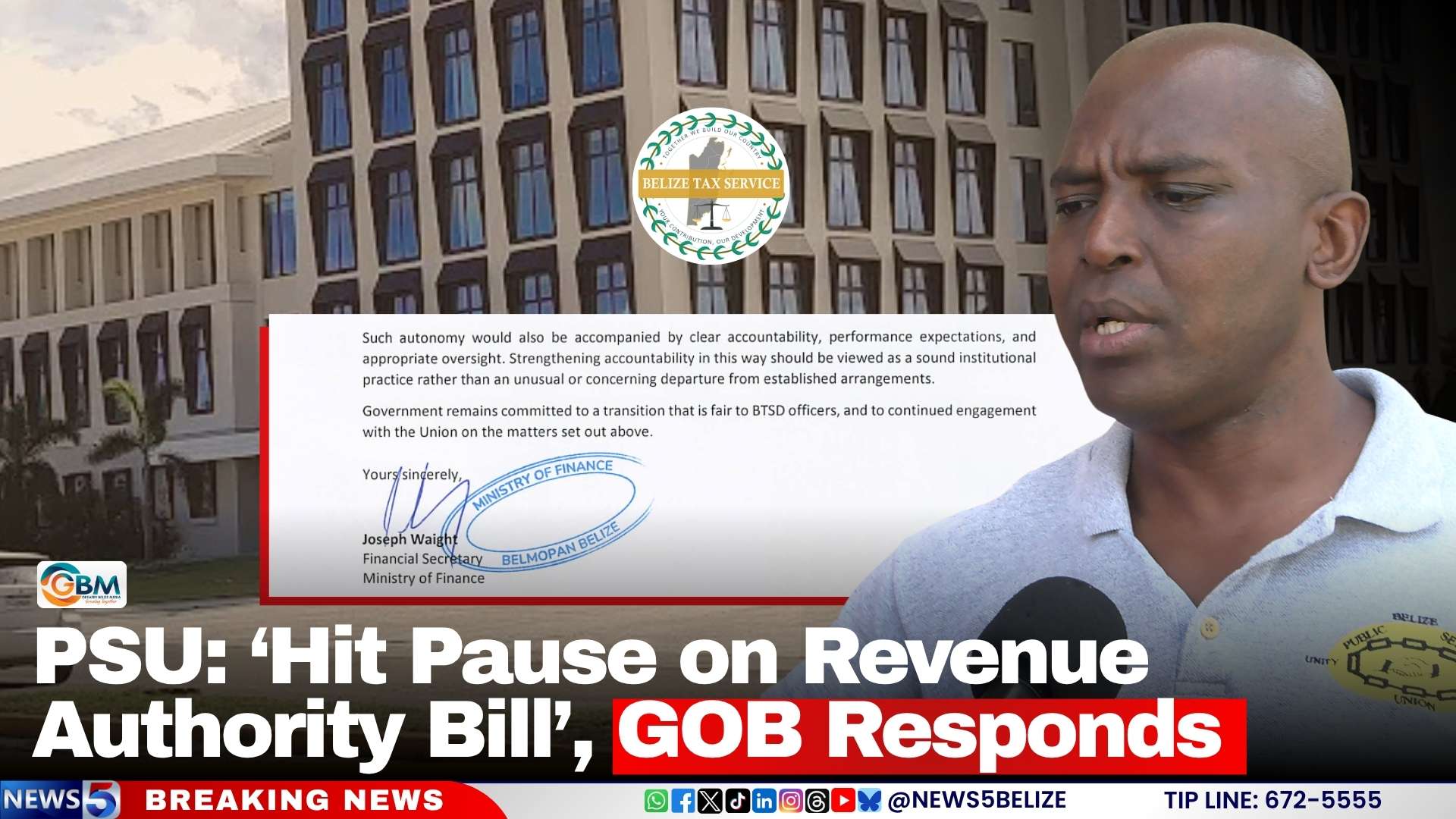
A simmering policy dispute between Belize’s Public Service Union (PSU) and the national government has reached a new turning point, as the administration has turned aside nearly all of the union’s core demands tied to the controversial 2026 Revenue Authority Bill, making only limited concessions to address labor concerns. The conflict, which has unfolded over the past month, centers on the proposed restructuring of Belize’s tax administration system into an independent revenue authority, a change the government frames as a critical modernization effort, but one the PSU argues leaves current tax workers without adequate protections for their employment, retirement and labor rights.
Last month, the PSU formally called on the government to hit a pause on the legislative progress of the bill, demanding 16 substantive amendments to the legislation and answers to 22 outstanding questions before any parliamentary movement. The union’s core sticking point was a demand for a legally binding guarantee that all transitioning tax officers would retain employment under terms no less favorable than their current public service positions. That request was among the majority of demands rejected by the government in its detailed, point-by-point response dated August 31, released publicly this week.
Financial Secretary Joseph Waight, who authored the response, laid out the government’s vision for the new body: the Belize Revenue Authority will operate under a fully restructured organizational model, with updated job descriptions and an independent compensation framework designed to compete for top talent in the field. Unlike the existing public service system, Waight explained, current posts will not automatically transfer over to the new authority. Instead, all sitting tax officers will be required to participate in a new recruitment process, although the government has committed that current staff will receive first preference for open roles.
Waight emphasized that the core goal of the transition is to build a more effective revenue body that can attract and hold skilled professional workers. To meet that goal, he argued, the authority’s compensation and benefits structure must be competitive and, on the whole, more attractive than the terms offered through the traditional public service system.
Beyond the employment guarantee, the government also declined to meet the union’s demands for a mandated pension fund and fixed implementation timeline, noting that actuarial assessments required to structure the retirement system are still ongoing. The administration also rejected the push to formally write a collective bargaining mandate into the new legislation, pointing out that this right is already protected under existing national labor law, regardless of explicit inclusion in the bill.
For tax officers who are not successful in securing a role at the new authority, the government has committed that they will not be left without employment. These workers will remain part of the public service, and will be placed in roles commensurate with their current positions — a wording the government has agreed to formally define in regulation, one of the few small compromises made to the union.
Waight did concede on two key points to ease the PSU’s concerns. The government has agreed to add an explicit provision to the bill that protects the accrued pension rights of all current officers, a critical win for workers nearing retirement. Additionally, the administration will formally require that the Auditor General’s annual oversight report be submitted alongside the revenue authority’s own annual report to the National Assembly, strengthening legislative transparency.
In a separate press statement released September 4, the Ministry of Finance pushed back against criticism that the reform is nothing more than a superficial rebranding of the existing tax system. The ministry reiterated that the restructuring is a deliberate effort to modernize Belize’s tax administration, improve efficiency, and bring the country’s revenue collection systems in line with international best practices. Officials also emphasized that the new authority will remain fully subject to the national Constitution and all existing independent oversight mechanisms, addressing concerns that the body would operate outside of standard government accountability frameworks.