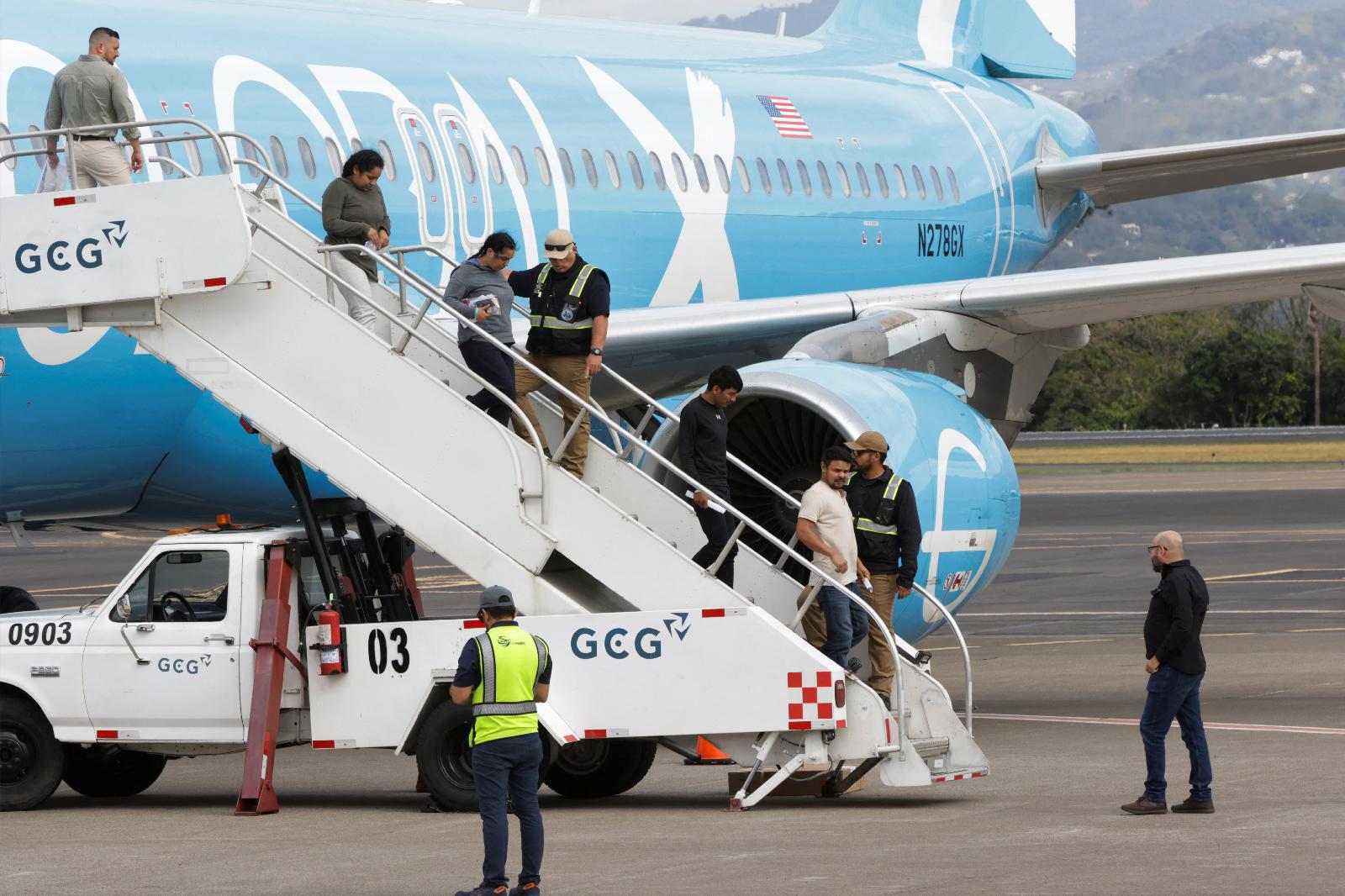
In recent days, Saint Lucia has been roiled by widespread public debate following Foreign Minister Alva Baptiste’s formal announcement that the island nation will accept third-country nationals deported from the United States. Much of the public discourse has centered on fierce opposition to the government’s decision, with critics arguing that Saint Lucia has caved to pressure from Washington, failed to release sufficient justifying information for the policy, and submitted to coercive demands from the U.S. government. What this heated public conversation lacks, however, is a nuanced, thoughtful examination of the complex web of issues surrounding the deportation agreement – the policy is far from a black-and-white issue that can be reduced to simple for-or-against stances.
One of the most pressing and legitimate public concerns centers on resource allocation: will Saint Lucia be forced to cover all costs related to supporting deportees with its own public funds, or will the U.S. provide adequate financial backing during their stay in the country? Polling of public opinion suggests broad support for the program would likely be possible if full U.S. funding is guaranteed, while the proposal garners almost no backing when the public is asked to shoulder the cost. To address these valid concerns about how taxpayer money will be used – if at all – the Saint Lucian government must proactively release detailed information to the public. Key transparency measures include, but are not limited to: full intergovernmental disclosure of each deportee’s background; acceptance only of individuals with no criminal history beyond minor immigration violations or unresolved asylum claims; ongoing parliamentary oversight with regular public reporting; and a binding commitment that the U.S. will provide a full financial package to cover deportees’ transition into Saint Lucian society.
Anti-immigration, isolationist and nationalist sentiment is not limited to far-right political parties; it also resonates with many ordinary Saint Lucians who worry that supporting deportees will come at the expense of domestic social support for citizens. A common refrain echoes across public discourse: “How can outsiders receive government support when I, a citizen, struggle to get the help I need?” Even when this fear does not align with factual reality, perception shapes political outcomes, and government officials must acknowledge this widespread anxiety and work to clarify what the agreement actually entails – and what it does not.
More troubling, however, is the growing narrative framing all deportees from third countries as violent, dangerous criminals who will drive up Saint Lucia’s already high crime rate, positioning them as an existential threat to public safety. While the government’s lack of transparent information about incoming deportees has undeniably fueled this anxiety, it raises a deeper, more critical question: Why is the default assumption that any non-Saint Lucian arriving from abroad must be a violent criminal, when no evidence supports this broad generalization?
This line of thinking leads to uncomfortable truths about implicit bias: Are we linking criminality to specific nationalities or groups of people? Where do these harmful stereotypes originate? Do they stem from Western media narratives that reinforce global hierarchies of people and nations, which frame entire regions as inherently criminal and their residents as nothing more than dangerous outsiders? Why do we only welcome foreigners as short-term tourists spending money in our economy, while refusing to acknowledge that many deportees have valuable skills, ambitions, and can make meaningful, productive contributions to Saint Lucia’s national development just as previous generations of immigrants have? Is a deportation order from the U.S., with no context about the individual’s actual offense, an automatic mark of permanent undesirability? Where is the regional Caribbean identity that reminds us we are all vulnerable to being labeled undesirable by powerful foreign nations at any moment? Would we want other countries to reject all Saint Lucian deportees based on the same unproven stereotypes?
Ironically, by embracing these harmful generalizations, we are replicating the same colonial, racist ideologies that once labeled all Caribbean people as useless, lazy criminals and primitives who needed to be “civilized” by European powers, solely because of our skin color and our fight for political independence. When we brand all deportees as “others” and “undesirables” without knowing their backgrounds, skills or personal stories, we are using the exact same dehumanizing language that has been used against Caribbean people for centuries. This is the same rhetoric that has labeled our people “from shithole countries”, spread false stereotypes about our cultural practices, and even argued that European slavery benefited Caribbean nations by bringing them democracy and the rule of law – claims that demand we reject calls for reparations for colonial harm.
Critics often point to U.S. Secretary of State Marco Rubio’s claim that the deportees accepted by Saint Lucia are “the worst of the worst” to justify opposition. But a closer look at U.S. deportation operations run by Immigration and Customs Enforcement (ICE) reveals that not all detained and deported individuals are violent criminals who threaten U.S. national security. Like the UK’s Sunak administration’s blocked plan to offload asylum seekers to Rwanda, the U.S. has abdicated its own responsibility to address its domestic immigration crisis by shifting the burden onto smaller, poorer nations, rather than doing the hard work of crafting humane, dignified, responsible policy solutions.
In fact, a large share of deportees being sent to Caribbean nations are only guilty of overstaying their visas, after fleeing violence or poverty in their home countries to pursue the “American Dream” that the U.S. has long promoted globally. We also need to interrogate the unspoken assumption that the U.S. has an inherent right to decide an individual’s moral worth, and that every other nation must automatically accept its labeling of people as criminals. This is the core logic behind the common argument: “If the U.S. doesn’t want these people, why should we?” This line of thinking grants the U.S. sole authority to judge who is valuable and who is not, erasing the right of other nations to make their own independent assessments. In embracing U.S. labels uncritically, we fail to recognize that under current U.S. policy, almost any non-American can be categorized as an undesirable, and we are blindly replicating harmful hierarchies that have no basis in fact. We do not need to demonize and dehumanize people simply because we lack full information; we can demand greater transparency without resorting to discrimination.
This dehumanizing rhetoric is often a deliberate political tool to justify mass deportation. It stokes fear, anger and anxiety among right-wing voters and ordinary citizens by blaming “foreign criminals” for rising crime, rather than acknowledging that most crime in any country is committed by citizens, and requires long-term solutions like economic growth and social development. When domestic political elites have no new ideas to reduce crime or invest in human development to address the root causes of violence, scapegoating immigrants is an easy distraction that wins public support for harsh immigration policies. Similarly, elites often blame immigrants for domestic unemployment, claiming outsiders take all the good jobs from native-born citizens, rather than acknowledging that high unemployment stems from the failure of political and business leaders to create new jobs. As the age-old saying warns: When you’ve expelled all the immigrants and all your problems still remain, who will you blame then?
This is not to claim that there are no criminals among deportees – every community in the world has people who break the law, and that fact does not make an entire group of people inherently criminal. Making broad, evidence-free generalizations about an entire heterogeneous group of people is not just intellectually lazy, it is anti-intellectual. It also does not mean that known, convicted violent criminals should be allowed entry into Saint Lucia. If an individual has a proven record of violent offending, they have every right to be excluded.
As Saint Lucian academic Professor Justin Robinson argued in a recent op-ed, the dehumanizing language framing deportees as the worst of the worst was created for a U.S. domestic political audience that has been trained to see migrants as a threat. “We do not consume US political theatre; we assess facts,” Robinson wrote. “This is the vocabulary of a great power making human beings sound disposable before a receiving country has examined a single file. It may serve US domestic politics, but it must not become our vocabulary. The deportees are not abstractions; they are parents, siblings, neighbours, people who made mistakes, people who sought better lives. That does not erase the rule of law, but it should erase the language of disposal.”
Instead of devolving into partisan point-scoring, the public conversation needs to shift to a more profound examination of the unequal, asymmetrical relationship between the Caribbean and the United States, in which the U.S. dictates terms and small nations are pressured to accept them. The core of this imbalance is clear: the U.S. asks Caribbean nations to help resolve its immigration crisis by accepting its deportees, while U.S. policy continues to discriminate against Caribbean migrants, impose strict visa restrictions and bans, and label Caribbean deportees from the U.S. as undesirables.
Compounding this power imbalance is the reality that rejecting the U.S.’s request often carries severe economic and social consequences for small island nations like Saint Lucia. Because of Saint Lucia’s geographic proximity to the U.S. and deep economic dependence on American trade, tourism and investment, successive governments of all political stripes have been forced to accept agreements like this, as the country cannot bear the cost of retaliatory measures such as new visa and travel restrictions for Saint Lucian citizens.
Robinson summarized this regional predicament perfectly: “Our geography only compounds our predicaments, such that some of our islands lie closer to Miami than Miami lies to Atlanta, American tourists fill our hotels, American dollars flow through our banks, American visas determine whether our citizens can visit family, American deportation flights return our nationals after decades of residence, and there is no aspect of Caribbean life untouched by American proximity, and our agony of the 15 [Caribbean nations] is poorly suited to bilateral coercion, and Washington can apply pressure sequentially, and extract concessions from the weakest, and use those to pressure the others, and we are being picked off one by one.”
For this reason, a far more constructive national conversation – one that has been drowned out by partisan grandstanding – should focus on building long-term national self-sufficiency, strengthening regional solidarity across the Caribbean, and expanding partnerships with other global powers to reduce dependence on and vulnerability to asymmetrical U.S. influence. If the government ultimately moves forward with the agreement, political leaders also have a responsibility to be honest with the public about the coercive geopolitical context that shaped the decision, and the necessary trade-offs that come with it, rather than hiding details behind closed doors.
Empty partisan posturing serves no public good. Opposition politicians often claim they would reject the agreement if they were in power, but this claim is misleading and purely political. The structural pressure from the U.S. affects all governing parties equally, especially when all major parties continue to frame the U.S. as a valued friend and partner. The Opposition Leader’s criticism of the ruling party’s alignment with U.S.-backed groups like the Lima Group also misses the mark: even governments openly friendly to the U.S., such as Prime Minister Andrew Holness’ administration in Jamaica, have also agreed to accept third-country deportees from the U.S. If the U.S. only offloaded deportees on politically unfriendly governments, it would not be asking ideologically aligned Caribbean nations to take them, which directly contradicts this narrative.
Instead of political point-scoring, the national focus should shift to the concrete measures needed to implement the agreement responsibly – if it moves forward – and to asking hard questions about double standards, such as why Haitian migrants are routinely denied entry to Saint Lucia while the country considers accepting deportees from other third nations.