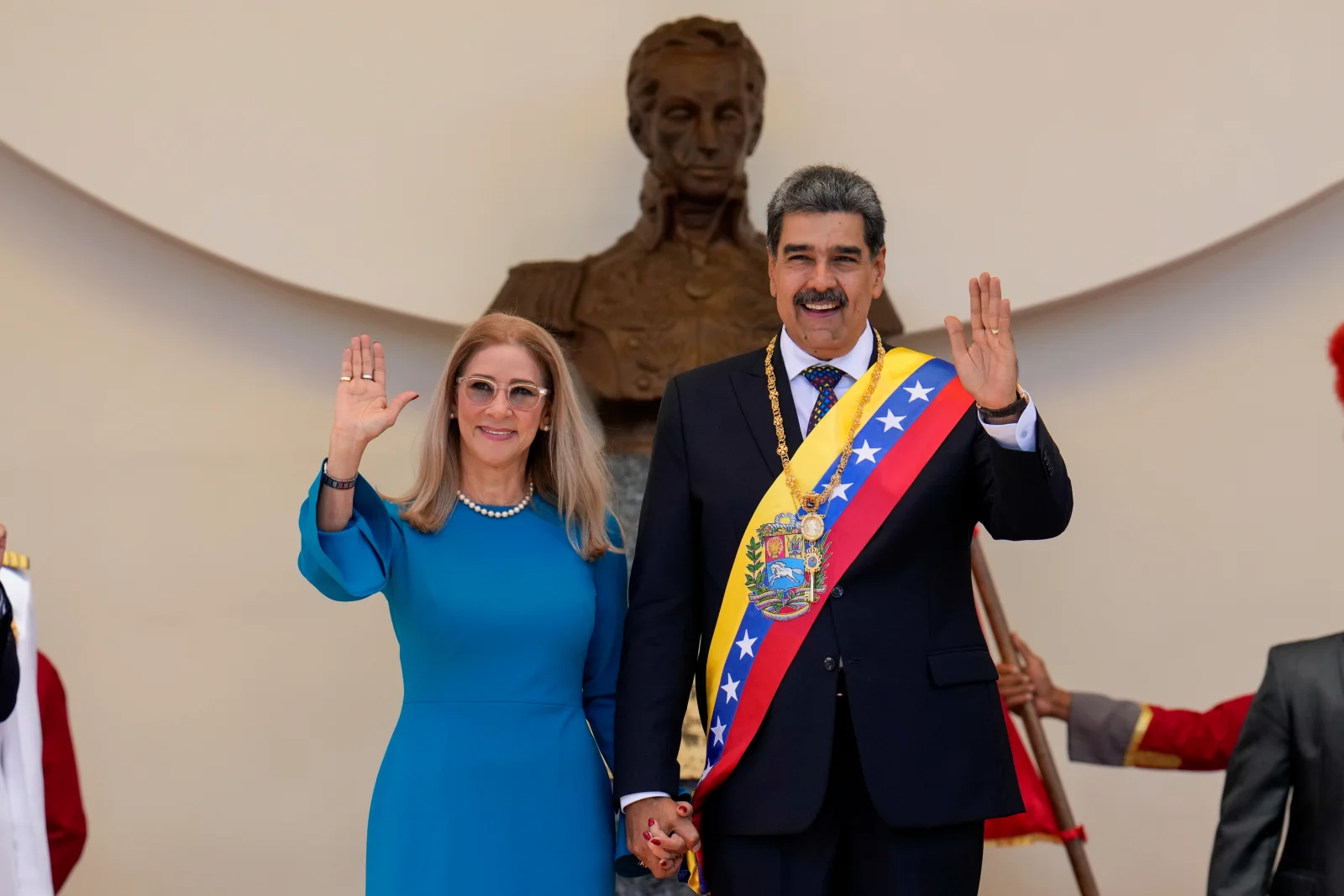
In a major legal development unfolding in a New York federal court, former Venezuelan President Nicolás Maduro and his wife, Cilia Flores, have formally petitioned a judge to throw out a long-running drug trafficking indictment against the pair, arguing that they are shielded from prosecution under international principles of sovereign immunity.
The legal motion, filed Wednesday with the United States District Court for the Southern District of New York in Manhattan, lays out a clear constitutional and historical argument: that no domestic U.S. court holds the jurisdiction to hear criminal charges against a sitting head of state recognized by their home nation. Maduro’s legal team emphasized in the court filings that this longstanding principle of immunity pre-dates even the common law legal system, holding that heads of state may only be tried by their own national judicial bodies, not courts of a foreign country.
“No American court has ever presided over the criminal trial of a foreign leader who was recognized by their own country as the sitting head of state at the time the charges were brought,” the legal team wrote. “That is not an accident of history. It reflects a rule older than the common law: heads of state are exempt from the criminal process of any national court but their own.”
Both Maduro, 63, and Flores, 69, are currently being held at a federal detention facility in Brooklyn, after U.S. law enforcement forces seized the pair from their residence in Caracas in an overnight raid earlier this January, before extraditing them to New York to face the charges. Their trial on the drug trafficking allegations is currently scheduled to begin on June 1 of next year, and Judge Alvin K. Hellerstein has slated oral arguments on the dismissal motion for November 17.
In separate court filings submitted alongside Maduro’s motion, Flores’ legal team echoed the immunity argument, noting that as the former first lady of Venezuela, she also falls under the protection of sovereign immunity. The team stressed that this immunity is an inherent component of Venezuelan national sovereignty, and only the Venezuelan government itself can waive that protection, not U.S. judicial authorities. “It is an attribute of Venezuela’s sovereignty, and only Venezuela may surrender it,” her legal team wrote.
Beyond the core claim of head-of-state immunity, Maduro’s lawyers also laid out an additional argument: even if the court rejects the claim of personal sovereign immunity, the charges must still be dismissed because Maduro is entitled to conduct-based sovereign immunity, which protects official acts taken by a sitting head of state. The motion also forcefully rejected the prosecution’s allegations, with Maduro’s team stating that their client “vehemently denies the allegations against him.” They added that “if this case were to proceed to trial, it would be apparent that he has been falsely accused.”
The indictment against Maduro and Flores was first brought six years ago, alongside charges against multiple alleged co-conspirators in the drug trafficking scheme. Both have formally entered not guilty pleas to the charges. If convicted by a jury of involvement in a conspiracy to smuggle cocaine into the United States, both face the possibility of life imprisonment. U.S. federal prosecutors allege that Maduro conspired to move thousands of tons of cocaine into the U.S. by colluding with Venezuelan law enforcement officials to protect and assist major drug kingpins operating the trafficking network.
Federal prosecutors have been ordered to file their formal response to the dismissal motion by the end of this month. The seizure and extradition of Maduro has remained a major point of international contention: the former Trump administration defended the overnight raid as a targeted “surgical law enforcement operation,” while Maduro has described his capture as an illegal kidnapping and refers to himself as a prisoner of war.