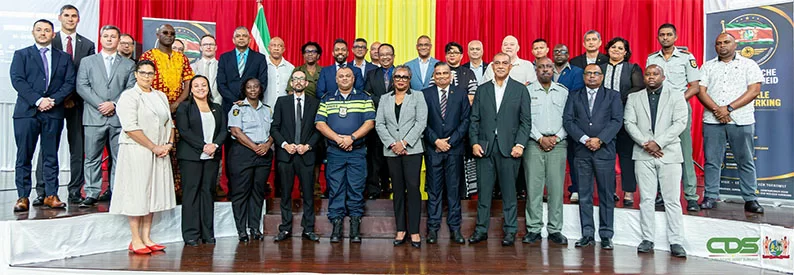
Suriname is embarking on a critical reevaluation of its national security strategy at the 2026 National Security Conference, a two-day gathering that centers on replacing the nation’s long-standing crisis-first response framework with a preventive, proactive approach to emerging threats. Hosted by the Directorate of National Security (DNV), the event brings together senior representatives from across the full spectrum of Suriname’s security agencies and relevant partner institutions, organized around the core theme of “Strategic Resilience and Integrated Collaboration.”
Beyond simply facilitating knowledge sharing among stakeholders, conference organizers say the gathering has a more ambitious goal: laying the groundwork for a coordinated, unified strategy to counter the full range of modern threats to Suriname’s national stability. Acting DNV Director Major Gerard Kalka emphasized that this shift cannot happen without intentional, cross-agency cooperation. “For far too long, we have only mobilized once a crisis has already broken out,” Kalka told attendees. “We need to identify and flag risks early, and that work cannot be done by any single agency alone. Cross-stakeholder collaboration is not an optional addition—it is an absolute prerequisite for effective national security.”
According to event organizers, the security challenges facing Suriname today extend far beyond traditional domestic crime. The conference agenda covers a broad, evolving set of risk areas, including transnational organized crime, systemic subversive criminal activity, cybersecurity threats, maritime security, energy security and protection of critical infrastructure, economic stability, and food safety and food sovereignty—issues that touch nearly every sector of Suriname’s governance and public life.
Harish Monorath, Suriname’s Minister of Justice and Security, has set clear expectations for the conference outcomes: he called for discussions to produce tangible, actionable policy proposals that can be implemented quickly, and stressed that strengthening trust and clarity between law enforcement, military, and civilian security actors remains a top priority for the government.
Carmen van Dijk, DNV Deputy Director for Security Policy, highlighted a long-standing structural barrier to better security coordination: the persistent culture of working in isolated institutional silos. “Too often, information critical to national security is treated as the exclusive property of a single organization, rather than a shared resource that all relevant agencies can leverage to protect the country,” van Dijk explained. She added that breaking down these silos is non-negotiable for building a more effective proactive security system.
Van Dijk also clarified the unique role the DNV plays in Suriname’s national security architecture. Unlike law enforcement or military bodies that carry out direct operational responses, the DNV functions as a central strategic advisory body supporting the president and national cabinet. “Our core mandate is to collect, verify, and analyze threat information, then deliver evidence-based guidance to the nation’s leadership,” she said. “Everything we do is focused on protecting our collective national security.”
As of the opening day, the conference is scheduled to continue its sessions on the second day, with working groups focused on developing concrete pathways to more sustained, structural collaboration across agencies. The ultimate goal is to establish new frameworks for early risk detection and coordinated intervention that will serve Suriname’s security needs for years to come.