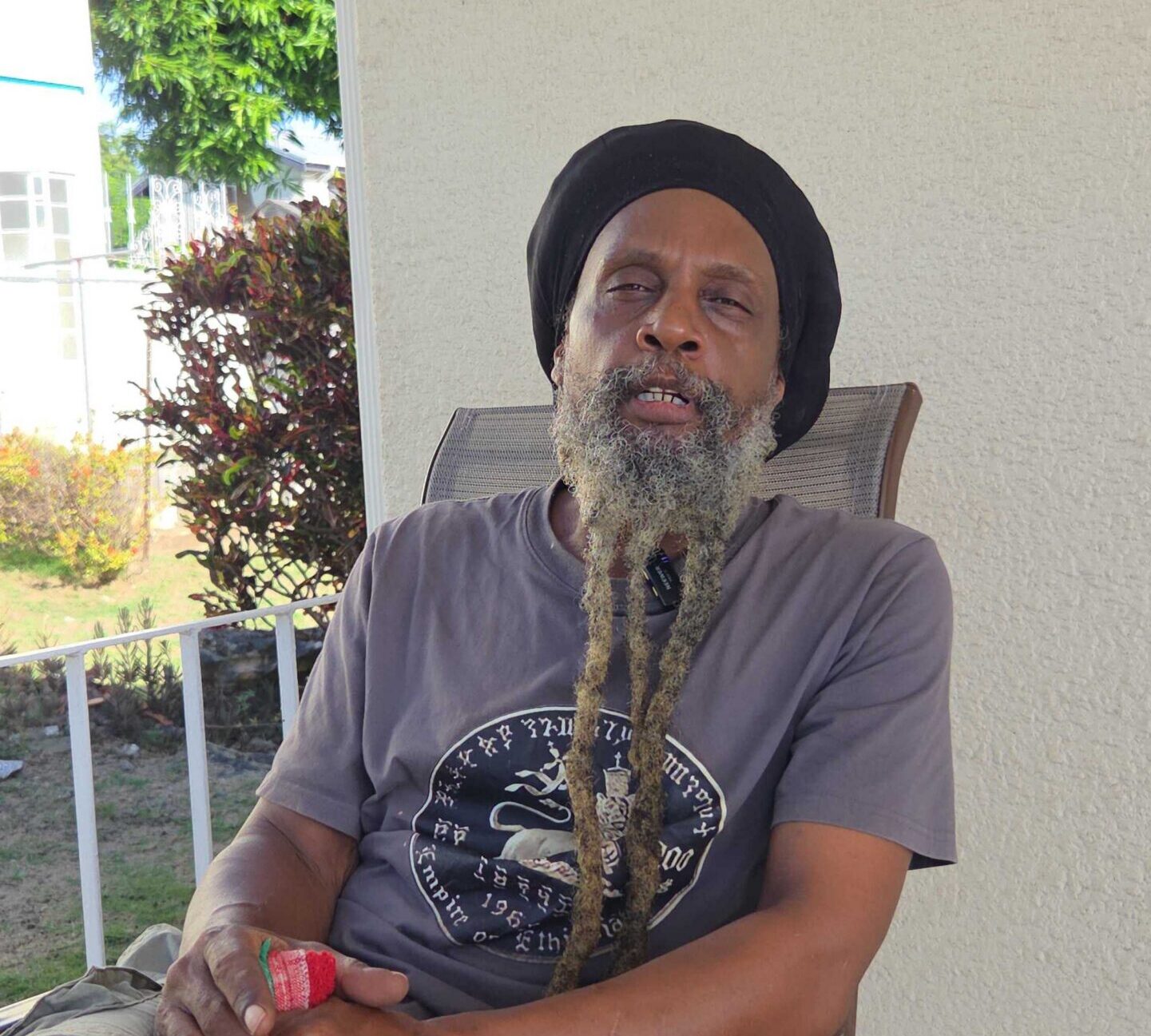
A prominent Rastafarian rights advocate in Barbados is pushing forward with a legal battle to expand religious access to cannabis, confirming he will challenge a recent High Court ruling that upheld the constitutionality of the country’s existing cannabis regulations. Paul Ras Simba Rock, who launched a constitutional challenge against Barbados’ Drug Abuse Prevention and Control Act and Sacramental Cannabis Act (SCA), has denounced the court’s judgment as legally unfounded and says he will take his case to the Barbados Court of Appeal.
In the original ruling handed down at the Supreme Court No. 8, Justice Michelle Weekes found both pieces of legislation compatible with Barbados’ constitution, justifying the current restrictions on the grounds of protecting public health, maintaining community safety and upholding public order. Under the existing framework, legal sacramental cannabis use is limited exclusively to officially registered tabernacles and recognized places of worship. Justice Weekes rejected the challenge to this provision, arguing that the restriction does not violate constitutional protections for religious freedom, personal privacy, or freedom from discrimination. In her written judgment, she clarified that the judiciary’s role does not include rewriting legislation or creating new legal exemptions, noting that the SCA already extends a specific accommodation to Rastafarians that is not available to the general public.
Represented by attorney Lalu Hanuman, Ras Simba Rock argued during the original challenge that confining sacramental cannabis use to official worship spaces unlawfully encroaches on core personal and religious liberties. His legal team specifically highlighted a gap in the law that excludes Rastafarian women who are unable to attend formal tabernacle gatherings for various reasons and must practice their faith in private home spaces, a scenario not permitted under the current statute.
Speaking out after the ruling, Ras Simba Rock expressed firm conviction that the legal justifications for the High Court’s decision are weak at best. “I’ve appealed the case. The grounds on which I lost are very flimsy,” he stated, also noting the lack of substantial media coverage of his challenge was unusual. Beyond the specific legal details of his case, he voiced deep frustration that the ruling perpetuates what he calls the systemic denial of full constitutional rights to Rastafarians in Barbados. “We are left as a subsection out of the Barbadian community,” he said, emphasizing the broader marginalization the community faces as a result of the restriction.
The ruling also carries tangible harms for local communities and small-scale young cannabis cultivators, Ras Simba Rock explained. Currently, cultivators who wish to grow cannabis for sacramental use outside registered worship spaces are forced to cultivate crops in secret, often hidden in cane fields and remote wooded areas. If the challenge had succeeded, he argued, cultivators would have been able to grow cannabis legally within the privacy of their own homes, reducing the prevalence of unregulated hidden cultivation across the island. “A win for me would have meant that probably a lot of the youngsters who had to resort to the canefields and the bushes … wouldn’t be growing at anybody’s homes,” he said. “And if [they] were able to plant and cultivate within the privacy of their own home, whatever amounts, I’m sure the amounts being found in the bushes and things will be lessened.”
Beyond its immediate impact, the outcome of Ras Simba Rock’s challenge has already delayed resolution for multiple other pending cannabis cases involving members of the Rastafarian community. The activist revealed that several other Rastafarians currently facing cannabis possession charges, all arrested with small numbers of plants near their homes, have opted not to plead guilty while waiting for the result of his constitutional challenge. The negative High Court ruling has now left those cases in limbo, hanging on the outcome of the upcoming appeal.