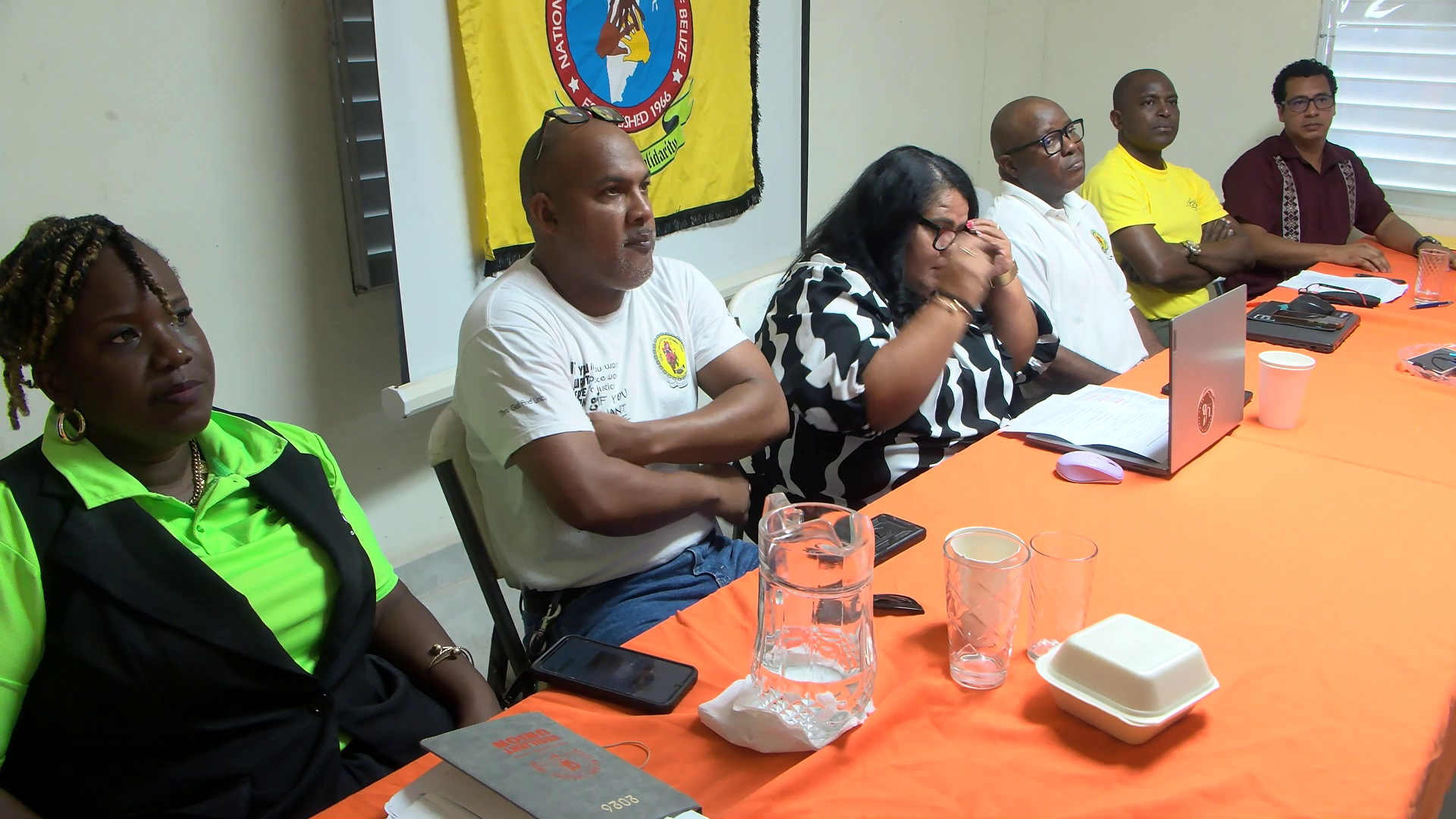
A sharp public dispute over accountability for destroyed public sector financial records has broken out between Belize’s top auditor and the leader of the nation’s Public Service Union (PSU), raising urgent questions about who holds public officials responsible for misconduct in the Central American country.
The conflict ignited two weeks prior to Auditor General Maria Rodriguez’s latest response, when PSU President Dean Flowers publicly questioned Rodriguez over why she had not referred more complaints against misbehaving public officers to the Belize Public Service Commission for disciplinary action. At the heart of the disagreement is confusion surrounding authority to initiate disciplinary proceedings after public officers were found to have intentionally destroyed critical financial documents.
In a pointed public rebuke delivered September 3, Rodriguez pushed back hard against Flowers’ criticism, laying the blame for the current accountability gap at the feet of the unions themselves. She explained that the existing disciplinary rules governing public service employees were not drafted by her office, but were jointly developed by union representatives and the Ministry of Public Service during collective bargaining negotiations.
Rodriguez emphasized that the agreed-upon framework explicitly reserves the power to initiate disciplinary cases for Chief Executive Officers (CEOs) of government departments, not the Auditor General’s office. Under the established rules, when a CEO submits a case of misconduct — ranging from minor infractions to major violations like the destruction of financial records — the Public Service Commission reviews the matter, with unions even providing legal representation for the accused public officers at commission hearings.
“I did not write the rules. I did not write the process for disciplinary action,” Rodriguez stressed, dismissing Flowers’ claims that she is shirking her responsibility as untruthful. “So I don’t understand why they are asking me to take someone to the commission. There is no provision in the rules that says the auditor general can bring disciplinary matters directly to the commission. It is very specific: the Chief Executive Officer is the person who needs to initiate the disciplinary proceedings.”
Beyond the question of disciplinary authority, Rodriguez also highlighted a second major barrier to holding non-compliant public officers accountable: her office lacks the in-house legal staffing required to pursue criminal charges. While officers who destroy or fail to produce financial records can technically face criminal prosecution under existing law, Rodriguez’s office does not employ dedicated legal personnel to move forward with such cases, leaving that pathway to accountability blocked for the time being.
This report is a transcribed adaptation of an evening television news broadcast from Belize.