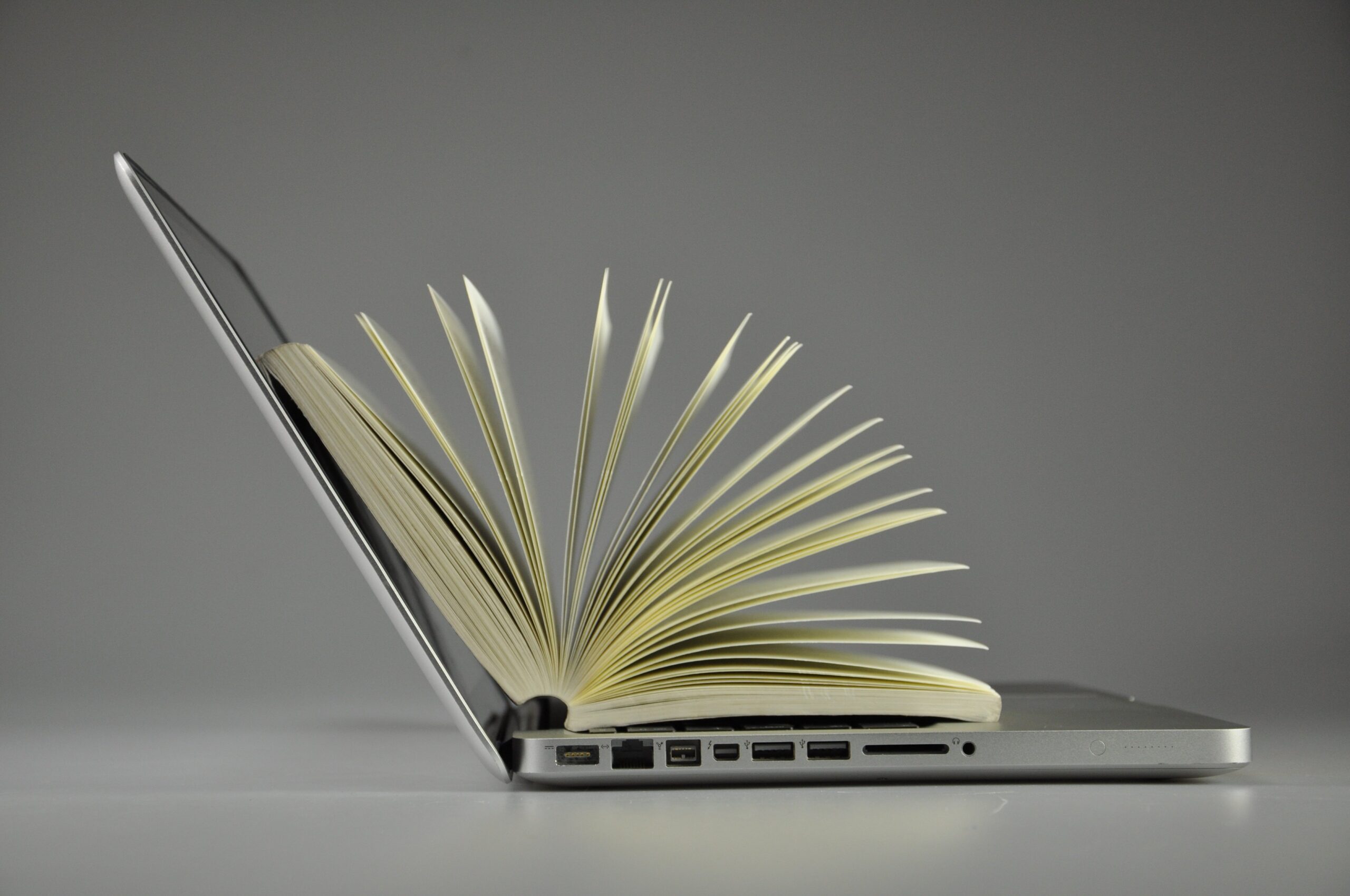
As a 30-year veteran educator, I have spent years sponsoring Grenadian secondary students to access the textbooks they need to succeed. This year, however, I encountered a stark shift: nearly all core learning materials have moved exclusively to digital platforms. The surprise of this transition left me stunned. Today, Grenada is rushing to join a global trend of putting a personal laptop in every student’s hand — a policy that many early adopter nations are already hastily reversing after witnessing its negative impacts on learning.
This sudden push toward full digitalization brings my own CXC exam preparation days into sharp focus. I still remember Teacher Henry leading a group of us to Pope Paul’s camp in Palmiste, the site that later became NEWLO, for a weekend of intensive, book-based study ahead of our national exams. Another year, a larger cohort camped overnight at Saint Rose Secondary School, each of us toting 6 to 7 physical textbooks, working through past exam papers until the concepts clicked into place. In those days, A-level students organized their own study groups, meeting in whatever small space they could find — a kitchen corner, a family veranda — to work through course material together. One former student I spoke with put it plainly: “When I sat my A-levels in sociology, it was physical textbooks that got me through. I wrote every essay by hand. If I made a mistake, my teacher caught it, and I rewrote the entire piece from scratch until I got it right.”
This global reversal of full classroom digitalization is not rooted in nostalgia alone; it is backed by rigorous research and evidence-based policy change. A 2023 Norwegian research study confirmed that handwriting practice builds far greater neural connectivity in the brain regions specifically tied to memory retention and learning, a finding that has already prompted policy shifts across Europe. In February 2024, Sweden rolled back its national digital-first education strategy, allocating hundreds of millions of kronor annually to restore printed textbooks and school library resources, and mandating that all primary and secondary schools become completely phone-free by autumn 2026. This reversal came after pediatricians and neuroscientists sounded the alarm on the harms of early overexposure to screens, prompting the government to overrule the education agency’s original digital-first agenda. The Netherlands implemented a full ban on phones, tablets, and smartwatches in classrooms starting in January 2024, and Finland passed identical restrictions the same year. In Madrid, regional education authorities have introduced age-based caps on classroom screen time, limiting the youngest primary students to just one hour of screen use per week — a policy that impacts more than 500,000 students across the region. These are not trivial, marginal policy adjustments; they are deliberate, data-driven course corrections by national and regional governments that have already lived through the costs of full digitalization.
We do not need to look across the Atlantic for evidence of the risks of unfettered digital learning. The Caribbean Examinations Council (CXC), the governing body that accredits Grenadian students’ secondary exam results, announced in July 2025 that it will phase out School-Based Assessments (SBAs) for most subjects. The reason? Generative AI, easily accessible via personal laptops and digital devices, has irreparably compromised the academic integrity of student work. For decades, the SBA was one of the most well-designed components of the CXC syllabus: students selected their own research topics, conducted independent inquiry, wrote up their findings, and defended their work before their teachers. Today, widespread access to digital tools has made it far too easy for students to skip the entire learning process and submit AI-generated work they never created, forcing the regional exam board to rebuild the entire assessment model from the ground up.
Grenada’s own universal laptop program, which includes e-textbooks and a free Microsoft 365 account for every student, began rolling out to Form One and Form Two students in September 2025, covering all core subjects from mathematics and English to geography, science, agriculture, home economics, and foreign languages. Government officials say parents who prefer physical textbooks can still purchase them independently. While this may hold true on paper, my own trip to local bookstores told a different story: the entire education system has already shifted to prioritize digital materials, with physical textbooks now an afterthought that requires extensive searching to locate, rather than the default learning tool every student receives.
The nations now reversing course — Sweden, the Netherlands, Finland, Madrid — are not speaking from abstract theory. They tested universal laptop access for every student, measured the damage to students’ reading proficiency, writing skills, attention spans, and critical thinking abilities, and are now investing significant public funds to undo the policy. This leaves Grenada with a unique advantage these nations did not have: we have not yet locked in this mistake. We can learn from the experience of other countries’ students instead of learning the same hard lesson through our own children’s suffering.
This is not an argument to ban computers from Grenadian classrooms entirely — digital tools certainly have a valuable role to play in modern education. But that role is as a dedicated subject on the school timetable, just like English, mathematics, agriculture, or social studies. Students should have scheduled computer lab periods where they learn explicit, structured skills: typing proficiency, coding, ethical research practices, and how to use generative AI responsibly. That is where laptops earn their place in education. They should not replace the physical textbook students carry into every other class, nor replace the hands-on practice of handwriting, in-person classroom discussion, and the slow, deliberate work of reading a physical page and developing an independent opinion on its content.
Every one of the nations rolling back full digitalization is fighting to return to the model Grenada already maintains. Right now, Grenada could be a global leader in evidence-based education: we could stand firm in keeping physical books in students’ hands, and other nations could look to our example. Instead, we are rushing in the opposite direction, heading straight for the exact policy failure the rest of the world is now desperate to escape.
I am calling on Grenada’s Ministry of Education and on parents across the country to examine closely the 15 years of costly lessons Sweden has learned, and the urgent fixes our own regional exam board is already implementing. Move laptops to the dedicated computer lab where they belong. Put physical textbooks back in every child’s hands, where they have always supported strong learning. If we move forward with putting a personal laptop in every child’s hands today, we are not playing catch-up — we are taking a massive step backward, straight into the mistake the rest of the world is already spending billions to undo. We have a rare opportunity to avoid this mistake entirely, instead of living through it and paying to fix it decades later, just like every other nation that rushed into this policy.