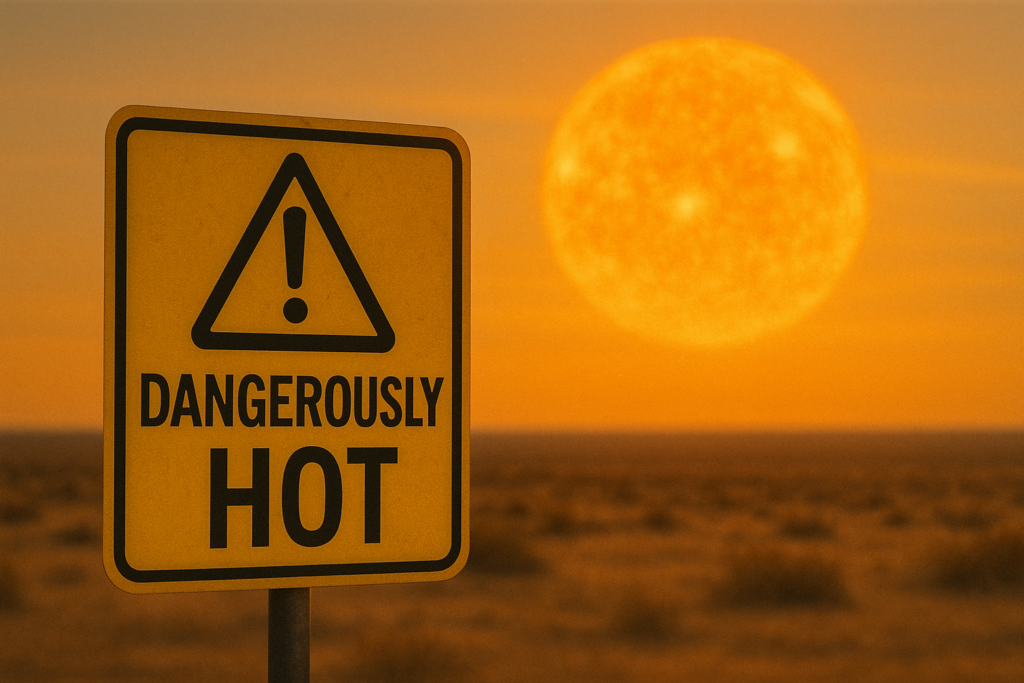
The 1.5°C global warming limit is far more than a flexible policy target that nations can abandon or negotiate away – it is a binding commitment enshrined in the Paris Agreement, rooted in the urgent need to shield communities and ecosystems from the worst ravages of climate change. This obligation has further been cemented by the International Court of Justice, which formally recognized that all states hold legal responsibilities to protect the global climate system for current and future generations.
For generations, Small Island Developing States (SIDS) have stood at the frontline of climate impacts, ringing the alarm bell about the catastrophic consequences of uncurbed greenhouse gas emissions. Today, cutting-edge climate science is validating and amplifying those early warnings. Human activity has already pushed the planet far beyond its natural equilibrium, and continued delay in cutting emissions amounts to a reckless game of chance that puts global communities, economic systems, and entire ecosystems at existential risk.
Every extra tenth of a degree of warming beyond the 1.5°C threshold amplifies the likelihood of irreversible, devastating outcomes. These range from catastrophic sea-level rise that renders low-lying island nations uninhabitable, to widespread glacial and ice sheet collapse, mass forest die-off, the total degradation of tropical coral reef systems, and growing threats to global food and water security. For SIDS, these risks are not abstract projections far in the future – they are unfolding crises that are already disrupting lives and threatening national sovereignty.
Critically, a recent UN Environment Programme (UNEP) report warning of growing near-term risks should not be misread as a signal to abandon the 1.5°C target. Instead, it must act as a jarring wake-up call to ramp up climate ambition and action with far greater urgency than we have seen to date.
Crucially, the trajectory of global warming is not yet locked in. The landmark UNFCCC Global Stocktake has already mapped out clear, actionable pathways to close the existing emissions gap and keep the 1.5°C goal within reach. Leading climate science confirms that even if temperatures temporarily overshoot the 1.5°C mark, the length and severity of that overshoot can still be limited with bold immediate action. As such, governments must shift their focus beyond debating whether a temporary overshoot will occur, and instead prioritize every possible measure to minimize the overshoot and return global temperatures to below 1.5°C as quickly as possible.
To support this goal, the Alliance of Small Island States (AOSIS) emphasizes that the next Intergovernmental Panel on Climate Change (IPCC) assessment report must be finalized in time to inform the next Global Stocktake. World leaders require the most up-to-date, robust scientific evidence to guide the high-stakes decisions that will shape the course of global warming for decades to come.
AOSIS is sending a clear, uncompromising message to all nations: it is imperative that we uphold the commitments made under both the Paris Agreement and the UN Framework Convention on Climate Change. This means accelerating the global transition away from fossil fuels, and deploying every available climate solution to cut greenhouse gas emissions rapidly. Technological innovation must go hand in hand with deep, systemic decarbonization across all global economies. If governments move now with the highest level of ambition, it is still possible to reverse current warming trajectories and stabilize the global climate as close to the 1.5°C threshold as possible.
Every fraction of a degree matters, for SIDS and for every nation on Earth. As the world grapples with growing climate uncertainty, scaled-up, accessible, and sufficient financing for adaptation, climate resilience, and addressing loss and damage is non-negotiable for vulnerable nations on the frontline.
In sum, the UNEP report should not be interpreted as a final death sentence for the 1.5°C target. It must be understood for what it is: a stark warning of what stands to be lost if we fail to act. This is a defining call to action for global leaders. Governments must immediately enact ambitious policies that limit the magnitude and duration of any potential temperature overshoot, and keep the pathway back to 1.5°C well within reach. The 1.5°C threshold must remain the guiding North Star for global climate action, and talk of temporary overshoot must never become an excuse for continued inaction.