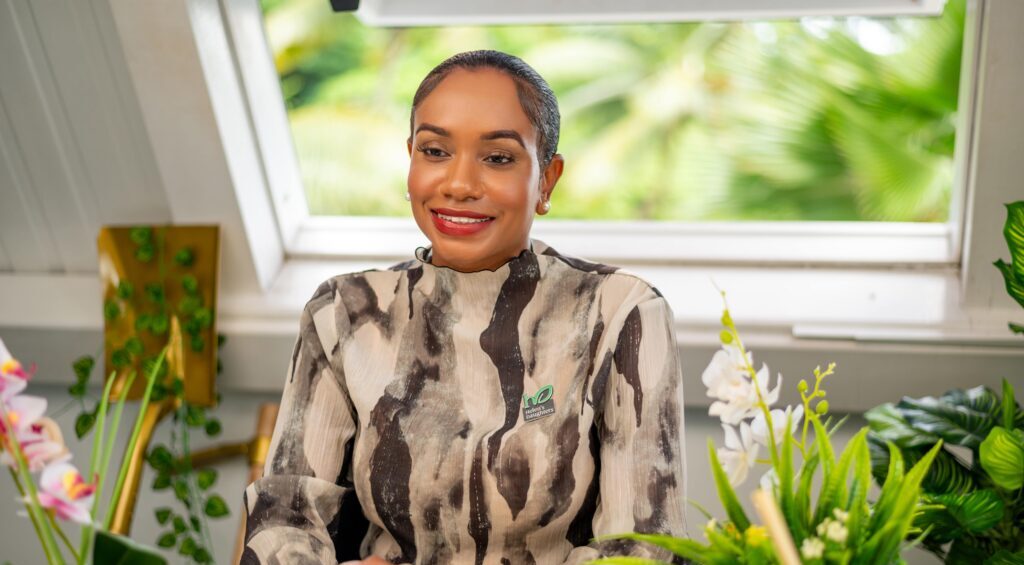
The Caribbean is globally synonymous with postcard-perfect paradise: turquoise waters, powdery white sand, vibrant Carnival celebrations, and warm, welcoming hospitality. This carefully cultivated brand has been one of the region’s greatest marketing successes, drawing millions of visitors annually and supporting millions of livelihoods tied to the $30 billion-plus Caribbean tourism industry. But as Keithlin Caroo-Afrifa, founder and executive director of regional non-profit Helen’s Daughters, argues, this single dominant narrative has created a costly paradox that has held back progress on the region’s most pressing unmet needs.
Caroo-Afrifa’s insight into this dynamic came from an offhand comment during a discussion on why the Caribbean consistently struggles to secure development funding for critical challenges: “When people see paradise, they assume everything is okay.” At first, the line struck her as absurd. How could a scenic image erase the need for targeted support for vulnerable communities? But upon reflection, she realized the comment cut to the heart of a decades-long problem she had witnessed firsthand.
Again and again, initiatives designed to boost climate resilience, improve regional food security, strengthen local civil society, and support working communities miss out on critical investment and global attention. While official eligibility criteria and the “too developed” classification often get the blame, Caroo-Afrifa argues a hidden barrier is far more impactful: the region has become a victim of its own success at selling paradise.
This conversation has gained new traction in recent weeks, as Carnival seasons wrapped up across the Caribbean and social media reignited a long-running debate: has the region prioritized partying over the hard work of nation-building? On one side, critics argue that excessive celebration distracts from persistent economic struggles; on the other, defenders note Carnival generates thousands of jobs, supports small businesses, and preserves core cultural identity. But Caroo-Afrifa says both sides miss the larger, more important point.
The issue is not that the region has sold the idea of paradise to the world — the problem is that paradise has become the only story most people ever hear. This gap is not just a misperception from outside visitors; it has also shaped how the Caribbean frames itself to global audiences.
The “paradise brand” is an undeniable achievement. It transformed small island economies, lifted countless households out of poverty, and shared the region’s rich culture with the world, something worth celebrating. But every oversimplified story omits critical realities. The more polished the global image of paradise becomes, the harder it is for international audiences, investors, and donors to imagine that paradise can also face systemic challenges.
When people imagine the Caribbean, they rarely picture a small-scale farmer anxiously monitoring drought levels and wondering if they will have enough water to bring their crop to harvest. They do not see local nonprofits scrambling to stretch tiny budgets to support families that have fallen through gaps in public social safety nets. They do not picture a single mother navigating an underfunded public health system while caring for an aging parent. They do not see a young college graduate weighing whether the only path to economic opportunity is leaving their home island for abroad. These realities are no less a part of Caribbean life than beaches and festivals, but they do not fit the neat, marketable narrative that has been built over decades.
Narratives do more than shape public perception, Caroo-Afrifa emphasizes: they shape tangible outcomes. They drive global investment decisions, influence international policy priorities, determine which stories get media and research attention, direct philanthropic funding, and even shape how much global empathy the region receives. People show up for the stories they understand, and the only story most people understand about the Caribbean is the one of the perfect vacation escape.
Visitors see record-breaking tourism arrivals, luxury coastal developments, and packed festival parades. What they rarely see are the quiet, unsung institutions holding local communities together: grassroots organizations building climate resilience between devastating hurricane seasons, smallholder farmers working to strengthen regional food sovereignty, public educators dedicating their careers to nurturing the next generation, community groups resolving local challenges long before a disaster makes international headlines, and thousands of ordinary Caribbean residents doing extraordinary work with limited resources.
This is the core of the paradox: the more successful the region is at marketing the paradise narrative, the harder it becomes to honestly communicate vulnerability and unmet need. Caroo-Afrifa is quick to clarify that this is not a call to abandon tourism promotion or abandon Carnival as a core cultural and economic pillar. Caribbean culture is one of the region’s greatest strengths, and tourism remains an indispensable driver of economic activity for nearly every island nation.
Instead, the call is to expand the narrative beyond the single story of paradise. The Caribbean is also a region of extraordinary innovation: women leading sustainable agricultural transformation, young entrepreneurs building climate-focused local businesses, communities leading coastal ecosystem restoration, nonprofits strengthening democratic governance and social cohesion, and countless changemakers across sectors quietly building a more equitable future. These stories do not need to replace the narrative of paradise — they need to complete it.
Caroo-Afrifa argues that a paradise that is honest about its challenges is ultimately far stronger than one that hides its problems. The world cannot invest in needs it cannot see, and if the Caribbean wants to build a future that is not just beautiful for visitors, but resilient, equitable, and prosperous for the people who call it home, the region must be just as intentional about telling the full story as it has been about telling the story of paradise.