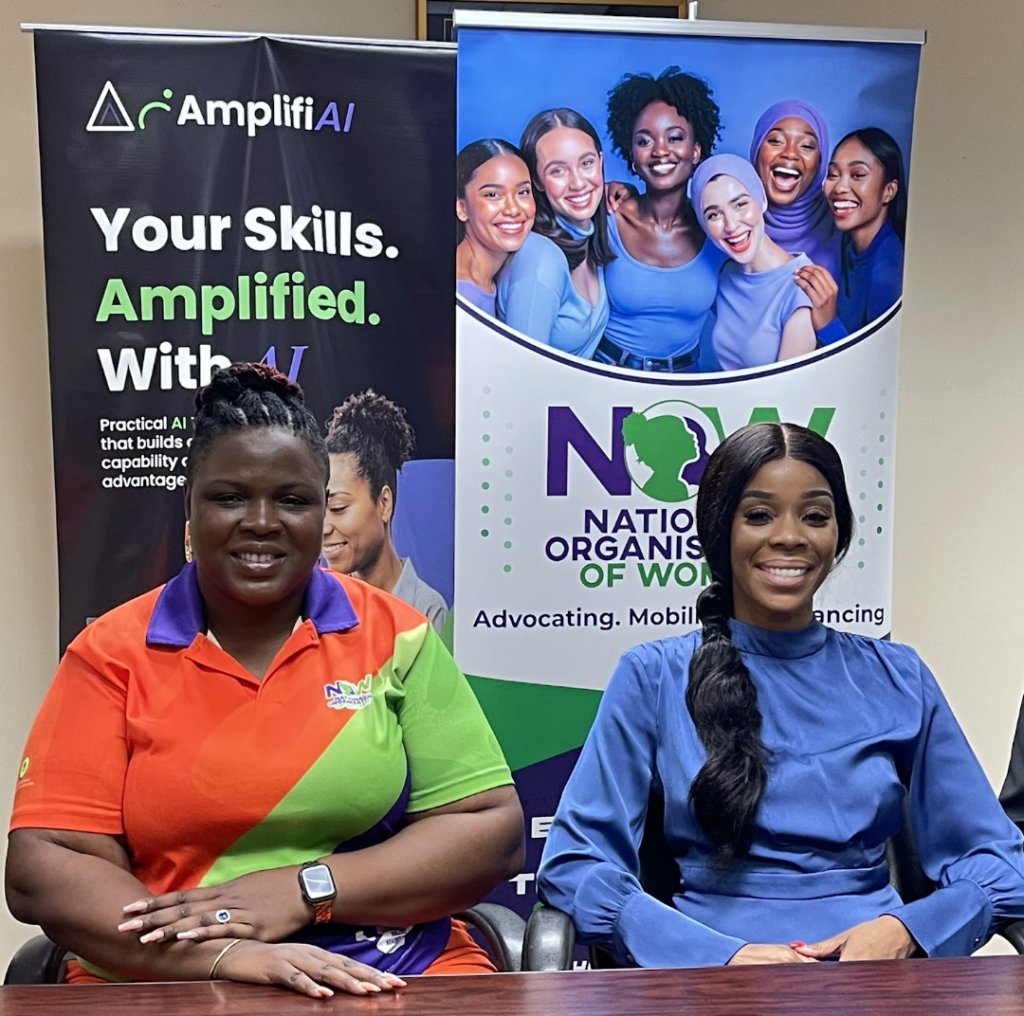
Female small business owners struggling to cover the cost of additional staff as they scale their operations have a new, low-cost tool at their disposal: artificial intelligence. That is the core message from Melissa Savoury-Gittens, president of the National Organisation of Women (NOW), who made the announcement during the official launch of NOW’s groundbreaking new initiative, “Build a Business with AI”. The program is a collaborative effort between NOW and Amplifi AI Inc, a firm specialising in expanding AI capabilities for everyday users, and was launched at the Ministry of People Empowerment and Elder Affairs in Warrens.
Savoury-Gittens explained that the program was developed in direct response to feedback from female small business owners who participated in NOW’s earlier digital marketing workshops. Many of these early participants shared that while their young ventures needed extra administrative support to grow, they simply did not have the budget to bring on a full or part-time paid assistant. This common bottleneck, she argued, is where AI can step in to fill the gap.
“Many small women-led businesses need help, but they cannot afford to pay an assistant. That’s where AI comes in,” Savoury-Gittens said, outlining the wide range of day-to-day administrative tasks AI can handle for cash-strapped founders. From sorting and responding to emails, drafting replies to customer enquiries, organising daily and weekly calendars, to sending automated responses to marketing inquiries, Savoury-Gittens noted that AI can take over many time-consuming routine tasks that pull entrepreneurs away from core business growth work.
Crucially, NOW’s leadership emphasized that the program does not aim to replace future human hiring. Instead, it is designed to support small business owners through their early growth stage, when budgets are too tight to add staff. “Instead of paying for an assistant, we’re going to teach you how to make AI your assistant that can do all the work for you so you can still advance in your business,” Savoury-Gittens explained. This approach lets founders scale their operations gradually, without being held back by administrative bottlenecks before they can afford to bring on human team members.
Janelle Germain, chief executive officer of Amplifi AI Inc, added that the initiative also addresses a second major barrier to AI adoption: unequal access to high-quality AI skills training. Germain shared that Amplifi AI’s internal research found that even senior professionals often only understand the most basic functions of AI, with most people only associating the technology with consumer tools like ChatGPT, limited to simple tasks like writing emails or drafting short documents. In reality, she noted, AI has far broader capabilities that can drive major business growth—if users know how to leverage those tools effectively.
This lack of accessible training has created a new digital divide, Germain argued. People with the financial means to pay for specialised advanced AI training can upskill and get ahead in their industries, while those who cannot afford these costly programs are locked out of the benefits of AI technology. The “Build a Business with AI” program is designed to close this gap by making practical, business-focused AI training free and accessible to members of NOW, removing the cost barrier that keeps many female founders from learning these valuable skills.
Beyond the new AI initiative, Savoury-Gittens also touched on broader challenges facing NOW as it continues its work advancing and empowering women across the region. She acknowledged that the organization is facing a general decline in volunteerism, which has strained its capacity to deliver programs, but noted that NOW is in a stronger position today than it was a decade ago. Even as more women move into positions of public and private sector influence, she cautioned, the work of advancing gender equality and supporting women’s economic empowerment is far from over.
“We still need to continue to fight for women, and we still need to continue to help advance and empower our women,” Savoury-Gittens said. To address the growing scope of NOW’s work, she argued that the organization’s presidency should eventually transition from an unpaid volunteer role to a paid, full-time position, given the massive volume of work required to support the organization’s programs and members. Savoury-Gittens added that NOW currently receives only minimal government funding, forcing the organization to rely heavily on partnerships, sponsorships, and grants to sustain its operations and continue expanding its support for women. “That’s why we need partners, and that’s why we’re out there always asking and pleading to get sponsorship, grants, and all those other things we’re trying to get so that we can sustain the organisation,” she said.