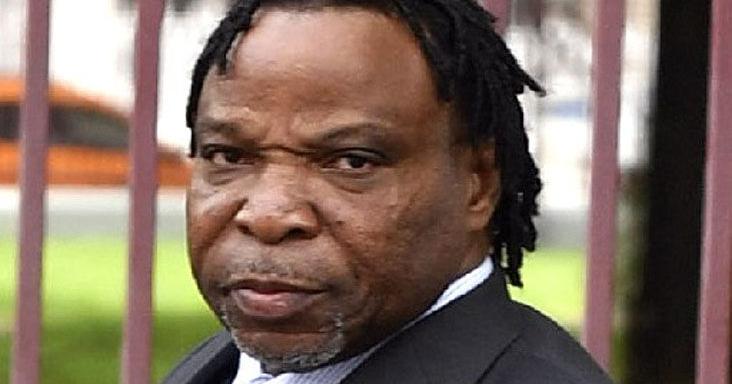
A high-stakes legal battle has emerged in Trinidad and Tobago, where the state-owned Trinidad and Tobago Electricity Commission (T&TEC) has launched formal High Court proceedings against Senior Counsel Keith Scotland—now a sitting government minister—and junior attorney Keisha Kydd-Hannibal over catastrophic missteps in a $2.39 million corporate debt recovery case. The utility, which is seeking millions in compensatory and punitive damages, accuses the legal team of procedural failure, professional misconduct, and deception that left its long-sought claim permanently time-barred earlier this year.
T&TEC first retained Scotland, practicing through his Virtus Chambers, in November 2022 to pursue unpaid electricity charges totaling $2,392,220.11 from local food manufacturer Flavorite Foods Ltd, along with accumulated interest and legal costs. According to T&TEC’s August 27 Statement of Case, led by former attorney general Anand Ramlogan SC, what followed was a cascade of unreported procedural errors and false misrepresentations that ultimately erased the utility’s legal right to recover the debt when the statutory limitation period expired in January 2025.
The first debt recovery claim, filed in December 2022, was automatically struck from the court’s docket after Scotland’s team failed to submit a proof of service affidavit and move for default judgment, per T&TEC’s allegations. Rather than disclosing the dismissal to the utility, T&TEC claims Scotland intentionally misrepresented that the original claim had been voluntarily withdrawn and re-filed—a false statement he knew was untrue by September 2023 at the latest. Scotland acknowledged in pre-action correspondence that he instructed Kydd-Hannibal to re-file the claim and pursue default judgment if Flavorite Foods failed to mount a defense, court documents state.
A second claim was filed in October 2023 without T&TEC’s formal approval. Over the course of 2024, the utility says it was repeatedly told an application for default judgment was already pending before the court, when in reality no such application was ever submitted. By August 11, 2024, the second claim was also automatically struck out for inactivity, a development T&TEC was never informed of. A third, unauthorised claim filed later in 2024 was never properly served on the defendant and was also automatically dismissed in August 2025, again with no notification to T&TEC.
T&TEC holds Scotland personally liable for the failures, arguing that he was the only attorney formally retained under a written retainer agreement, and he bore ultimate responsibility for overseeing all litigation activity. The utility alleges he failed to monitor court deadlines, ensure proper filing and service of claims, pursue default judgment, and keep T&TEC updated on the true status of the proceedings. Critically, when Scotland was appointed to government in August 2024 and ceased private legal practice, he failed to complete an orderly, transparent handover of the active case to new counsel, leaving T&TEC in the dark about the collapsed claims.
In addition to claims of breach of contract and professional negligence, T&TEC has advanced an alternative claim of deceit centered on the false representation that the first claim was withdrawn and re-filed. The utility argues Scotland knew the first claim had already been struck out, yet either made, approved, or allowed the false statement to stand without correction. If the court finds Scotland did not make the misrepresentation himself, T&TEC argues Kydd-Hannibal did so falsely.
Scotland has forcefully denied all allegations through his legal team, pushing back against T&TEC’s narrative. He admits to drafting the original claim form and statement of case, and acknowledges learning the first claim was automatically struck out, before advising the matter be re-filed. However, he claims Kydd-Hannibal subsequently informed him the second claim had been properly served, no defense had been filed, and the default judgment application had been fully prepared. Scotland says when he joined the government in August 2024, he notified T&TEC he could no longer practice and proposed handing the full file to Kydd-Hannibal, who he claims was separately retained by the utility as instructing counsel. He also denies any involvement in or knowledge of the third unauthorised claim.
T&TEC rejects both Scotland’s claims of a separate retainer for Kydd-Hannibal and his assertion that the lawsuit is motivated by political gain. The utility notes the only written retainer agreement was issued directly to Scotland, with no separate agreement for Kydd-Hannibal, and says its legal action is rooted in the written contract and Scotland’s own acknowledged role in the litigation.
The full scope of the procedural failure only came to light for T&TEC in 2026, by which point the limitation period for bringing a new debt recovery claim had long expired. T&TEC argues that if it had been informed of the failures earlier, it could have hired new counsel and taken immediate steps to preserve its claim. The utility is now seeking damages equal to the full $2.39 million value of the lost debt claim, plus $300,000 plus value-added tax to cover investigative and remedial legal costs, as well as aggravated and exemplary damages. It has asked the High Court to grant full relief for breach of contract, negligence, or alternative claims of deceit and misrepresentation, plus accrued interest and legal costs.