Local residents and environmental campaigners in St. Andrew have banded together to press national authorities for stronger protections for Long Pond, a ecologically and culturally significant coastal wetland that they warn is facing irreversible damage from unregulated off-road vehicle use, unchecked littering, and lax visitor management.
The collective made their case at Thursday’s St. Andrew Ideas Forum, hosted at Alleyne School, where they emphasized that the designated natural heritage site is not receiving the respect and protection it mandates, and outlined a series of urgent reforms centered on expanded community participation in the area’s governance.
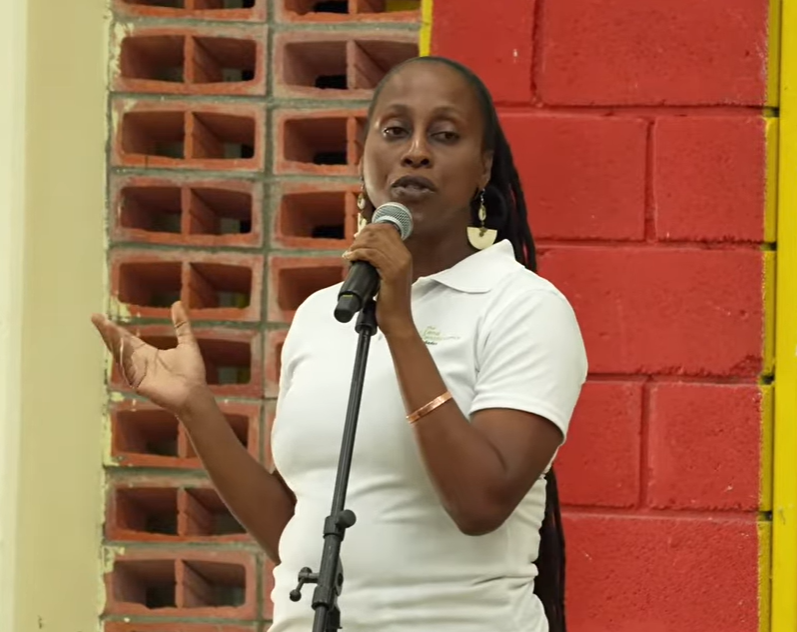
Long Pond project coordinator Kellyann Alicott led calls for a community co-management model, arguing that local residents should not be sidelined in decisions about a landscape that forms part of their daily lives. “The people in the community don’t want to be seen as just a visitor in their own home,” Alicott said. “If we’re positioning Long Pond as a conservation area with shared community stewardship, we have to center their needs and priorities in all planning.”
Alicott stressed that formal, clear usage guidelines must be implemented for all visitors—both local and international—to set clear boundaries for activity in sensitive zones. Without universal standards for conduct, she argued, long-term preservation of the site will be impossible. She also called for expanded environmental education that builds a culture of respect for natural heritage sites from early childhood through secondary and tertiary education, extending beyond Long Pond to other sensitive sites across Barbados including Turner’s Hall Wood.
Framing Long Pond as far more than just an environmental asset, Alicott described it as a space of collective memory, cultural heritage, and community relaxation with the potential to become a landmark for St. Andrew. She called for the site to be integrated into broader national park development plans.
Selena King, co-founder and director of the St. Andrew’s Community Development Commission, echoed these concerns, highlighting ongoing damage to Long Pond’s beach and critical sand dune systems from unregulated off-road vehicle activity. Her organization is currently partnering with environmental scholar Professor Robin Mahon on dune restoration and protection efforts, noting that the wetland and dunes play an irreplaceable role in shielding St. Andrew’s low-lying coastal communities from coastal erosion and storm surge.
“Off-road drivers are tearing up the beach, destroying native vegetation and wildlife habitat on the dunes,” King explained. “We need government officials to partner with us to protect this landscape. The wetland here is non-negotiable to protect, especially for our vulnerable coastal communities.”
King also pointed to the untapped potential of St. Andrew to grow community-led ecotourism, an industry that could generate new local jobs while expanding and diversifying Barbados’ overall tourism product. To resolve the conflict between off-road recreation and conservation, she proposed the government create a designated, dedicated off-roading zone—similar to the Bushy Park motor racing facility—to draw activity away from sensitive areas, and formally ban off-road vehicle access to Long Pond beach and other ecologically critical landscapes. “Long Pond is home to hundreds of vulnerable bird and animal species, and we have a duty to protect those habitats,” she added.
Environmental researcher Dr. Ariana Marshall told the forum that both clearer governance rules and deeper community engagement are critical to Long Pond’s future, adding that the site offers a unique opportunity to connect young Barbadians to hands-on environmental stewardship and eco-entrepreneurship. She argued that young people should be included in planning from the earliest stages, rather than only learning about conservation in abstract classroom settings.
“Long Pond can be the foundation for coordinated programs that tackle environmental challenges while giving young people tangible opportunities,” Dr. Marshall said. “They can see people creating documentaries, developing sustainable eco-products, and build careers around this work—they don’t just have to follow instructions about conservation.” She proposed launching a formal eco-entrepreneurship program tied to the Ministry of Education’s existing community service learning initiative, a model that would build young people’s environmental appreciation while creating economic opportunities for surrounding communities.
Minister of Education Chad Blackman confirmed that the national community service learning program, branded “60 hours at 60,” will roll out across all Barbadian schools this coming September. All students will complete 60 hours of structured community engagement working with local groups and institutions over the academic year, with a focus on building capacity in sustainability, agriculture and other public interest areas. Blackman encouraged all Barbadians to volunteer and participate in the initiative, which is designed to give young people clear pathways to contribute to national development.
Long-time St. Andrew resident Hedda Phillips-Boyce raised additional concerns about widespread littering across the parish, noting that plastic bottles, food packaging and other waste accumulate in storm gutters, a problem that becomes even more visible after public gutter cleaning operations. She called for targeted public service announcements to reinforce a culture of keeping public spaces clean across the island, as well as more strategically placed waste skips to improve public waste access. She also urged greater policy focus on expanding recycling infrastructure, particularly for plastic waste.
Collectively, the stakeholders emphasized that Long Pond’s value extends far beyond its biodiversity: it is a core part of St. Andrew’s cultural identity, a natural barrier protecting coastal communities, and an untapped economic asset that requires urgent government partnership to preserve for future generations.