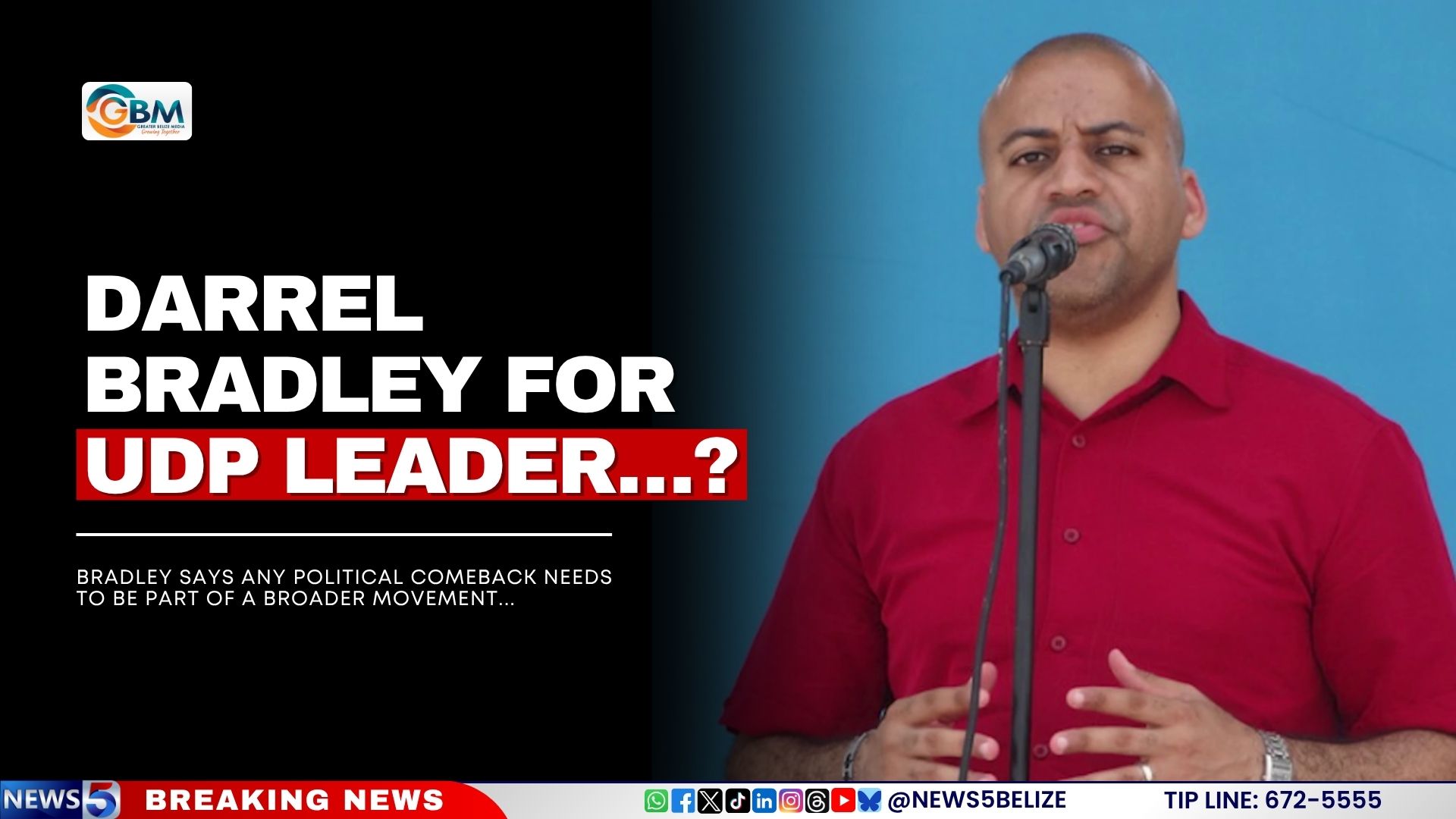
Nearly 11 years after his narrow electoral defeat, former Belize City mayor and long-time United Democratic Party (UDP) figure Darrel Bradley has opened the door to a potential political comeback – but only on the condition that his party commits to substantive, meaningful structural and policy reform.
Bradley last appeared on a general election ballot in 2015, when he lost the Caribbean Shores constituency seat to People’s United Party incumbent Kareem Musa by a razor-thin margin of just 56 votes. Since that defeat, he has stepped back from active electoral politics, but in a recent statement, he confirmed that leadership ambitions remain and a return to the public political arena is not off the table.
“I do have a desire to return to politics, and that could happen sooner rather than later,” Bradley said. “But I want to be clear: the change this country needs does not rise or fall on one individual. This is a responsibility I take very seriously, and any comeback I make will be part of a broader collective movement, not a solo return to the spotlight.”
Bradley emphasized that meaningful national progress in Belize requires a coordinated team of leaders united by principled governance and a commitment to moving the country forward. “Change has to come from a cadre of people dedicated to high ideals, not just one person stepping back into politics,” he explained. “I am ready to take on the responsibility of leadership if that movement comes together, but that movement must include many other people working shoulder-to-shoulder to build a renewed, reformed Belize.”
A core demand Bradley has laid out for the UDP is a shift away from protest and criticism alone toward the development of a concrete, actionable policy platform. For years, he noted, the party has focused on public demonstrations and calling out government shortcomings, but it has not prioritized articulating clear policy solutions that would drive change once in office.
“We have spent a lot of time talking about protests and highlighting the problems facing our country, which is important, but now we need to double down on outlining exactly what concrete policies we will advance to deliver change,” Bradley said. “This is not some untested, complex concept – countries around the world grapple with these same challenges, and there are proven frameworks we can draw from.”
He pointed to two key reform areas where Belize already has the legal foundation in place, but lacks meaningful enforcement: campaign finance regulation and whistleblower protection. Belize is already a signatory to the United Nations Convention Against Corruption (UNCAC), and model legislation for both policy areas already exists within the country’s legal framework, Bradley argued. The critical gap, he says, is strengthening enforcement mechanisms and holding all public officials – including party leaders – accountable for upholding these rules.
Bradley’s comments come as the UDP navigates internal conversations about party renewal ahead of upcoming electoral cycles, with many grassroots members pushing for greater transparency and policy clarity to rebuild voter trust ahead of the next general election.