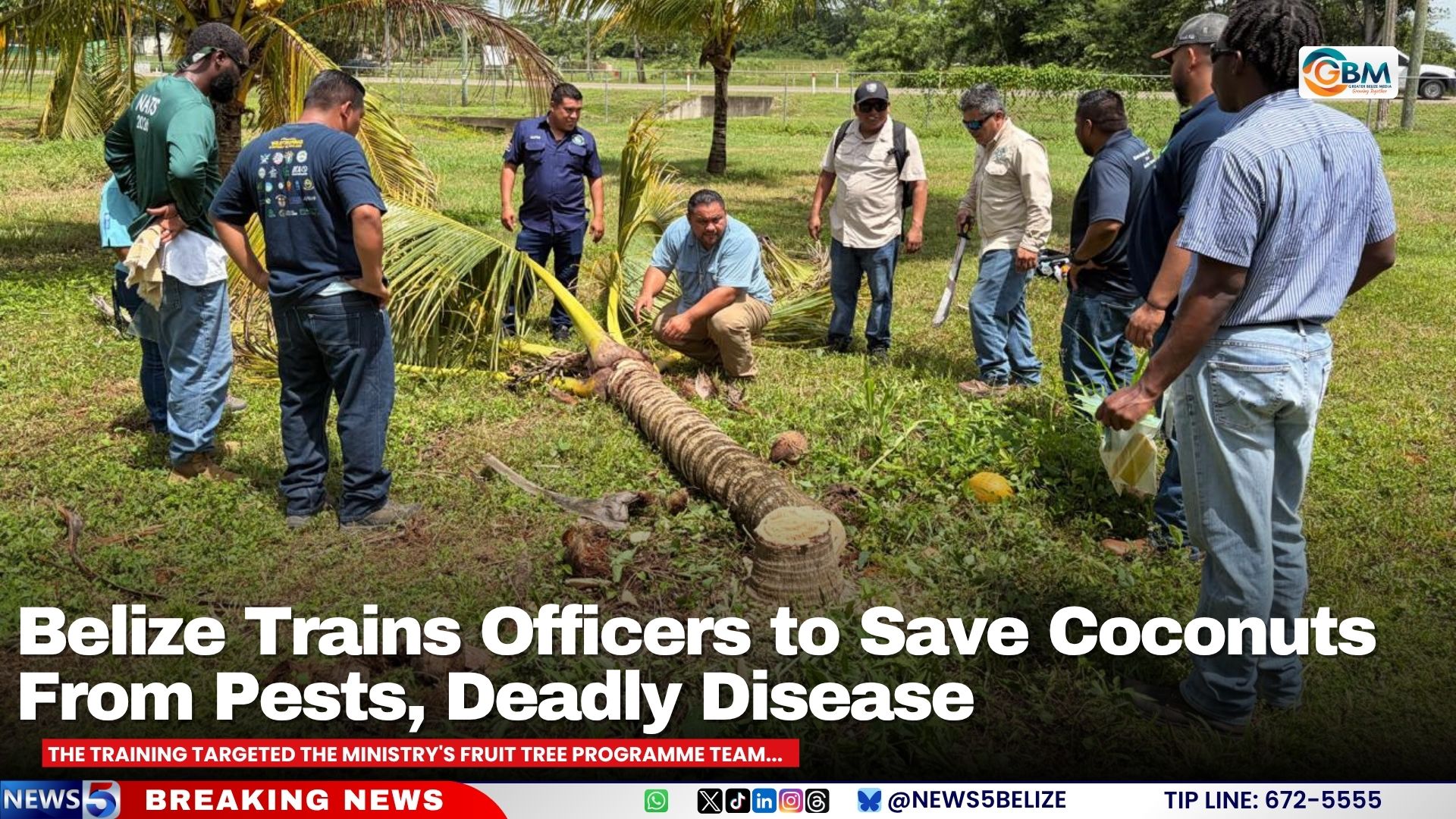
Belize’s national Ministry of Agriculture, Food Security and New Growth Industries has successfully concluded a five-day specialized training workshop hosted in partnership with the United Nations Food and Agriculture Organization (FAO), designed to boost the country’s capacity to detect and control invasive pests and lethal diseases that put its critical coconut sector at risk.
This Training of Trainers Workshop focused on coconut pest and disease management forms a core component of a broader FAO technical cooperation initiative that supports the revision of Belize’s National Rural Development Strategy, with targeted investment in the coconut value chain. The effort also aligns with FAO’s global “One Country One Priority Product” campaign, which works to foster green business development and inclusive sustainable growth for high-potential local agricultural sectors like Belize’s expanding coconut industry.
The training cohort was carefully selected to maximize national impact, including members of the Ministry’s national fruit tree program team, district-level agricultural extension officers, and technical officers from the Caribbean Agricultural Research and Development Institute (CARDI) who oversee coconut production activities across every region of Belize.
Over the first four days of the workshop, participants engaged in deep-dive technical sessions centered on integrated pest management practices, covering the most pressing threats to Belize’s coconut crops: the invasive coconut weevil, damaging red mites, and the lethal fungal red ring disease. All instructional content prioritized skills for accurate biological identification of threats and adoption of modern, low-impact management approaches, equipping participating officers to deliver faster, more precise diagnoses when responding to outbreaks in rural growing areas.
The workshop concluded with a full day of practical, hands-on learning split between local coconut plantations and a diagnostic laboratory. In the field, officers practiced on-the-ground identification of active red mite infestations and visible symptoms of fungal disease; in the lab, they mastered the laboratory protocols needed to confirm cases of red ring disease in infected plant tissue samples.
Following the successful completion of the training, national agricultural officials announced that the newly trained group of experts will move into the second phase of the initiative this fall. Between September and October, the cohort will roll out the identification and management skills they learned to extension teams across all districts of Belize. The long-term goals of the rollout are twofold: safeguard the livelihoods of small-scale coconut farmers who make up a large share of the country’s producers, and build greater climate resilience for Belize’s coconut industry as it faces growing agricultural threats from invasive species.