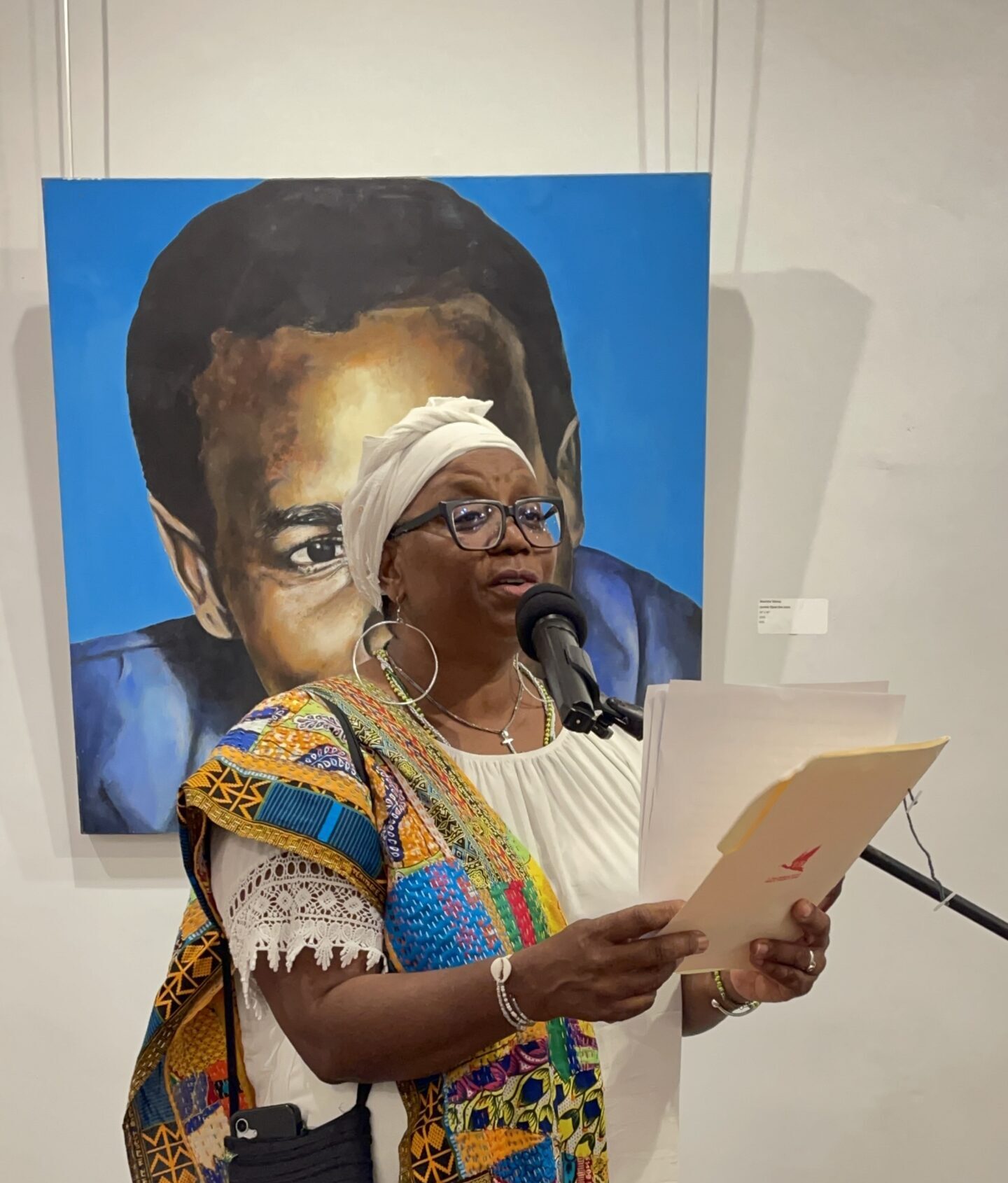
On a sunny Thursday lunchtime at Bridgetown’s iconic Queen’s Park, a diverse gathering of musicians, dancers, visual artists, and spoken-word performers came together to honor the indelible legacy of Barbadian music pioneer Jackie Opel, marking what would have been his 89th year since birth. Born Dalton Sinclair Bishop on August 27, 1937, Opel revolutionized Caribbean music by creating spouge — the genre now widely recognized as Barbados’ national sound — and built a cross-island cultural footprint that stretched from his hometown to Kingston, Jamaica, decades before his influence was fully celebrated on a national scale.
Leading the tributes was Andrea Wells, Chief Cultural Officer of Barbados’ National Cultural Foundation (NCF), who framed Opel’s contribution as far more than a musical milestone: he was a foundational figure in shaping the island’s independent national identity, she argued. “Today we celebrate the legacy of Jackie Opel, who was an artist that liberated souls through his voice, provoked imagination with his lyrics, and pushed us further in defining our national identity,” Wells told the gathered crowd, which included Opel’s daughter, three grandchildren, and great-grandchildren.
To carry forward Opel’s creative influence into a new generation, the NCF partnered with the Prime Minister’s Office Division of Culture to launch the 2025 Jackie Opel Residency Lab, an initiative designed to support contemporary artists creating work rooted in Opel’s life, career, and cross-cultural impact. The residency invited creators across visual art, music, and dance to dive deep into Opel’s archives and even travel to Jamaica to trace his professional connections and artistic influence there. Two emerging Barbadian visual artists, Safia Stoute and Starlight Talma, received residency funding to develop full collections of work inspired by Opel, with several pieces featured in the on-site Rewind exhibition at Queen’s Park. Wells explained that the artists’ work unpacks under-told layers of Opel’s story, from his childhood growing up on Nelson Street in central Bridgetown to his rapid rise to regional fame. “Jackie is Bajan. He was from town. Nelson Street was his stomping ground — the jukeboxes, the people, the energy,” Wells noted.
Wells emphasized that Opel’s 1970 return to Barbados after years working in Jamaica was a turning point for the island’s cultural transition to full nationhood. “His return to Barbados in 1970 seems like fateful ordination. Jackie was sent back to help us transition to nationhood, and this is most evident in the creation of spouge, which is now considered the music of Barbados,” she said.
For musician Justin Taylor, one of the residency participants, Opel’s artistic range extends far beyond his iconic creation of spouge. Taylor has long planned to release a full concept hip-hop album centered on Opel, arguing that the pioneer’s innovation as a soul singer has been underappreciated by modern audiences. “I think that Jackie was so much more than just spouge music,” Taylor said. “He was a top soul singer and really creative… Nobody else was doing that [the track *Tears Are Falling From You*] in the 60s. He was Kutton before Kutton.”
Taylor also highlighted Opel’s widespread recognition in Jamaica during the 1960s, where he recorded at the legendary Studio One and became a regular fixture on popular Friday sound systems. “Jackie was fairly big in Jamaica… He was a voice that was known to the people,” he said. For the residency project, Taylor chose to explore Opel’s worldview rather than rehashing discussion of spouge, and he performed two original works, *They Don’t Know Jackie* and *One More Chance*, for the Queen’s Park crowd.
The cross-disciplinary tribute featured a range of other original works created for the anniversary: spoken-word artist Adrian Green presented a piece drawing from Opel’s life story; veteran musician Desmond Weekes debuted a new spouge track titled *I’ve Got a Mobaton of Love For You*; and dancer and choreographer Keisha Dowridge created *Wharf Boy*, a solo performed by Naiobi Rudder that references Opel’s childhood practice of diving for coins thrown by tourists at the Bridgetown Wharf. Dancers from the Mark Burgess Dance Academy performed choreographed pieces to classic spouge between each tribute, keeping Opel’s iconic sound central to the celebration.
The Queen’s Park event also hosted the Rewind exhibition, sponsored by the Central Bank of Barbados as part of the NCF’s Emancipation exhibition series *Push, Pause, and Rewind*. Following the daytime celebration, events continued into the evening at CARIFESTA House, where the NCF hosted a dedicated Jackie Opel Night to extend the tributes.
Closing the daytime event, Wells reaffirmed that Opel’s legacy continues to resonate across the Caribbean and beyond. “Jackie Opel has left a legacy that stretches far beyond the shores of Barbados, one that we are proud of as Barbadians and Caribbean people,” she said.