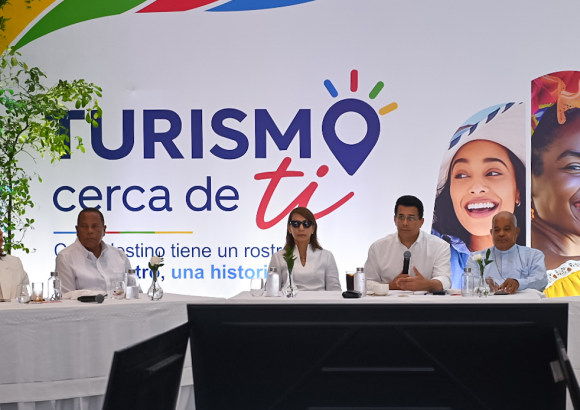
The Dominican Republic’s tourism sector has taken a major step toward inclusive, community-focused growth with the official launch of the national initiative “Tourism Close to You”, unveiled by Tourism Minister David Collado in the coastal province of Puerto Plata. The groundbreaking program is designed to unify a broad cross-section of tourism stakeholders — from local communities and small business owners to national authorities and industry operators — to collectively elevate four core pillars of Dominican tourism: destination safety, environmental and cultural sustainability, service quality, and coordinated organizational planning.
At the launch event, Minister Collado centered his remarks on the program’s foundational principle: that tourism development must be “with the people and for the people”. He stressed that local communities and frontline tourism workers are the backbone of the country’s world-class tourism experience, noting that every memorable visitor experience is rooted in the work of local families, neighborhood residents, and daily industry employees. In line with this community-centered approach, Collado emphasized the Ministry of Tourism’s ongoing commitment to proactive listening and collaborative decision-making with all sectors that contribute to the country’s tourism economy.
Minister Collado also addressed a key factor in global tourism competitiveness: national security. Drawing on 2024 data from the Inter-American Security Observatory, an agency under the Organization of American States (OAS), he confirmed that the Dominican Republic ranks among the safest major tourist destinations in the Latin American and Caribbean region — a standing that positions the country for continued inbound visitor growth.
In Puerto Plata, the first region to roll out the program, “Tourism Close to You” has brought together every segment of the local tourism value chain. Participants include municipal and provincial authorities, local business associations, regional tourism boards, hotel groups, independent restaurants, ground transportation providers, tour operators, certified tourist guides, local artisans, airport and port management teams, public health service providers, and grassroots community organizations.
The entire initiative is structured around three clear, actionable core pillars that guide all programming and investment.
The first pillar focuses on sustainability and proactive destination management. Work under this umbrella includes long-term strategic planning for tourism growth, responsible land-use management to prevent overdevelopment, improved visitor signage throughout popular destinations, and targeted protection of the country’s unique natural ecosystems and cultural heritage sites.
The second pillar centers on enhancing tourist security. This includes expanding and improving visitor assistance services for domestic and international travelers, strengthening protections for children and adolescents who interact with the tourism sector, and upgrading on-the-ground surveillance and regulatory oversight in high-traffic tourist areas.
The third and final pillar covers comprehensive tourism regulation. This involves updating outdated industry rules to match modern tourism needs, ongoing supervision of tourism services to ensure consistent quality, and strict enforcement of national service and safety standards across all industry segments.
Looking ahead, the Ministry of Tourism outlines a clear long-term vision for the initiative: to ensure that the Dominican tourism industry’s continued expansion delivers tangible, widespread benefits across all levels of society. Rather than concentrating growth in the hands of a small group of stakeholders, the program aims to turn industry growth into greater economic opportunity for local residents, improved community well-being, and higher overall quality of life for Dominican people living in tourism-dependent regions. Ultimately, the initiative seeks to build a national tourism ecosystem that is safer, more sustainable, better organized, more inclusive of local communities, and more competitive in the global travel market.