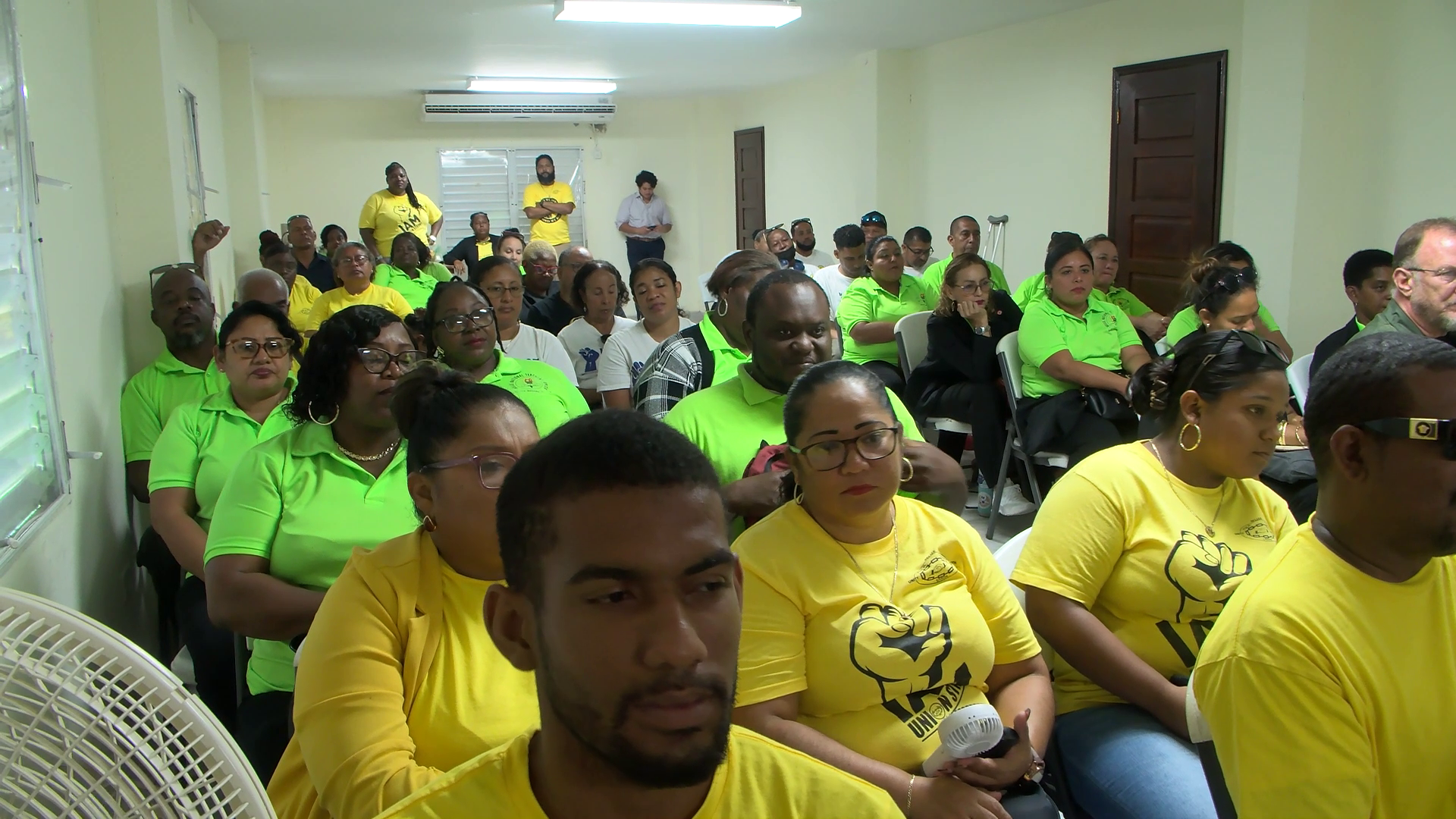
Dated August 27, 2026, a new discussion around labor advocacy in Belize has emerged following a formal set of demands delivered by the National Trade Union Congress of Belize to the national government. The union confederation is calling for sweeping revisions to how statutory bodies operate, framing these changes as critical to safeguarding workers’ rights and strengthening governance across the country’s public sector. But one prominent Belizean political voice says the current conversation misses a deeper, more foundational requirement for meaningful change.
Darrel Bradley, a trained attorney and political scientist who was once seen as a promising emerging figure in Belize’s political landscape, has stepped forward to share his perspective on the ongoing labor dispute. In recent years, Bradley has stepped back from the forefront of domestic partisan politics to pursue a doctoral degree in political science based in Canada, a move that has given him a unique analytical lens on the core tensions playing out in his home country. His academic research already centers on the very issues now driving Belize’s labor conflict: good governance, systemic reform, and the risks of unaccountable concentrated political power. He has closely tracked the unions’ campaign and argues that even the strongest political will from the current administration will not deliver the lasting changes workers are demanding.
In comments recorded for a national evening television broadcast (transcribed in full for this online publication), Bradley laid out his core argument: that legislative reform alone cannot fix deep-seated problems in Belize’s public sector. “What I would say as a wider problem is that we need to create cultural and institutional norms and conventions that create openness in government so that we can have the best laws but the best of laws may also lead to a very inefficient and corrupt system,” Bradley explained. “What we need is a culture of leadership that promotes ethics, that promotes transparency, and promotes character in public office. And if we have that, then I think we would have good laws. It actually starts with that first.”
Bradley has reviewed the unions’ 11-point reform package in depth, and acknowledges the merit of many of their specific proposals. But he maintains that institutional and cultural change must precede new legislation to create effective long-term governance. “We need to get into a system where there is a value of ethics and integrity in the public service and in the administration of government and in the political space. And that discussion must come first before there is the creation of effective laws or mechanisms to champion good governance,” he said.
A core gap Bradley identifies is a widespread misunderstanding of the role of political leadership in Belize. He argues that current norms frame top officeholders as sole authorities, rather than the collaborative facilitators they should be. “Because I am the leader, because I am the prime minister, because I am the cabinet, it does not mean that my voice is the most important voice. It means that I am a facilitator. I am a convener of ideas. And I will facilitate the overall development and growth of the economic and political space. That’s actually a very different philosophy and view of what leadership is,” Bradley noted.
This publication notes that the text above is an exact transcript of Bradley’s televised remarks, with Kriol language portions adapted to a standardized spelling system for readability.