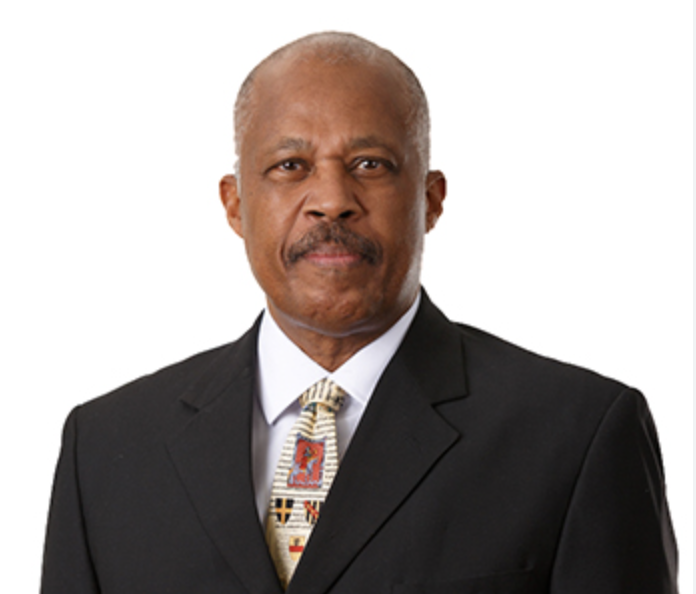
The tragic death of pioneering Black academic Professor Jason Arday has sparked a searing indictment of systemic anti-Black racism in British universities, led by leading higher education leader and racial justice advocate Professor Sir Hilary Beckles, Vice-Chancellor of the University of the West Indies (UWI).
Arday made history in 2023 when he became the youngest Black scholar appointed to a full professorship at the University of Cambridge, taking up the role of Professor of Sociology of Education. The groundbreaking appointment drew global attention, but just a year later, on August 14, the 40-something scholar was found unresponsive at his south London home and pronounced dead at the scene. Police have ruled out suspicious circumstances, and an initial coroner’s inquest held this week was adjourned to allow for further investigation into the death.
Arday’s death came just nine days after he resigned from his post at Jesus College, Cambridge, facing public accusations of plagiarism and intense scrutiny of gaps in his academic record and career trajectory. Before his death, Arday had forcefully denied all claims of academic misconduct and plagiarism. In the wake of the scholar’s passing, Beckles — a prominent historian and chair of the CARICOM Reparations Commission — has issued a blistering statement tying Arday’s treatment and untimely death to deep-rooted, institutional anti-Black racism that persists across the United Kingdom’s higher education sector.
“The public destruction of the living and life of this young, accomplished scholar has resonated globally as a gruesome, networked catastrophe,” Beckles wrote, arguing that Arday’s experience cannot be disentangled from the centuries-long history of anti-Black racism embedded in British public institutions. “It is impossible to separate the loss of Professor Jason Arday’s life from the truth embedded in the resolution. Anti-black racism at its most inhumane and life-destroying intensity has always been implemented by the minds and mostly invisible hands within public institutions.”
Beckles drew a direct historical parallel to another trailblazing Black Caribbean scholar, Sir Arthur Lewis, the Saint Lucian economist who would go on to win the Nobel Prize in Economics. When Lewis was tapped for a professorship in economics at the University of Liverpool in 1947, Beckles recalled, widespread white resistance blocked the appointment — at the time, no British university had ever hired a Black professor, and Liverpool refused to become the first. Lewis ultimately moved to the University of Manchester, where he built his legendary career, but the incident, Beckles argues, is proof that the systemic racial barriers that blocked Lewis a generation ago remain unaddressed in 21st-century British academia.
Beckles also challenged the core narrative of academic excellence that leading British institutions promote, noting that most historic UK universities are still grappling with their deep financial and ideological ties to chattel slavery, colonialism, and apartheid. He questioned whether a university can truly claim to deliver world-class excellence when it maintains an unspoken “race ceiling” that limits the advancement and well-being of Black scholars at its core.
“Excellence is no longer seen as confined to curriculum, teaching, research ranking, and student satisfaction,” Beckles argued. “It is equally about the ethical values of pedagogy and genuine commitment to the enlightenment of humanity.”
Beyond structural analysis, Beckles placed direct blame on institutional failure, saying Arday was failed by a total lack of formal and public support when he faced public attacks. “The ending of Arday’s life resonates everywhere as evidence of the lack of institutional and public support for a human who deserved a right to public help,” he said. “This is not a ‘who done it’ mystery. Collective ownership is the place to begin looking for the weapon.”
Beckles added that the crisis triggered by Arday’s death is not unique to Cambridge, warning that similar failures will play out at other institutions unless widespread change is implemented. “The university cannot easily set aside the tangled web of warfare unleashed upon its member. The gauntlet has befallen Cambridge University today, but it will fall elsewhere tomorrow,” he said. He called on all British universities to launch urgent reviews of the institutional support systems available to Black academics facing public scrutiny, and to confront the ongoing racial inequities that shape campus culture. In framing Arday’s experience as part of a broader centuries-long struggle against colonial racism, Beckles said his death must serve as a catalyst for long-overdue institutional reckoning and change.