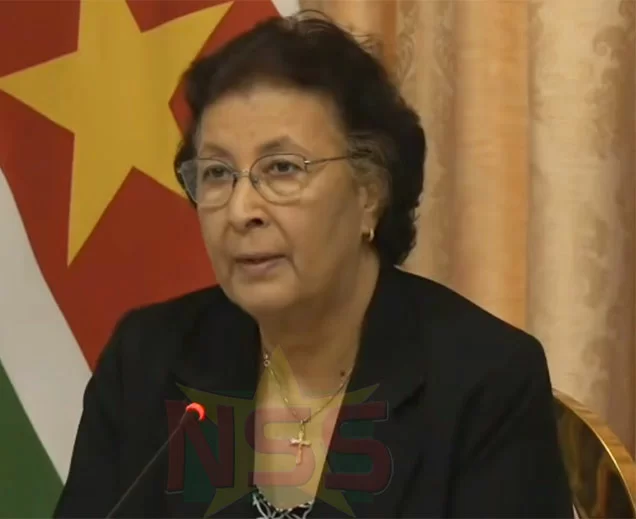
In a breaking press briefing held on August 27, Suriname President Jennifer Simons announced that the national government will formally hold state-owned gold mining company Grassalco accountable for widespread ecological damage stemming from toxic pollution along the Moeroekreek, which has triggered mass fish die-offs in the region.
Preliminary findings from the country’s National Environmental Authority (NMA) have confirmed with high certainty that the pollution originated on a mining concession held by Grassalco, Simons confirmed during the ongoing press conference. Additional test results show that toxic substances remain detectable in fish caught from the affected waterway, leading public health authorities to strongly advise against consuming fish from the area for the foreseeable future. The National Assembly, currently convened for its regular session, is scheduled to receive a full briefing from the administration on the unfolding situation before the end of the day.
According to Simons, the central government only recently received the NMA’s official final report, and Grassalco has already been notified that a formal notice of liability is en route. The document, expected to be delivered by Thursday evening or no later than Friday morning, will outline the government’s claim for damages and initiate discussions on how the company will contribute to remedying the pollution’s far-reaching impacts.
Grassalco has informed the administration that it has already implemented initial corrective measures and relocated the mining unit that operated at the contaminated site, Simons said. However, government officials are still waiting for a formal written account of these actions from the company. Starting Friday, a joint interagency task force including NMA inspectors, national police, military personnel, and other security services will deploy to the Moeroekreek region to conduct on-site inspections. The team will verify whether the relocated mining operation now meets all required national environmental and safety regulations.
Should the inspection find the operation still non-compliant, the site will be immediately ordered to suspend activities pending further corrections, the president announced. Authorities will also launch a deeper probe into the company’s past operational practices at the concession. Simons stressed that the investigation and remediation process is far from over, and the government’s warning against consuming local fish remains in full effect while toxic residues persist.
The president has already held initial consultations with community leaders from Indigenous and local villages in the affected area. On Friday, she will lead expanded talks with community members to share full investigation results, outline potential impacts, discuss upcoming regulatory and remediation measures, and map out the next steps for the response.
Beyond addressing the Moeroekreek incident, the Simons administration is using this case to push for broader regulatory reform of Suriname’s gold mining sector, which has long been linked to widespread environmental degradation in the country’s interior. New and renewed mining permits are currently paused across the country as authorities conduct a full sector-wide audit to map out legal and illegal mining operations across the interior. Authorities are also deploying advanced monitoring technology to track unreported mining activity across remote regions.
The government expects to release a new package of broader protective regulations within two weeks, aimed at safeguarding vulnerable interior regions including community residential areas, critical river ecosystems, and watersheds that are essential to preventing future large-scale pollution events. Simons emphasized that the administration is moving away from the longstanding practice of only responding to pollution incidents with ad-hoc measures, and is working to build a permanent, structural framework for regulating the gold sector and protecting Suriname’s natural environment.
“Gold is found across almost all of Suriname, but we cannot allow prospecting and mining to take place everywhere,” the president stated.