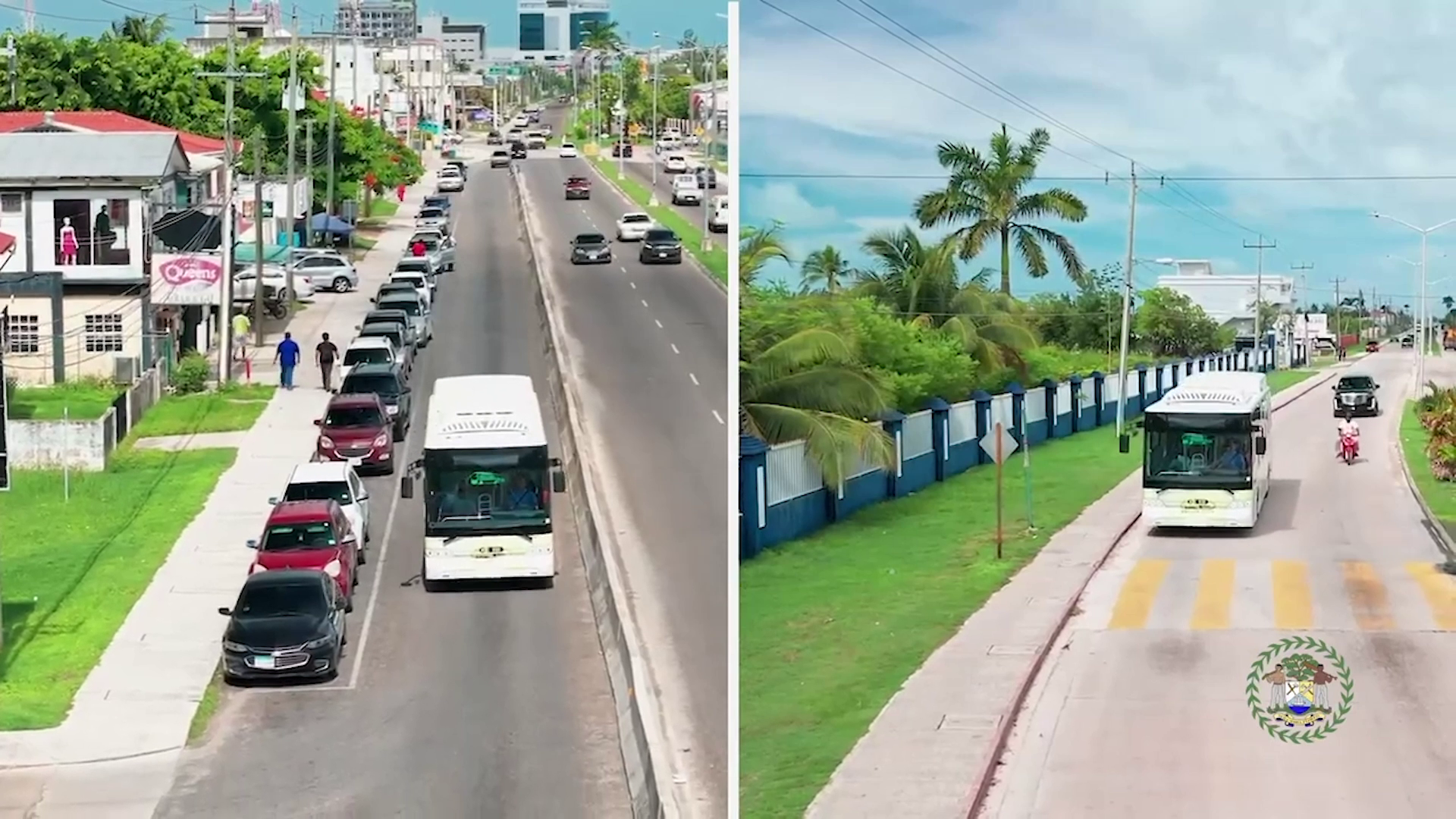
By 2026, Belize’s transportation landscape is quietly shifting toward electrification, as government officials and private sector stakeholders work to build the infrastructure and public support needed for a full transition away from fossil fuel-powered vehicles. Electric cars, buses, scooters and bicycles are increasingly appearing on the country’s roads, but widespread adoption among private motorists remains uncertain as many Belizeans question the upfront costs and long-term reliability of electric vehicles (EVs).
For generations, the roar of combustion engines has been a constant background to daily life in Belize, where thousands of gas and diesel vehicles carry commuters to work, school and errands across the country. Today, that familiar noise is being replaced by near-silence as new EV models like the Sinogold E-400 hit local streets. Belize City, which has emerged as the national leader in e-mobility rollout, frames the transition as a dual win for public health and climate action.
“If we’re a city with low carbon expenditure and a more quiet [electric] vehicle, you are winning on noise pollution and carbon emissions,” explained Neil Hall, E-Mobility Coordinator for Belize City.
While the environmental and quality-of-life benefits are clear, policymakers recognize that those advantages alone will not convince most Belizean drivers to swap their combustion vehicles for EVs. The biggest barrier remains the high upfront purchase price of electric models, a concern that government and industry leaders are working to address by highlighting long-term cost savings.
Dr. Leroy Almendarez, CEO of Belize’s Ministry of Energy, Public Utilities and Logistics, pointed to the volatility of global gas prices that the country has no ability to control, a risk that is eliminated with electric mobility. “If you were running from Belize City to Cayo, you’ll find out that it’s much cheaper” to power an EV than a gas-powered car, he noted.
Private e-mobility businesses like E-Volution Ltd. echo that argument, framing the switch to EVs as a sound financial decision over the lifespan of a vehicle. “When you buy a diesel vehicle or a gas vehicle, let’s say you pay thirty thousand for a newer model vehicle. You’re still going to pay for gas, which would then bring the total cost up to match that of an electric vehicle,” said Isani Napata, Program Director at E-Volution Ltd. By contrast, Napata explained, “buying an electric vehicle for let’s say sixty thousand and you pay twenty dollars in electricity or energy to charge that vehicle, and it could get you from here to Punta Gorda for twenty dollars, you can’t beat that.”
Early data from Belize City’s ongoing electric transit pilot project already supports the case for transition. A 2025 assessment of the program found a 41% reduction in energy costs compared to fossil fuel-powered transit fleets. Even when accounting for the municipal government’s high administrative and management costs, the projected payback period for the initial investment in electric transit is just nine years; for more streamlined operation models, that payback period drops to just four years.
These promising results have led Belize City’s council to fully commit to expanding its e-mobility program, and both the national government and private sector are now pushing for the entire public transportation system to make the switch to electric. This report is part one of a series, with the next installment examining incentives and adoption efforts for national buses, city buses, taxis and dollar vans.