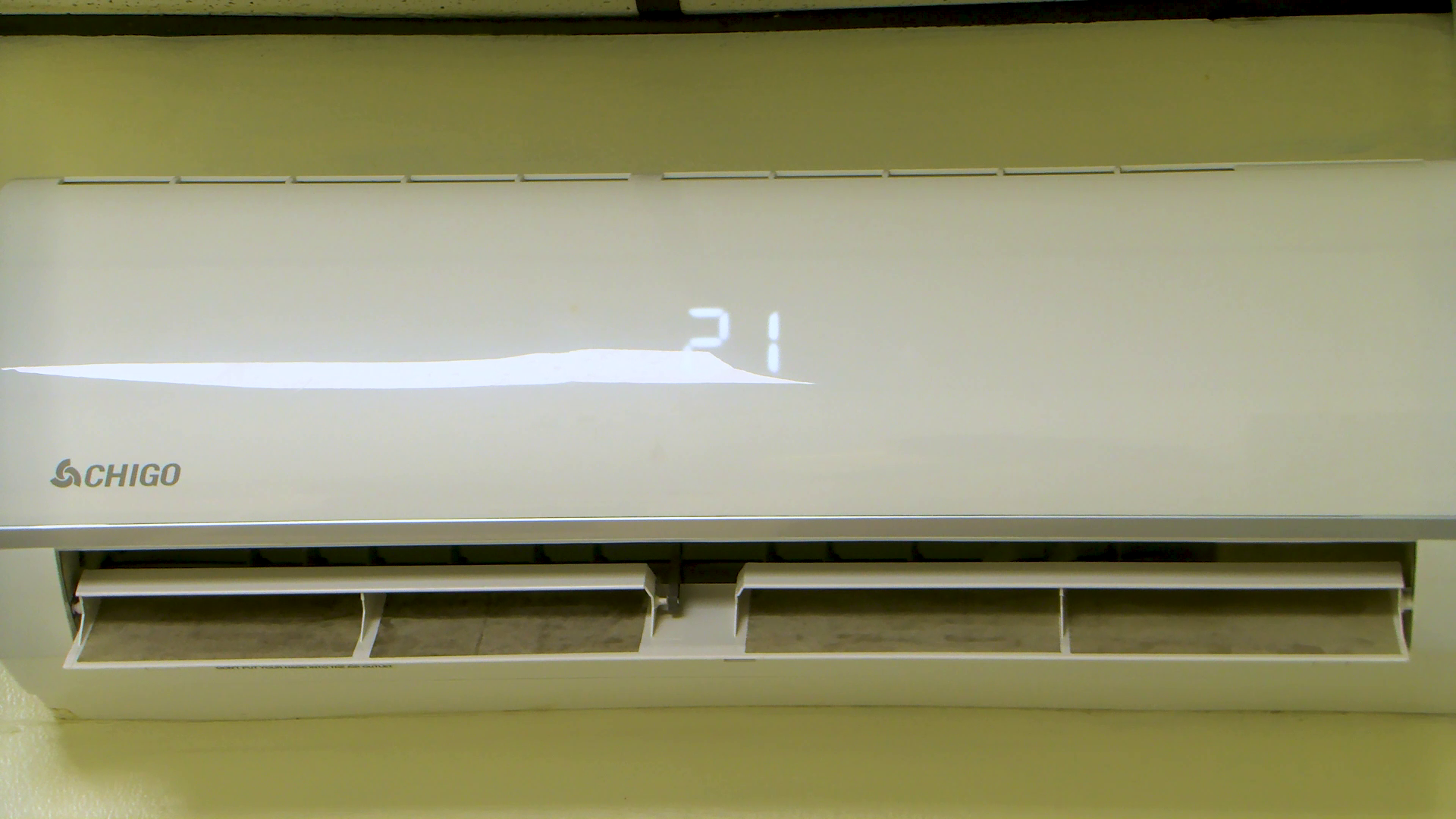
As record-breaking heat becomes more common across Belize, air conditioning has shifted from a luxury for wealthy households to a near-necessity for families across all income brackets. But this growing accessibility comes with a hidden cost: thousands of Belizeans are seeing their monthly electricity bills skyrocket, driven in part by common missteps in AC use that force units to work far harder than necessary.
Energy experts explain that dropping market prices have democratized access to cooling technology over the past decade. “It is across the board, as soon as somebody can afford it, and they are getting much cheaper nowadays, so you start seeing a lot more people from different tax brackets started purchasing ACs,” explained Jordanny Williams, an engineer with FT Williams & Associates. With average summer temperatures climbing year over year, the strain on these units and the power grid has grown accordingly.
Lynn Young, Executive Chairman of Belize Electricity Limited (BEL), notes that the energy demand of AC units rises sharply as outdoor temperatures increase. “An AC for that kind of temperature difference might burn fifty or sixty percent more energy that it normally would burn for the same period of time, for the same indoor temperature,” Young said. This means on the hottest days, cooling can eat through a household’s energy budget far faster than most residents anticipate.
The good news, Williams says, is that most households can cut their cooling-related energy use with simple, low-effort adjustments. One of the most common mistakes he has observed is users setting thermostats to unnecessarily low temperatures. In many residential and commercial spaces across Belize, he has found high-wall mini-split units set to as low as 16 degrees Celsius (60 degrees Fahrenheit), a target that is functionally impossible to reach given most local building construction that lacks heavy insulation in walls, roofs and ceilings. “It doesn’t make the AC cool better or anything like that,” Williams explained. “It just makes it work a lot harder.”
Instead of extreme low temperatures, Williams recommends setting thermostats between 23 and 24 degrees Celsius (73 to 75 degrees Fahrenheit), only dropping the temperature one or two degrees during the most extreme heat waves. He also advises keeping the AC fan set to medium to optimize moisture removal, and scheduling regular professional maintenance to keep units running efficiently. Even small changes to these settings can produce noticeable reductions in monthly energy use, he added.
But while these habits can curb overconsumption, they do not fully explain the steep increases many Belizean households are seeing in their electricity bills. Williams, who follows all of his own guidance, says his own monthly bill jumped by 33% in the last month alone, even though he keeps his thermostat set to 78 degrees Fahrenheit (25.5 degrees Celsius) overnight and never drops it below 75 degrees Fahrenheit (24 degrees Celsius).
“If you did not implement some of these same advices, your bill could have been much higher?” asked investigative reporter Paul Lopez of News Five, who reported on the issue.
“I don’t want to imagine what that bill would be,” Williams responded.
While improved AC habits can slow rising energy costs, the reporter notes that even correct usage does not eliminate steep bill increases, leaving open the question of whether other factors — including BEL’s new smart metering infrastructure — may also be contributing to the higher monthly charges many residents are facing.