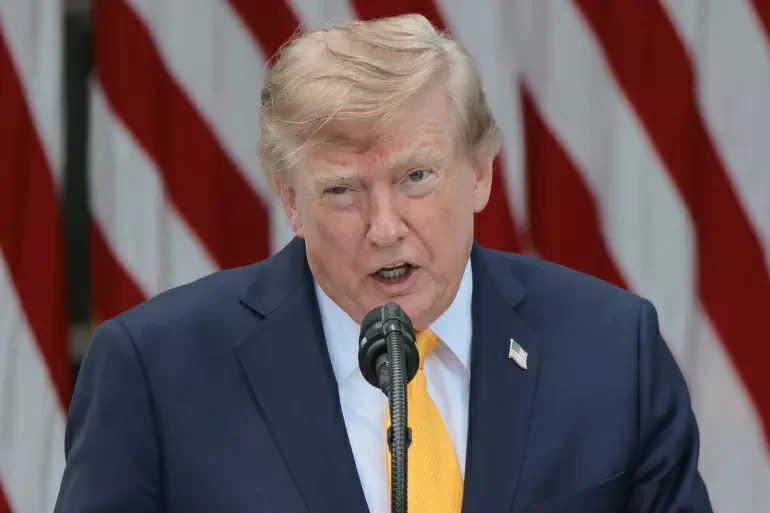
More than five months after the United States launched open conflict with Iran, former U.S. President Donald Trump has stated he has no set timeline for Tehran’s return to diplomatic negotiations to resolve the ongoing standoff. Speaking in an interview with Al Jazeera on Wednesday, Trump emphasized that he is in no hurry to force a diplomatic breakthrough, pushing back against questions about how much time his administration is willing to give Iran to come back to the negotiating table.
Trump pointed to what he called “major successes” for U.S. pressure on the Iranian government, highlighting the severe economic turmoil currently crippling the country: sky-high inflation, a collapsed domestic economy, and harsh government crackdowns on internal protest movements. This new stance marks a clear departure from Trump’s earlier comments shortly after the conflict began in late February, when he predicted the entire standoff would be resolved within just four to six weeks.
Diplomatic progress has stalled since a 60-day memorandum of understanding between Washington and Tehran expired earlier this month without an extension. That agreement, reached back in June, was designed to address key sticking points including freedom of navigation through the Strait of Hormuz, the lifting of U.S. economic sanctions, and the launch of new talks over Iran’s nuclear program.
Just days before Trump’s latest comments, the White House announced a new round of sweeping, toughened sanctions targeting Iran and 60 third-party companies around the globe that conduct business with the Islamic Republic. U.S. officials have described this fresh pressure campaign as “economic D-Day,” with the administration officially naming the initiative “Operation Economic Outcast.”
The current open conflict between the U.S. and Iran officially erupted in late February, capping off years of steadily escalating tensions over Iran’s nuclear activities, its regional influence projections, and long-running international sanctions. The U.S. has combined military moves and economic pressure to force concessions from Tehran, a strategy that has been met with Iranian countermeasures and sent regional volatility soaring across the Middle East.
Today, the complex, high-stakes standoff continues to threaten broader regional stability, while diplomatic efforts to find a negotiated solution move forward at a painstakingly slow pace. Trump’s rejection of a fixed negotiation timeline reflects a deliberate strategic shift toward patience: the administration is continuing to ramp up economic pressure on Iran while refusing to tie itself to any rigid deadline for diplomacy to produce results.