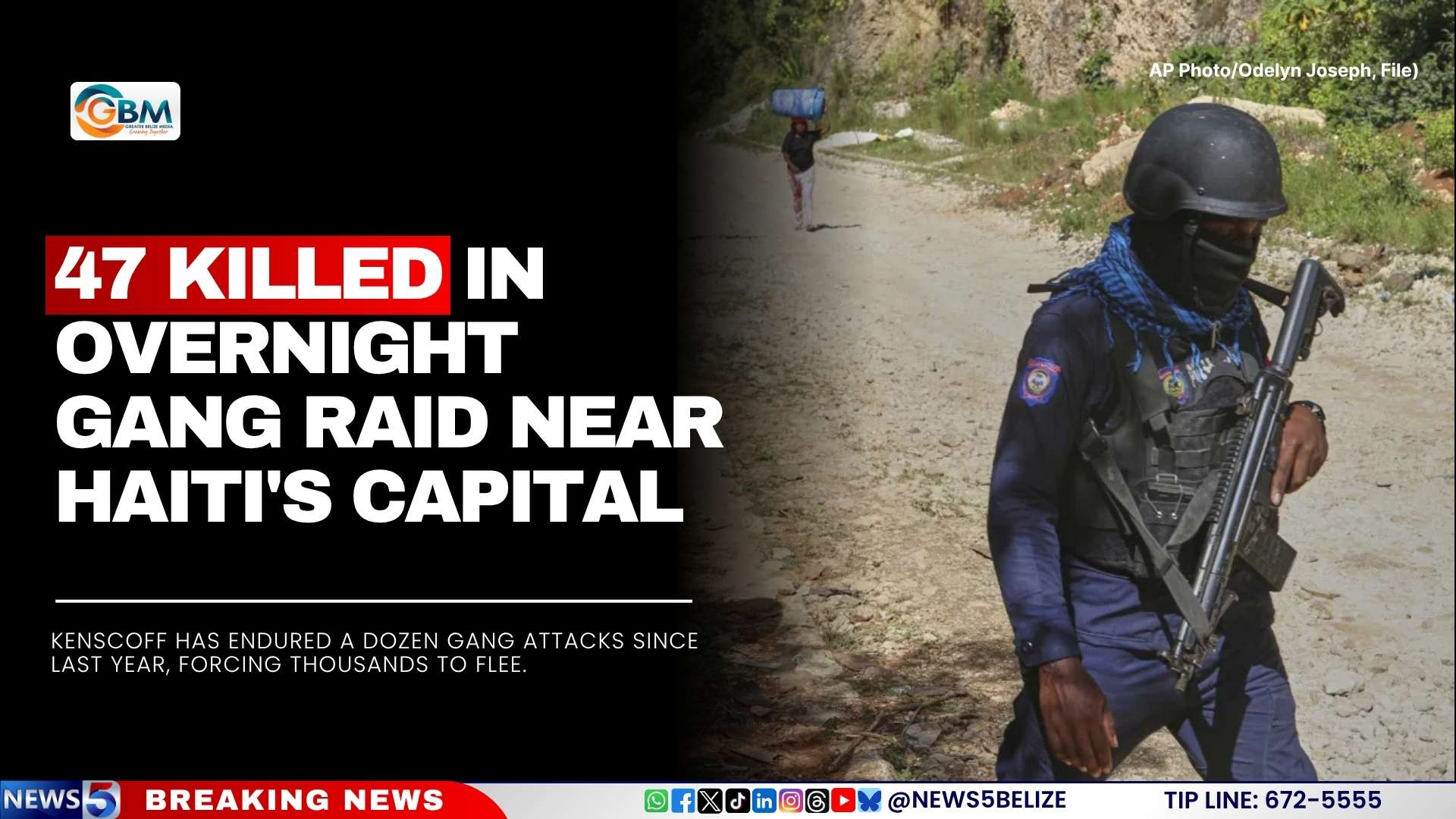
On a violent overnight incursion that has sent fresh shockwaves through Haiti’s already unstable security landscape, at least 47 people were killed and 22 others wounded in a gang raid on Kenscoff, a hillside community overlooking Haiti’s capital Port-au-Prince, the United Nations confirmed in a statement released Monday. Local human rights organization RNDDH has offered a slightly lower preliminary estimate, placing the death toll between 30 and 40 and the number of injured between 15 and 20, noting that a full, accurate accounting of casualties remains hampered by ongoing unrest and restricted access to affected areas.
Kenscoff, which commands strategic views over critical supply and transit routes leading into Port-au-Prince and neighboring Petion-Ville — the current home of Haiti’s temporary government headquarters and numerous foreign embassies — has faced a persistent wave of gang violence since last year, with at least 12 separate attacks recorded that have forced thousands of residents to flee their homes to seek safety elsewhere.
The Haitian government has labeled the latest attack an “heinous” act of violence and pledged to ramp up security deployments to the region, but the assault has sparked widespread public anger. Kenscoff residents are now calling for the local police chief to step down, arguing that armed officers failed to intervene even as the killings unfolded mere minutes away from the local police station. Vladimir Paraison, Haiti’s national police chief, has pushed back against the criticism, defending his personnel by stating “The police never gave up.”
For many residents of the violence-stricken community, however, blame lands firmly on national authorities. “My family are victims,” said Coriolan Kendy, a local resident who spoke to reporters while standing beside the body of his slain cousin. “People in Kenscoff are suffering and the government is to blame.”
This latest massacre is only the most severe in a years-long surge of bloodshed in the area: in the first two months of 2025 alone, more than 260 people were killed across Kenscoff. Since that wave of violence, nearly a dozen additional attacks have been recorded, including widespread reports of sexual violence, mass kidnappings, and deliberate arson attacks on civilian property.
Beyond the immediate human cost, the attack has deepened long-running international concerns about Haiti’s ability to proceed with its long-delayed general election scheduled for December. The vote will be the first national election the country has held in a decade, and rising gang control of large swathes of territory has thrown the logistics and legitimacy of the poll into increasing doubt.
A United Nations-backed multinational Gang Suppression Force, deployed to help Haitian authorities retake territory from armed gangs, currently aims to reach its full authorized strength of 5,500 troops by the upcoming autumn. As violence continues to escalate ahead of the election, however, questions are growing over whether the understrength force will be able to stabilize the country in time to allow for a safe, democratic vote.