The Caribbean region faces one of the most pressing public health crises of the modern era: an unprecedented cancer crisis that ranks among the most severe in the entire Americas. With incidence and mortality rates far above regional averages, the growing threat of cancer already strains the bloc’s healthcare infrastructure, drags on national economies, and inflicts lasting harm on local communities. Data from the Global Cancer Observatory confirms that this heavy burden is set to grow dramatically over the coming decades: annual new cancer diagnoses across the Caribbean are projected to jump by 55% by 2050, rising from 123,884 cases in 2024 to nearly 192,000 within 26 years.
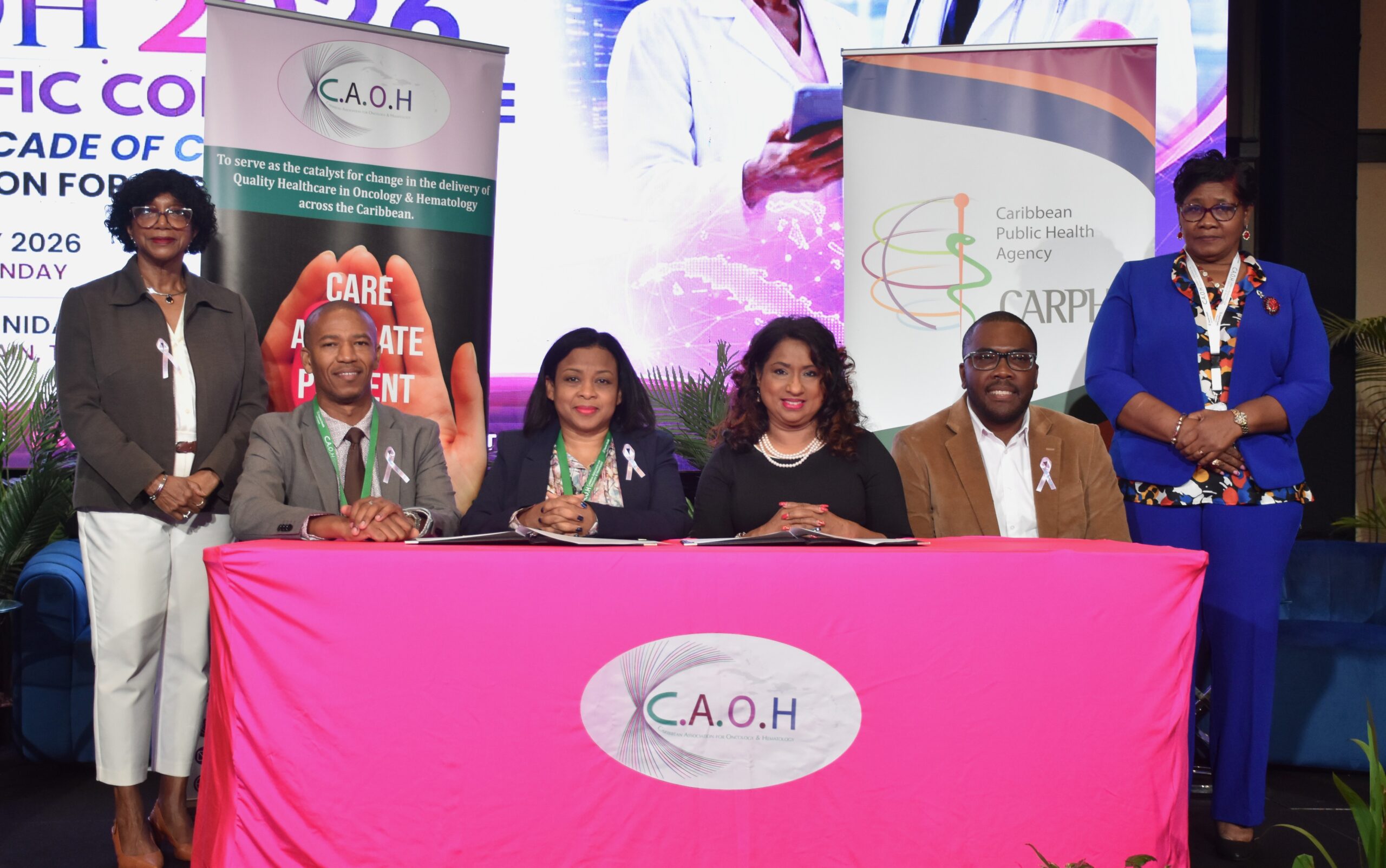
To confront this rapidly escalating challenge, two leading regional health bodies have formalized a landmark five-year collaborative partnership designed to strengthen the Caribbean’s coordinated response to cancer. The Caribbean Public Health Agency (CARPHA) and the Caribbean Association for Oncology and Haematology (CAOH) signed a formal Memorandum of Understanding (MoU) that establishes a shared framework for joint action across key pillars of cancer care and control: disease surveillance, prevention initiatives, healthcare workforce development, public nutrition programming, expanded access to safe, quality-assured cancer medications, and public awareness campaigns. The agreement aligns CARPHA’s regional public health governance leadership with CAOH’s specialized clinical and technical expertise in oncology and haematology, laying the groundwork for more cohesive, data-driven cancer prevention and control strategies across all CARPHA member states.
Dr. Lisa Indar, Executive Director of CARPHA, emphasized that no single institution can reverse the region’s growing cancer burden in isolation, and sustained cross-organizational collaboration is non-negotiable. “Regional cooperation has always been one of the Caribbean’s greatest strengths,” Indar noted. “This partnership creates a critical new platform to combine technical expertise, regional population data, and coordinated public health action to strengthen prevention protocols, expand early detection programs, improve cancer control systems, and guarantee broader access to quality-assured life-saving medications.”
Under the terms of the MoU, CARPHA will lead technical coordination and on-the-ground support through its specialized departments, including the Chronic Disease and Injury Department (CDI), the Caribbean Regulatory System (CRS), and the Medicines Quality Control and Surveillance Department (MQCSD).
Dr. Marisa Nimrod, Chief Executive Officer of CAOH, framed the partnership as a transformative milestone for regional oncology and haematology cooperation. “Through this collaboration with CARPHA, our member clinicians and researchers will gain access to new joint programs, regional professional training opportunities, research partnerships, professional networking platforms, and pathways to contribute directly to stronger cancer surveillance systems and the development of context-appropriate regional cancer policy and programming,” Nimrod explained.
The partnership’s formal cooperation covers five core priority areas: First, it will strengthen cancer surveillance systems and improve the quality and utilization of data collected by regional cancer registries, to ensure all cancer control planning is rooted in robust local evidence. Additional priorities include expanding workforce development and professional training for oncology care teams; supporting cross-institutional research and knowledge exchange; scaling up promotion of healthy nutrition and physical activity as evidence-based primary cancer prevention strategies; strengthening workplace safety protocols for staff handling hazardous cancer medications; and upgrading regional systems for medication quality assurance, pharmacovigilance, and post-market surveillance of oncology treatments.
CARPHA has already made significant progress advancing integrated cancer control work through its International Agency for Research on Cancer (IARC) Caribbean Cancer Registry Hub, which works to expand population-based cancer registration and surveillance across the bloc to ensure national governments have access to high-quality data to guide policy and measure the impact of public health interventions. The agency also leads complementary work in non-communicable disease prevention, healthy nutrition promotion, physical activity programming, medication quality assurance, and pharmacovigilance, all core components of comprehensive, people-centered cancer care.
One of the partnership’s first major public initiatives took place at the 14th CAOH Annual Scientific Conference on 17 July 2026, where CARPHA representatives led a high-level technical session focused on advancing medication safety across regional oncology care. Dr. Chantelle Bailey, Programme Manager of CARPHA’s Caribbean Regulatory System, and Nicole Ennis, Head of the Medicines Quality and Control Surveillance Department, led a hybrid panel discussion examining the critical role of quality assurance, pharmacovigilance, and post-market monitoring for all oncology medications.
Titled “Advancing Cancer Prevention and Control Across the Eastern Caribbean,” the session emphasized that robust national and regional systems are essential to identifying and mitigating risks linked to cancer medications, including substandard, falsified, and unregistered products. These unregulated products not only reduce treatment effectiveness and lead to worse patient outcomes, but also erode public trust in national health systems.
Conference participants mapped existing national and regional barriers to guaranteeing the quality, safety, and efficacy of cancer medications, while evaluating best practices for strengthening pharmacovigilance and post-market surveillance across CARPHA member states. The session highlighted that all stakeholders—from national regulatory authorities to frontline healthcare providers—share responsibility for identifying medication-related risks, reporting adverse drug reactions, and sustaining effective surveillance systems.
Discussion centered on four key priorities: implementing risk-based post-market surveillance protocols, expanding laboratory testing and routine quality monitoring, improving detection and reporting of substandard and falsified cancer medications, deepening regulatory collaboration across Caribbean member states, and addressing emerging challenges in oncology medication quality assurance. The session closed with a set of actionable recommendations for strengthening medication quality assurance and pharmacovigilance in oncology care, designed to support member states in advancing patient safety and building more resilient regional health systems.
As the first official deliverable from the newly signed CARPHA-CAOH partnership, the conference session underscored the two organizations’ shared commitment to expanding access to safe, effective, quality-assured cancer medications for all patients across the Caribbean, backed by robust regulatory and surveillance systems that protect patients and improve treatment outcomes.