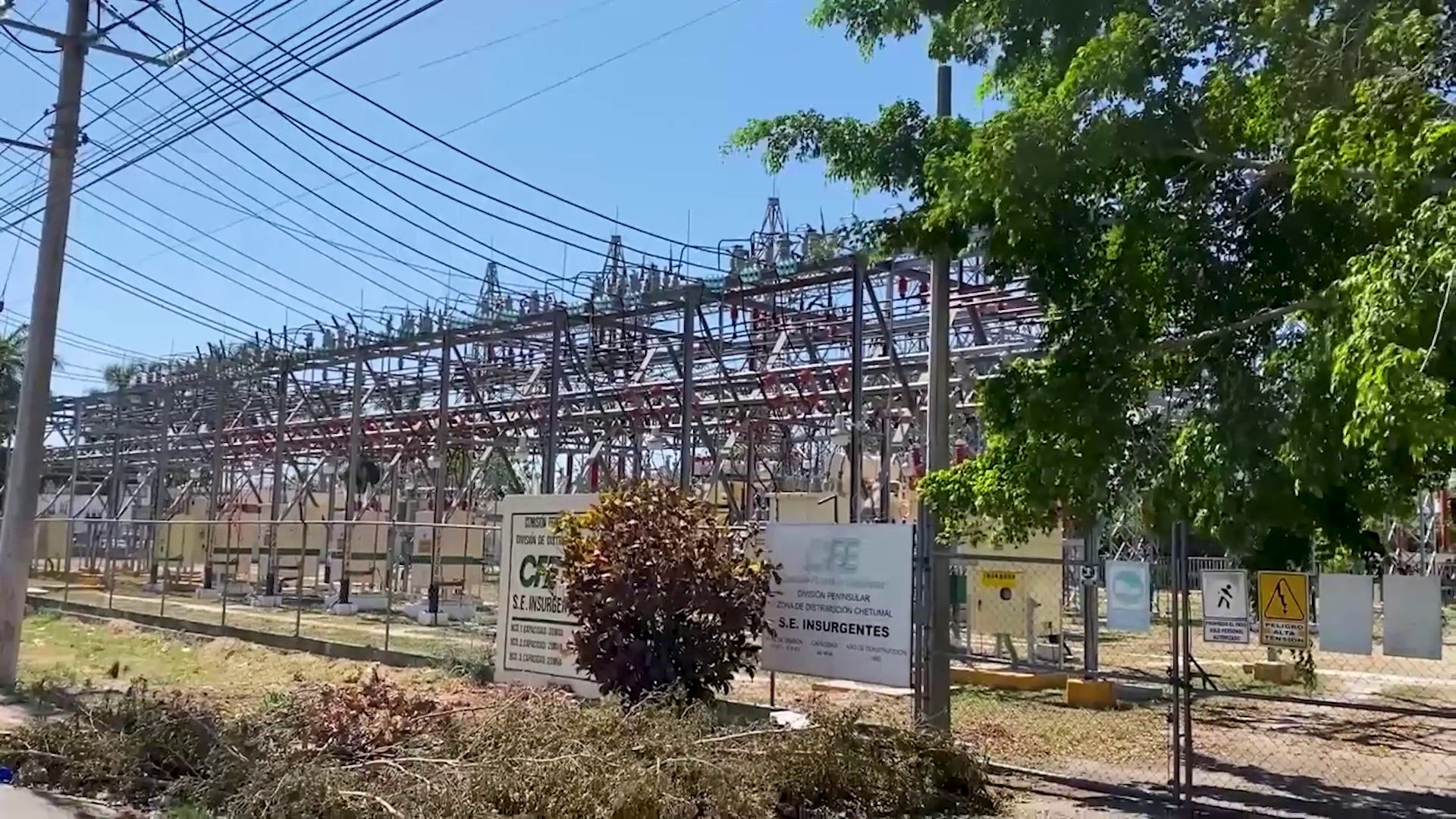
As of August 24, 2026, Belize’s primary energy provider Belize Electricity Limited (BEL) is confronting a severe financial and operational crisis, anchored by a multimillion-dollar outstanding debt owed to Mexico’s state-owned energy utility Comisión Federal de Electricidad (CFE). The company’s top leadership has confirmed that current operating revenues are insufficient to cover all recurring costs, and that the Briceño administration has stepped in to provide emergency financial support to keep the national power grid operational.
In a public press briefing, BEL Executive Chairman Lynn Young shared updated details on the scope of the debt, noting that the total obligation had fallen from $55 million in early January 2026 to roughly $30 million as of the latest reporting period, with approximately $20 million of that sum currently overdue. Young explained that the debt has mounted steadily over recent months due to a persistent gap between elevated wholesale power generation costs and regulated retail electricity rates charged to consumers.
To illustrate the stark imbalance facing the utility, Young outlined the company’s weekly cash flow: BEL collects approximately $6 million in total weekly revenue, while diesel fuel costs alone currently run to $3 million per week. After accounting for non-negotiable payments to CFE, domestic hydroelectric provider Hydro Belize, full-time staff salaries, and contractor invoices, all available operating revenue is exhausted, leaving no buffer to cover the full cost of imported power. While a recently implemented COPA fuel price adjustment is intended to close this gap, Young noted it only covers a fraction of the increased costs. In one recent month alone, extra generation costs hit 4.5 cents per kilowatt-hour, while the COPA adjustment only added 1.5 cents to retail rates, leaving a 3 cent per kilowatt-hour gap that translated to a $5 million monthly shortfall – a gap that has been covered partially by government assistance.
The ongoing debt crisis has pulled back the curtain on longstanding structural vulnerabilities in Belize’s national energy sector, which relies heavily on imported power from CFE while facing limited domestic power generation capacity. Young pushed back against criticism of past policy decisions that led to the country’s heavy reliance on Mexican imports, noting that decision-makers acted on the best available information at the time. CFE, as the national utility of an energy-rich nation, was long viewed as a cheap, reliable supplier, and no one could have predicted the operational instability it would face in recent years. “Everybody lose sometimes man,” Young noted, emphasizing that the focus now must be on moving forward rather than assigning blame for past choices.
While BEL works to address its immediate cash flow crisis, a key long-term project intended to strengthen Belize’s energy independence remains stalled. In 2023, the Briceño administration signed an agreement with Saudi Arabia to fund a $77 million utility-scale solar project designed to boost domestic generation capacity and reduce reliance on imported power, but the funding has yet to arrive amid lengthy Saudi bureaucratic approval processes.
Public Utilities Minister Michel Chebat explained that Saudi Arabia’s rigorous procurement process includes additional requirements, such as a mandate to use Saudi engineering teams for most core components of the project, which has extended the timeline. Chebat reaffirmed that the government is prioritizing the project and pushing for approval as quickly as possible, noting that the delayed solar investment is badly needed to address the country’s current generation shortfall. He added that the government recently secured a $125 million compact with the Millennium Challenge Corporation, a large portion of which is earmarked for reducing national power costs, as part of a broader push to stabilize Belize’s energy sector.