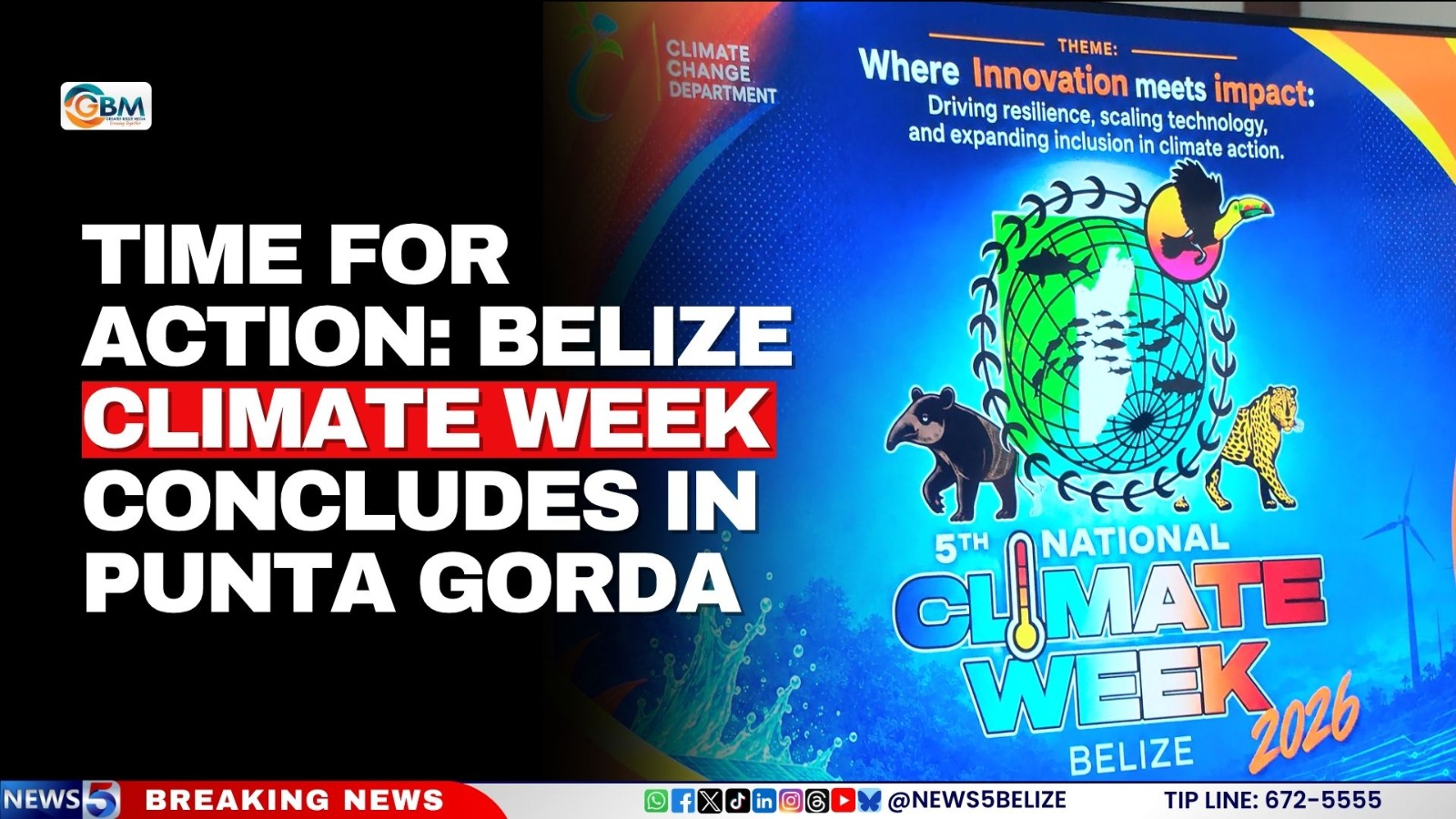
As Belize wrapped up its inaugural national Climate Week in Punta Gorda, Toledo District on August 24 2026, the four-day event has left a clear call for urgent, inclusive climate action that centers the communities already bearing the brunt of global warming.
This year’s gathering, sponsored by RF&G and held in partnership with the United Nations Development Programme (UNDP), deliberately moved the climate conversation from national policy halls to southern Belize, where coastal communities and indigenous populations confront daily climate crises ranging from catastrophic flooding to accelerating coastal erosion and erratic seasonal weather patterns. Organizers made a deliberate choice to anchor the event in Punta Gorda to shine a much-needed spotlight on the disproportionate struggles of local indigenous groups and small-scale farmers, who have watched their livelihoods unravel as global warming reshapes regional weather systems.
Under the overarching theme “Where Innovation Meets Impact: Driving Resilience, Scaling Technology, and Expanding Inclusion in Climate Action”, the week-long programming focused on a core goal: turning vague global and national climate pledges into tangible, on-the-ground support for climate-vulnerable regions. Edalmi Pinelo, Belize’s Chief Climate Change Officer, opened the event by grounding discussions in lived experience, emphasizing that climate change is no longer a distant future threat: “Climate change is real, it’s here, we are feeling the effects.”
Michael Lund, Deputy Resident Representative of the UNDP’s Belize office, noted that cross-community learning and centering indigenous knowledge are foundational to successful climate adaptation. “We need to both learn from each other and tap into that because that’s a way how we can also adapt to the things that we are experiencing with climate change,” Lund explained, pointing to generations of indigenous environmental stewardship as a largely untapped resource for building national climate resilience.
For Belize’s indigenous populations, climate change poses an existential threat that extends beyond economic disruption to cultural survival. Indigenous communities’ identity and heritage are deeply intertwined with their traditional lands, which underpin their language, spiritual practices, ceremonial traditions, and intergenerational ancestral knowledge. These cultural foundations are put at growing risk as widespread deforestation and accelerating coastal erosion erode the landscapes that have sustained indigenous ways of life for millennia.
Cristina Coc, spokesperson for the Maya Leaders Alliance, reinforced that indigenous communities are the first to face climate impacts, even as they have spent generations protecting natural ecosystems that sequester carbon and support biodiversity. Across the Toledo District, unpredictable weather has already upended traditional farming practices and depleted wild food sources that communities have relied on for centuries. “Never before have we seen this kind of weather pattern that is really impacting crops, but also wild foods,” Coc noted, describing the rapid, unprecedented shifts local residents have observed in recent years.
The economic strain of climate change has compounded these challenges for rural households. Filiberta Coc, a resident of Otoxha Village who attended the event, explained that skyrocketing living costs have left many families struggling to cover basic needs for themselves and their children, making climate adaptation an even more urgent priority for low-income communities.
Despite the growing risks, indigenous communities bring unique, generations-old expertise to climate action built on centuries of close observation of local forests, water systems, agricultural cycles, and weather patterns. Traditional sustainable practices like the Maya milpa farming system, which rotates crops to protect soil health, have already proven effective at stabilizing food production and helping communities adapt to shifting environmental conditions. Lund closed the week by praising local indigenous leaders for advancing proactive climate solutions rooted in their cultural heritage, calling for greater investment in community-led efforts across the country.