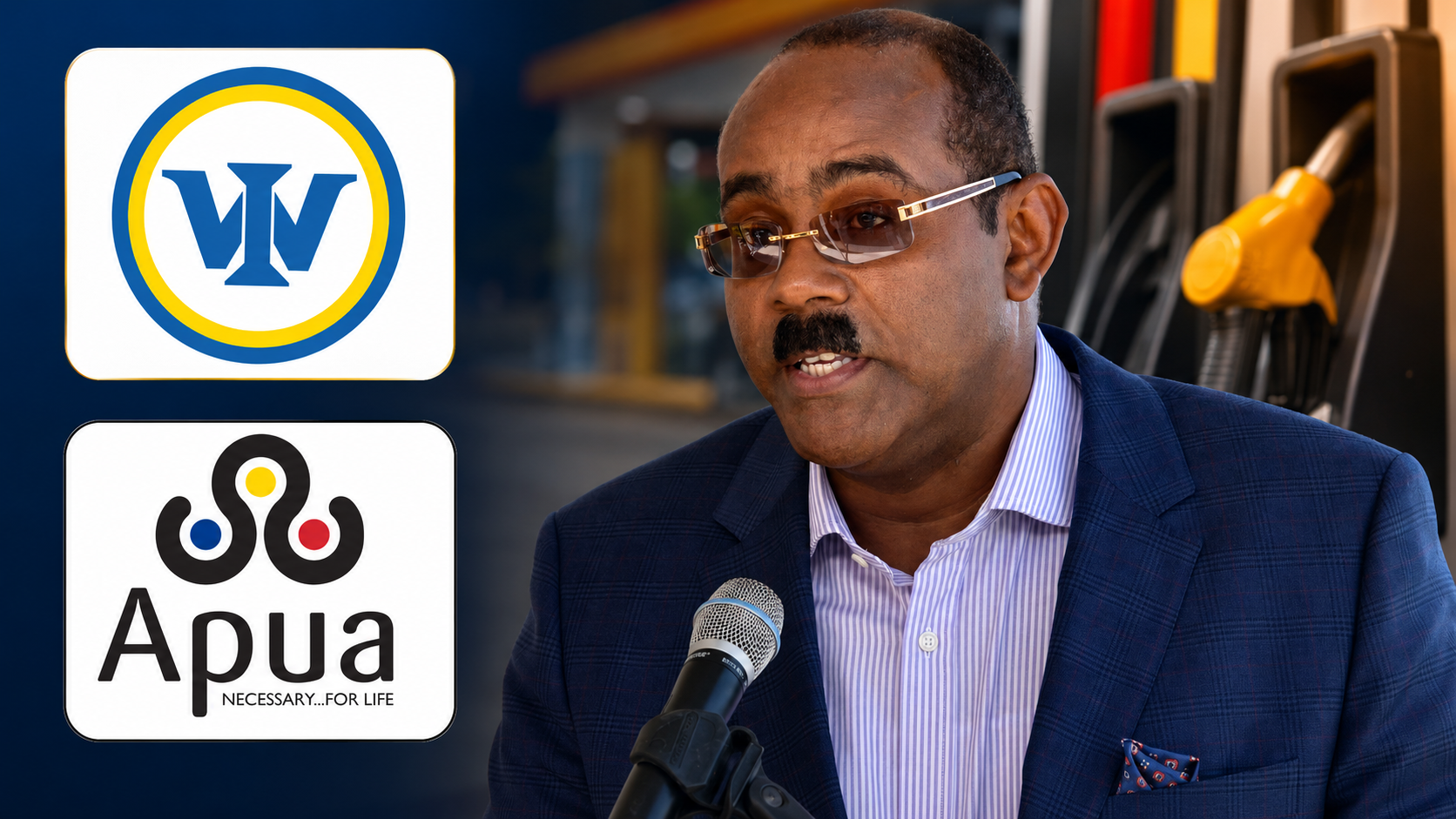
The prime minister of Antigua and Barbuda, Gaston Browne, has issued a stark public warning that domestic fuel prices will almost certainly need to rise in the near future, as the national government can no longer sustain the massive financial burden of shielding consumers from skyrocketing international petroleum costs. Since the beginning of the current price stabilization policy six months ago, Browne confirmed, the government has foregone more than 30 million Eastern Caribbean dollars in revenue, all to keep retail fuel rates frozen despite volatile shifts in the global energy market.
During an appearance Saturday on the local public affairs program *Browne and Browne Show*, Browne added that the policy has also left the government with a large unpaid obligation to the West Indies Oil Company, the regional energy provider that supplies fuel to the twin-island nation. To keep retail prices fixed at their current levels—14.25 Eastern Caribbean dollars per liter for diesel and 14.50 Eastern Caribbean dollars per liter for gasoline—the government has accumulated an estimated 10 million Eastern Caribbean dollars in outstanding debt to the firm, Browne explained.
When combined with the foregone revenue, the total financial hit to the public purse totals around 40 million Eastern Caribbean dollars, a sum Browne described as significant enough to threaten long-term fiscal sustainability. He noted that even with the ongoing government subsidies, Antigua and Barbuda already boasts one of the lowest retail fuel price regimes in the entire Caribbean region, outranked only by major oil-producing neighbors Guyana and Trinidad and Tobago. Even so, the prime minister emphasized, the government cannot maintain this subsidization strategy indefinitely.
“I have to admit, I don’t know how much longer we can sustain that,” Browne told listeners. “We’re going to have to have a conversation at some point, and we may just have to increase the price.”
Browne traced the root of the current pressure to two interconnected global factors: persistently high crude prices on the international market, and the ongoing armed conflict in Iran that has disrupted global energy supply chains. Several months ago, he recalled, a tentative agreement between conflict parties raised widespread hopes that the fighting would wind down quickly, easing pressure on global energy markets. But the situation remains unresolved more than six months later, and the uncertainty continues to drive up costs for energy-importing small island nations like Antigua and Barbuda.
Despite the current strain, Browne said the government still holds out hope that the Iranian conflict will reach a negotiated resolution by the end of 2024, which would bring international oil prices back down and eliminate the need for a steep domestic fuel price increase. As of Saturday, the prime minister stopped short of announcing a specific timeline for any potential price adjustment, nor did he share details on how large any increase would be if implemented.