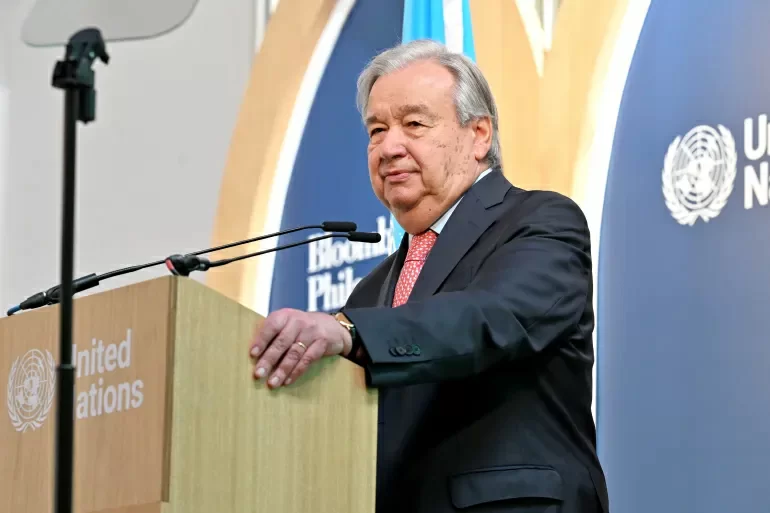
The race to succeed António Guterres as the next United Nations Secretary-General has entered a new stage, with Guyanese diplomat Carolyn Rodrigues Birkett emerging as the early frontrunner following the second non-binding straw poll conducted by the UN Security Council. As the UN works to build consensus ahead of the end of Guterres’ current term this December, Rodrigues Birkett secured eight encouraging votes from Security Council members, putting her at the top of the eight-candidate field. Guterres, who has held the role of UN Secretary-General since 2017, will step down when his second term concludes at the end of 2025; while the UN charter does not impose a formal term limit on the position, no previous secretary-general has served more than two full terms. Trailing closely behind Rodrigues Birkett are two contenders: Costa Rican diplomat Rebeca Grynspan, who led the first informal straw poll held in July, and Rafael Grossi, the Argentine head of the International Atomic Energy Agency. Both candidates earned seven encouraging votes, but differ significantly in their levels of opposition: Grossi received six discouraging votes, while Grynspan only earned four. The remaining candidate pool includes a roster of high-profile global figures: former Senegalese President Macky Sall, former UN General Assembly President Maria Fernanda Espinosa of Ecuador, former Chilean President Michelle Bachelet, veteran Ugandan diplomat Olara Otunnu, and Ecuadorean diplomat Ivonne A-Baki. These informal, non-binding straw polls are a longstanding procedural step designed to gauge support for candidates among the Security Council’s 15 members, helping to winnow the field gradually before a formal vote is held. To advance to confirmation by the UN General Assembly, a candidate must secure a minimum of nine favorable votes in a formal Security Council vote – and crucially, cannot be vetoed by any of the body’s five permanent members: the United States, China, France, Russia, and the United Kingdom. Whoever ultimately claims the role will inherit one of the most challenging diplomatic briefings in modern UN history: the organization faces widespread calls to strengthen its global standing, which has eroded considerably in recent years. Critics have repeatedly highlighted that the UN has failed to effectively prevent or end major global conflicts and crises since its founding in the aftermath of World War II, pointing to ongoing crises including the devastating war in Gaza and Russia’s full-scale invasion of Ukraine as evidence of the organization’s structural and functional shortcomings.
Guyana’s Rodrigues Birkett leidt informele stemming in race om volgende VN-leider