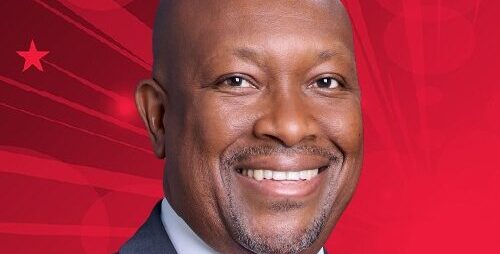
As the global community prepares for the 2027 election of the next Food and Agriculture Organization (FAO) Director-General, a former Caribbean agriculture minister has thrown his public support behind a seasoned hemispheric agricultural leader, calling on him to stand for the top role.
Saboto S. Caesar, former Minister of Agriculture of Saint Lucia, who worked directly with Dr. Manuel Otero during Otero’s tenure as Director-General of the Inter-American Institute for Cooperation on Agriculture (IICA), made the case in a commentary that Dr. Otero has the proven leadership, on-the-ground experience, and collaborative vision needed to guide the UN agency through today’s most pressing agricultural and food security challenges.
Caesar, who also served as Minister of Agriculture, Fisheries and Forestry of Saint Vincent and the Grenadines during Otero’s time at the IICA helm, said he witnessed the Uruguayan leader’s leadership first-hand, developing a deep understanding of Otero’s unwavering commitment to advancing agricultural development, strengthening food security, and driving inclusive rural transformation across Latin America and the Caribbean. Caesar highlighted that one of Otero’s defining strengths is his consistent commitment to centering the needs and priorities of stakeholders across the sector: he regularly listens to the concerns of national governments, smallholder producers, agricultural researchers, and rural communities, and consistently turns those inputs into actionable, impactful technical cooperation programs.
Under Otero’s leadership, IICA solidified its reputation as a reliable, trusted development partner for all countries across the Americas, Caesar noted. Otero also built critical bridges for technical knowledge sharing between the Latin America-Caribbean region and the African continent, and positioned the hemisphere to play a central role in advancing key global agricultural initiatives during his tenure, all while maintaining productive, collaborative ties with FAO and other global development partners.
A core priority of Otero’s leadership at IICA was placing science, technology, and innovation at the heart of the institute’s work. His administration prioritized the development of more robust, resilient agrifood systems, uplifted small-scale family farming, expanded inclusive rural development, and strengthened cross-country collaboration across the region. Throughout his tenure, Otero consistently prioritized the national priorities of Caribbean and Latin American governments, respected the unique on-the-ground challenges facing small-scale producers, and ensured IICA’s technical expertise was accessible to support local agricultural institutions and rural communities across the hemisphere.
Today, the global food and agriculture sector faces an increasingly complex web of interconnected challenges, Caesar argued. Chronic hunger and malnutrition remain persistent, unaddressed public health and development crises across much of the globe. Climate change continues to upend agricultural production, disrupt fisheries, and erode livelihoods for millions of rural households. International conflicts have sent shockwaves through global food supply chains, while producers of all sizes continue to grapple with skyrocketing input costs and persistent barriers to accessing critical resources including technology, affordable finance, and global markets.
Against this backdrop, Caesar emphasized that the next FAO Director-General must be far more than a career administrator. The successful candidate must bring firsthand understanding of agriculture from the perspective of farmers and rural communities, while also possessing the diplomatic skill to build consensus among nations with vastly different economic profiles, agricultural systems, and national priorities. They must also be able to convene a diverse range of stakeholders — from national governments and academic research institutions to farmers’ organizations, development partners, and the private sector — to deliver practical, scalable solutions to global food challenges.
Caesar stressed that Dr. Otero has already demonstrated all of these critical qualities throughout his successful tenure leading IICA. If Otero were to take the helm at FAO, his leadership would ensure that the long-overlooked priorities of developing nations, small island developing states, family farmers, agricultural workers, and rural communities remain at the center of the global agricultural agenda. At the same time, his longstanding commitment to scientific innovation and cross-border collaboration would allow him to build productive, constructive partnerships with developed nations, international financial institutions, global research bodies, and the private sector.
An Otero candidacy would offer FAO member states a well-experienced, credible, and forward-thinking leader with a proven track record of turning high-level policy commitments into tangible, on-the-ground agricultural cooperation, Caesar argued. It would also give the international community the chance to put forward a leader who understands that lasting global food security depends on building climate-resilient agricultural systems, leaning into scientific innovation, advancing sustainable natural resource management, and fostering equitable cooperation between developed and developing nations.
Drawing on his years of direct experience working alongside Otero, and first-hand observation of the leader’s integrity, leadership, and decades of public service, Caesar concluded that Dr. Otero has exactly the combination of hands-on experience and transformative vision needed to lead FAO effectively. For these reasons, Caesar is publicly calling on Otero to seriously consider putting his name forward as a candidate for FAO Director-General, arguing the moment has come for Otero to answer this global call to service.