A growing public and political controversy over unfair billing practices by Suriname’s state-owned energy utility Energie Bedrijven Suriname (EBS) has reached the country’s National Assembly, with lawmakers pushing for sweeping policy changes to protect consumers from unfair overcharging and delayed refunds.
Rossellie Cotino, a member of the National Assembly representing the National Democratic Party (NDP), is leading the call for reform, demanding that EBS issue immediate cash refunds to customers who have been overcharged or incorrectly billed, rather than forcing consumers to wait months for the excess amount to be gradually credited against future electricity bills. Cotino’s criticism has been echoed by multiple fellow lawmakers, who have also raised broad concerns about the utility’s handling of unexpectedly high energy bills and called for clearer, more consumer-friendly regulations for installment payment plans.
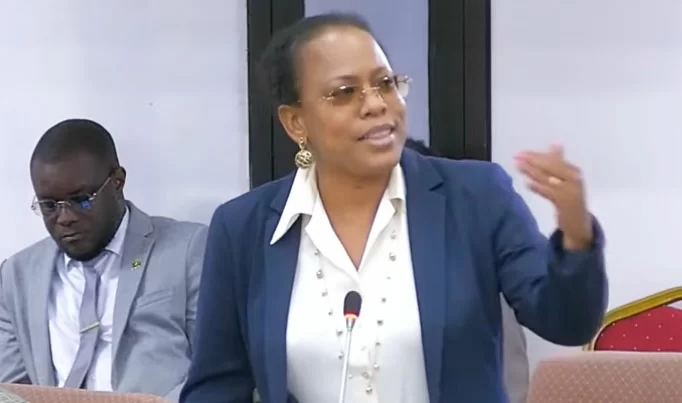
In a parliamentary address, Cotino emphasized that the core of the crisis is not a refusal by consumers to pay for the electricity they actually use — frustration stems from EBS’s practice of withholding overcharged funds instead of returning them promptly. She cited a striking example to illustrate the issue: one customer had 10,000 Surinamese dollars automatically withdrawn from their account, when their actual energy bill only came to roughly 1,000 Surinamese dollars. Under current EBS policy, the customer would have to wait months for the 9,000 Surinamese dollar excess to be credited through future bills, a practice Cotino called indefensible.
“That is your money, and you have a legal right to it,” Cotino told the assembly, repeatedly pressing for an immediate shift in policy. She argued that customers must be given an explicit choice to receive an immediate cash refund when overcharged, rather than being forced to leave the excess funds on deposit with EBS indefinitely.
Responding to the parliamentary questions, Minister of Natural Resources David Abiamofo stated that he had reviewed the official policies of both EBS and Suriname Water Company (SWM) ahead of the debate. He confirmed that consumers with accumulated, outstanding energy bills should qualify for flexible installment payment plans, acknowledging that reports from lawmakers indicated this policy is not consistently enforced by EBS frontline staff at customer service desks. Abiamofo clarified that requiring customers to pay the full outstanding amount in one lump sum contradicts official company policy, and said the utility must intervene when staff incorrectly impose this requirement on consumers. “Consumers in that situation have the right to an installment payment plan, where the debt is paid off in gradual portions,” Abiamofo explained.
Addressing the specific demand for immediate refunds, the minister added that when an error in the billing process has occurred, customers who request a refund should not be automatically denied. He committed to discussing the full set of concerns raised by lawmakers with EBS leadership to push for necessary changes.
The debate went beyond refunds and payment plans, with lawmakers also raising the question of interest on customer credits held by the utility. Ronny Asabina, leader of the Basic Party for Renewal (BEP) parliamentary faction, argued that utilities must apply the principle of reciprocity to consumer interactions. If consumers are charged fees and penalties for late bill payments, Asabina reasoned, EBS and SWM should similarly pay interest or compensation when they hold excess customer funds for extended periods. He asked Minister Abiamofo whether he would commit to requiring utilities to not only notify customers promptly of outstanding credits, but also treat consumers equally when the company holds their money.
Other lawmakers added that consumers are often blindsided by sudden bills totaling tens of thousands of Surinamese dollars, which commonly arise after months of billing based on estimated energy use rather than actual meter readings. They stressed that willing consumers who want to resolve their debt should not be turned away when they request installment payment plans.
Minister Abiamofo noted that many billing issues can be avoided if consumers regularly submit their actual meter readings to the utility. Without actual meter data, he explained, utilities rely on historical usage estimates, which often leads to overbilling and resulting customer credits once actual readings are taken. He noted that improved communication and consistent meter reading submissions would resolve a large share of existing problems.
Lawmakers countered that systemic backlogs in meter installation and new service connections are also a major contributing factor. Abiamofo confirmed that SWM has faced substantial backlogs in meter deployment in recent years, but added that the backlog is now being actively cleared. He acknowledged that customer service communication at utility counters needs urgent improvement, and pledged to revisit all of the issues raised in parliamentary debate with leadership from both EBS and SWM to implement actionable changes.