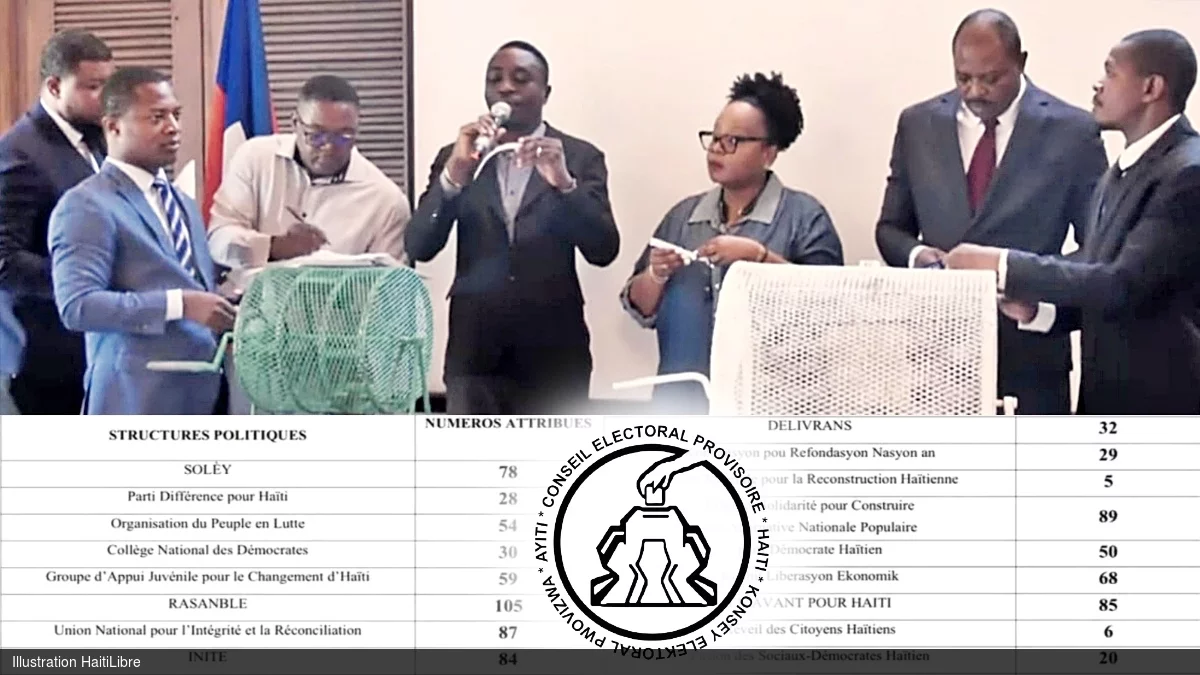
Haiti’s path toward restoring democratic governance took a key step forward this week, as the country’s Provisional Electoral Council (CEP) concluded a public, randomized draw to assign official campaign numbers to all political entities qualified to participate in upcoming national elections. The ceremony, held August 20, 2026, brought together a broad cross-section of domestic and international observers to reinforce commitments to a transparent electoral process after years of ongoing national crisis.
In attendance were voting from sitting CEP members, CEP Director General Uder Antoine, Haiti’s Minister for the Status of Women and Women’s Rights, official representatives from all competing political parties and groups, representatives of Haiti’s national and international development and election partners, members of the national and international press, and CEP administrative staff. This multi-stakeholder presence was structured to ensure every step of the draw process was open to public scrutiny.
Opening the event, CEP President Jacques Desrosiers framed the draw as a critical milestone for Haitian democracy. After more than 10 years of overlapping political, economic, and security crises that have crippled state function and eroded public trust in governance, Desrosiers noted that the upcoming elections represent a long-awaited opportunity for Haitian citizens to renew their national leadership.
Desrosiers used his opening remarks to reaffirm the CEP’s institutional commitment to upholding core democratic standards throughout the electoral cycle. The council, he stressed, would work to ensure a process rooted in fairness, impartiality, full transparency, and equal treatment for every competing political force, regardless of size or existing political influence. This commitment is designed to guarantee a level playing field that allows all qualified parties to compete freely for voter support.
Following the opening address, CEP Councilor Yves Marie Edouard walked attendees through the formal procedures for the draw, which would assign unique identifying numbers to a total of 105 competing political entities: 88 registered political parties and 17 independent political groups. To eliminate any potential bias or manipulation, the process relied on a simple, verifiable physical randomization system: two separate rotating drums were used, one holding slips of paper printed with the name of each political entity, and the other holding the corresponding unique campaign numbers. Representatives drew each entry publicly, resulting in a fully randomized assignment that was observed by all in attendance.
The entire draw process unfolded in a calm, orderly atmosphere that observers described as conducive to open accountability. Stakeholders from across the political spectrum and the international community noted that the inclusive, public nature of the event has already helped strengthen confidence in the credibility of this early stage of the electoral process.
In closing remarks, CEP Director General Uder Antoine extended thanks to all participating political representatives, national observers, and international partners for their attendance and collaborative engagement with the process. He also issued a key reminder to all competing entities: the official window for candidate registration will open the following day, August 20, 2026, marking the next formal step toward holding the long-delayed elections. The full, official list of all 105 political organizations and their assigned campaign numbers is available for public download via the HaitiLibre document portal.