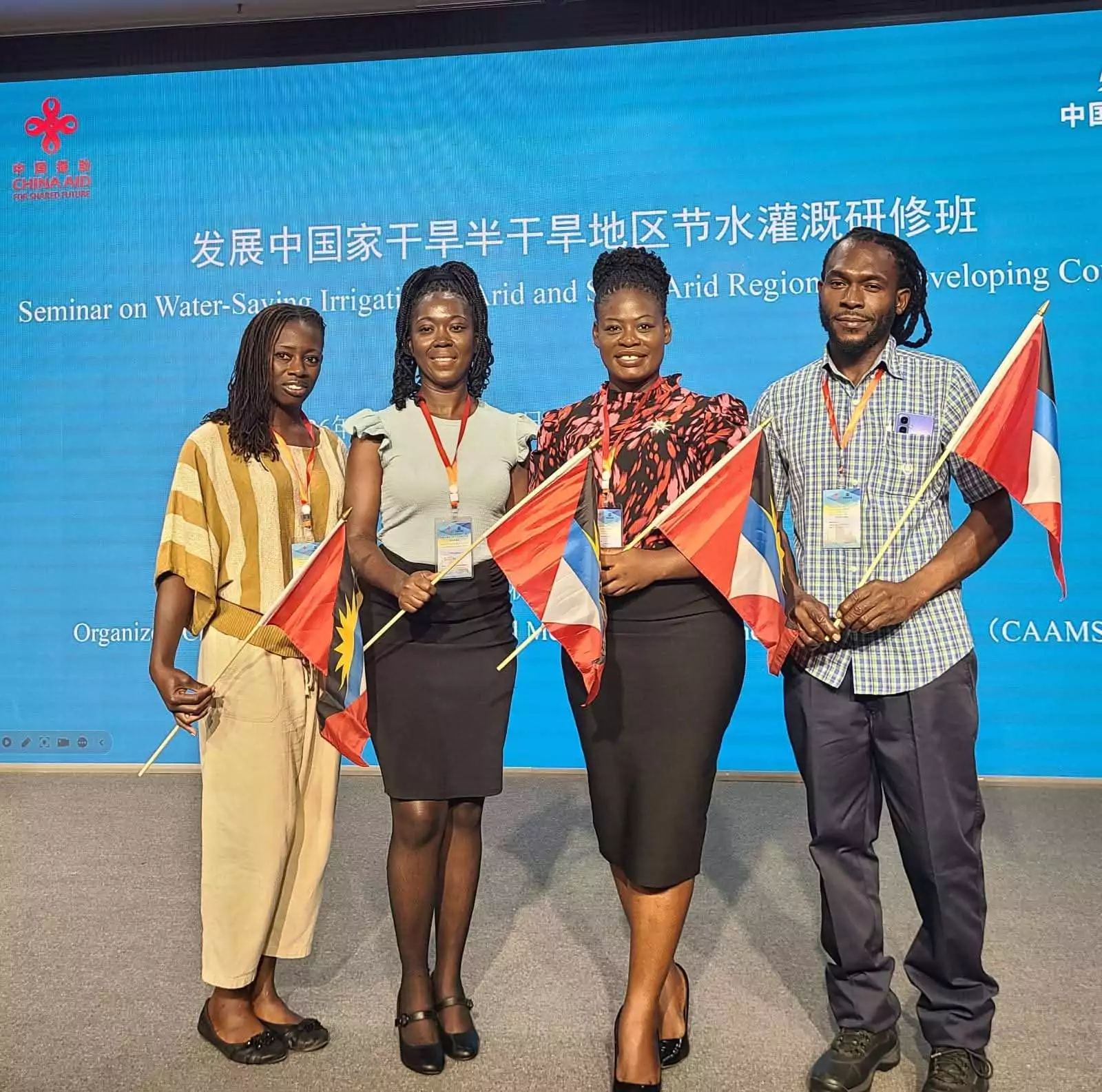
Agricultural development across small island nations often faces crippling constraints, and few challenges are more pressing than chronic water scarcity. For Antigua and Barbuda, this issue has long held back crop yields and threatened the stability of the domestic agricultural sector. Now, a new international training partnership is offering a path forward, bringing four professionals from the Caribbean nation to China to gain hands-on expertise in cutting-edge water-conserving farming practices.
The multi-city training curriculum, designed to blend theoretical knowledge with real-world application, covers three core focus areas: advanced irrigation infrastructure, precision soil monitoring, and data-driven smart agriculture technologies. Unlike traditional classroom-only programs, this initiative integrates interactive academic lectures, on-site practical skill-building exercises, and study visits to leading agricultural research institutions and fully operational demonstration sites across northern China. Trainees have traveled to Beijing, Shijiazhuang, Baoding, and Tianjin to observe how water-saving systems perform in diverse agricultural contexts, gaining first-hand insight into implementation strategies that can be adapted to their home country’s unique climate and soil conditions.
Throughout the program, participants have centered their learning on a critical question: how can water measurement and irrigation technologies simultaneously boost agricultural output and protect limited freshwater reserves? They have worked directly with industry experts and local agricultural practitioners to master system design, operation, and maintenance techniques that reduce unnecessary water waste while ensuring crops receive consistent access to moisture. By combining technical skill development with context-specific problem solving, the program equips trainees to address the specific water challenges facing Antigua and Barbuda’s agricultural communities.
Before wrapping up their training in China, the four-person delegation will complete a capstone project: developing a comprehensive action plan to translate their newly acquired knowledge into tangible change at home. This plan will outline concrete steps for introducing water-saving agricultural technologies across Antigua and Barbuda, laying the groundwork for long-term improvements in water resource management and agricultural productivity. For a nation grappling with persistent water insecurity, this knowledge-sharing partnership represents a critical investment in a more sustainable and food-secure future.