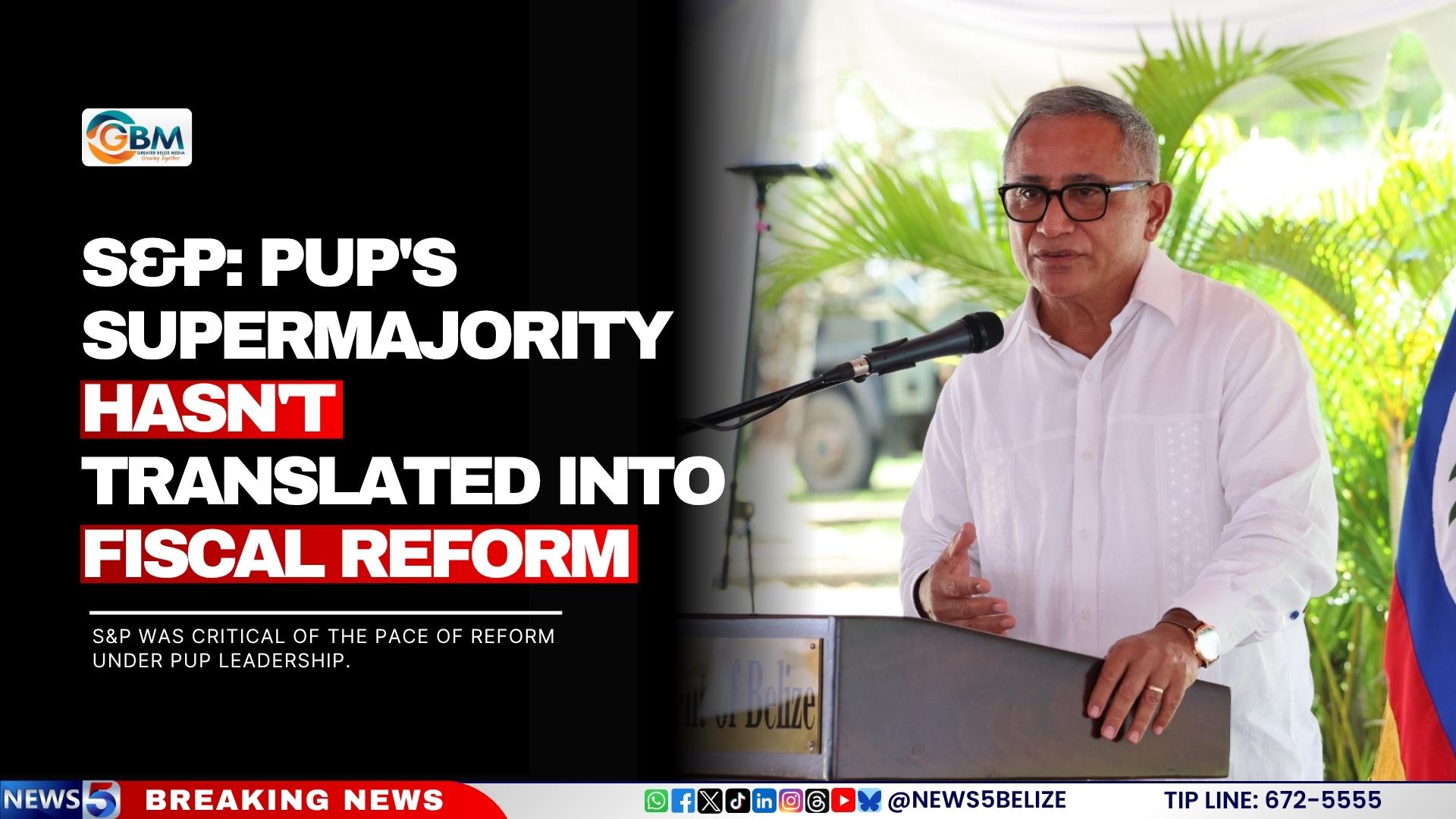
In its latest sovereign credit evaluation published on August 19, 2026, S&P Global Ratings has reaffirmed Belize’s long- and short-term sovereign credit ratings at B-/B while delivering a pointed assessment of the country’s political and fiscal trajectory. The ratings agency projects that the ruling People’s United Party (PUP), which has held national office since 2020 and secured a legislative supermajority in 2025’s general election, will retain power through the next scheduled national vote in 2030. S&P analysts note that the PUP’s dominant political position was built against a backdrop of a deeply fragmented opposition, and the upcoming 2027 municipal polls could even strengthen the party’s hold on governance across the country.
Despite the clear popular mandate and unchallenged political control the PUP holds, S&P has raised significant concerns over the slow pace of critical fiscal reforms that the agency says are necessary to shore up Belize’s long-term financial stability. Among the highest-priority unimplemented policy changes is the long-planned overhaul of the Pension Plan for Public Officials, a reform designed to reduce unsustainable long-term strain on the country’s national budget. S&P reports that the initiative has not moved forward in any meaningful way to date.
Two other core fiscal measures also remain stalled, per the ratings report: the establishment of a dedicated sinking fund to cover future amortization payments for Belize’s Blue Bonds, and the enactment of a formal fiscal responsibility law to provide a stable framework for long-term public financial management.
S&P stresses that repeated policy delays across successive Belizean administrations — not only the current PUP government — have created persistent headwinds for the country’s ability to maintain sustainable debt servicing. Belize has faced five sovereign debt defaults over the last 20 years, a historical pattern that continues to limit the country’s access to affordable external commercial financing, the agency added.
The report does acknowledge that the current administration has taken limited positive steps to improve its fiscal standing. These include expanding and improving tax collection through the rollout of mandatory electronic invoicing, and a plan to launch a Semi-Autonomous Revenue Authority by 2027 — a reform that was first approved by legislators back in 2022.