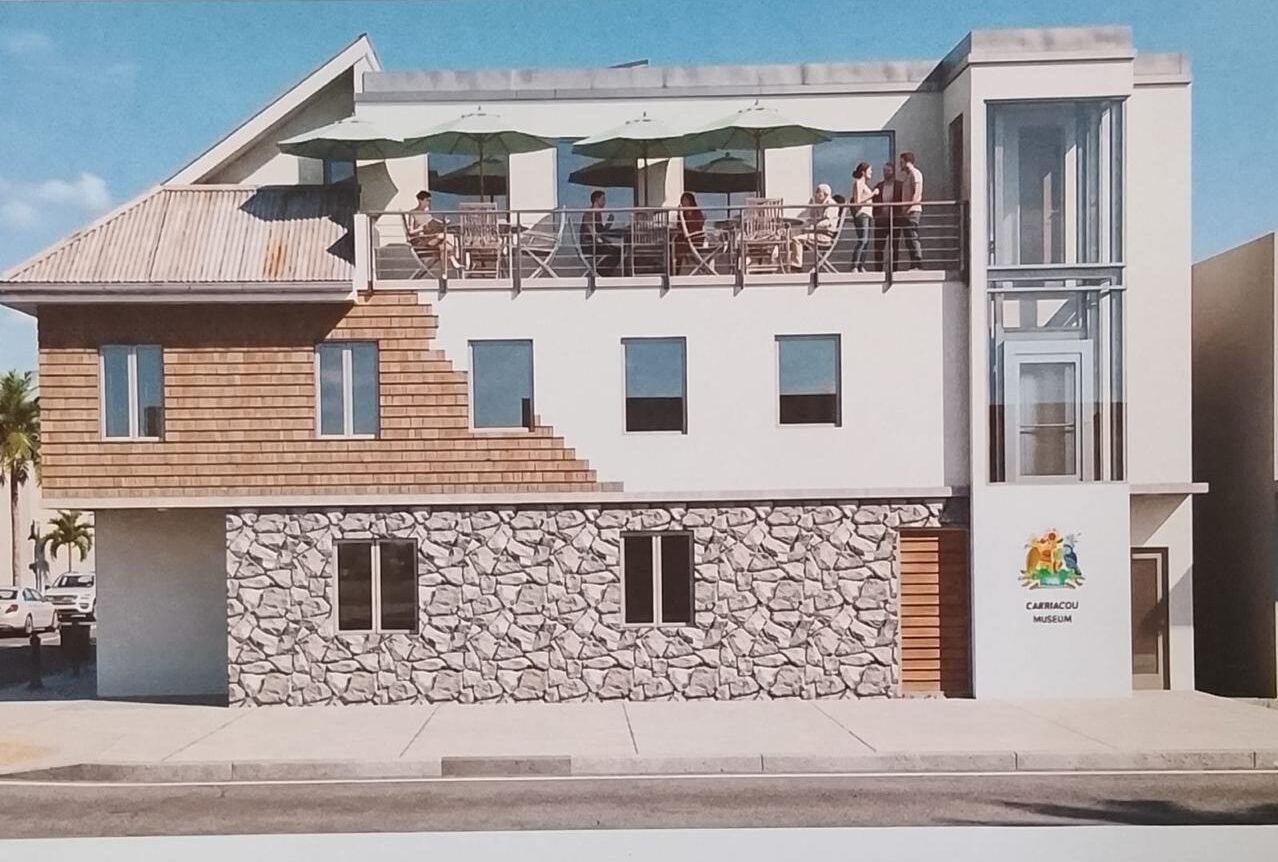
After sustaining severe damage from Hurricane Beryl, the Carriacou Museum has launched an ambitious, transformative rebuilding project estimated to cost over EC$1 million, with a mission to marry centuries of cultural history with cutting-edge climate-resilient design and reimagine the institution as a community-centered cultural hub for the future.
The museum is housed in a carefully restored 19th-century cotton ginnery, a structure recognized as the second oldest surviving cotton gin facility in the world that first became the museum’s home in 1989. The project avoids demolishing and replacing the historic site entirely; instead, it prioritizes preserving the ginnery’s irreplaceable legacy while upgrading it to withstand growing climate threats facing small Caribbean islands.
Designed by architect Erik Johnson, the new facility blends Carriacou’s beloved traditional architectural vernacular with modern engineering. Renderings of the planned project show a design that incorporates local limestone and shingle alongside contemporary glass and steel, with original 19th-century stonework and structural elements retained wherever possible to honor the building’s layered history. A new addition to the site will be a spacious rooftop terrace purpose-built to host community gatherings and public events, fulfilling the institution’s goal of becoming a shared space rather than just a static archive.
Climate resilience sits at the core of every design decision, rather than being added as a late afterthought. Project leads have embedded hurricane resistance into the facility’s foundational framework, with features including a reinforced concrete foundation, a stone-clad ground floor engineered to withstand life-threatening storm surges and extreme high winds, impact-resistant hurricane-rated glazing, and reinforced roofing built to meet the latest Caribbean high-wind building codes. The museum will also integrate rooftop solar panels to guarantee energy independence during and after severe weather events, and all building materials are selected to resist mould growth, moisture damage, and salt-air corrosion, a common threat to coastal Caribbean infrastructure.
Protecting the island’s irreplaceable cultural collections is another top priority for the team. The project will add state-of-the-art humidity- and moisture-controlled archival storage to protect fragile artefacts, and the museum is updating its collections management and acquisition policies to reduce risk. Leadership is also exploring a secondary off-site storage location for artefacts not on public display, eliminating the threat of total catastrophic loss of collections that would come from a single disaster damaging the main facility. Upgrading the historic ginnery to meet modern archival preservation standards while retaining its original character has been described as one of the project’s most delicate, yet most important, challenges.
To strengthen overall preparedness, the museum is collaborating with regional cultural emergency organizations, including Culture Emergency Response (CER) and Puerto Rico’s Alianza Cultural para Emergencias, to develop and publish a formal Disaster Risk Management and Emergency Response Plan. Leadership also aims to use the project as a catalyst to build a more connected, collaborative network of heritage institutions across Grenada, creating mutual support systems for all of the country’s cultural sites.
Fundraising for the project is currently in its early stages, with the team pursuing support from a diverse range of sources: public and private grants, individual private donors, corporate sponsorships, and members of the global Grenadian diaspora. In addition to financial contributions, the museum welcomes the diaspora’s contributions of cultural stories, family artefacts, and community perspectives to shape the new institution. Local community input has already been incorporated into early design plans, and public participation will remain a core part of the process through the end of construction.
Majella Mark, Director of International Affairs and Special Projects and lead of the Carriacou Museum’s Project Development Unit, explained that the initiative’s vision stretches far beyond replacing the infrastructure lost to Hurricane Beryl. “We want this museum to be an example of what museums of the future can look like: sustainable, seen through the eyes of the people and the land, and tech-savvy in how we preserve and share our history,” she said. Mark emphasized that the project is about more than restoring a building: it is about honoring the history that the ginnery and the surrounding community have carried, and building a stronger, more inclusive legacy for generations to come. Construction and the full reopening are projected to take between two and three years, and the museum’s leadership has expressed gratitude for all forms of community and donor support that are helping bring the vision to life.