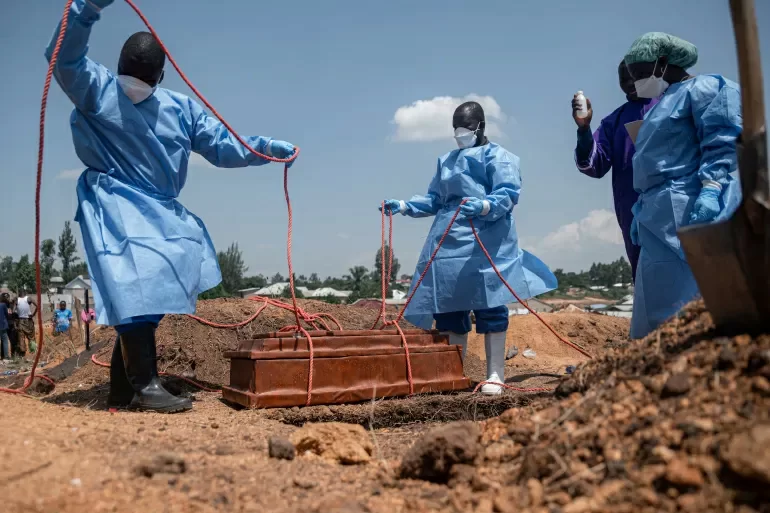
The World Health Organization (WHO) has issued a stark warning that the ongoing Ebola outbreak in the Democratic Republic of the Congo (DRC) remains an active global public health emergency, with the death toll already surpassing 2,300 to make it the deadliest outbreak in the country’s recorded history.
As of the latest official update, the outbreak has confirmed more than 5,000 infections, and the mortality rate continues to climb. During an emergency meeting held Tuesday, WHO Director-General Tedros Adhanom Ghebreyesus emphasized that the epidemic is still far from being contained, noting that the virus gained a substantial head start before response efforts were scaled, and response teams are still working to close that gap. This marks the 17th Ebola outbreak the DRC has faced, and it has already claimed more lives than the 2018-2020 DRC outbreak that previously held the grim title of the nation’s deadliest.
A top-level concern for responders is the specific viral strain driving this outbreak: the Bundibugyo strain, for which no fully approved vaccine or targeted treatment is currently available to the public. Compounding these challenges are multiple systemic barriers that slow containment work: ongoing armed conflict in the mineral-rich eastern regions where the outbreak is concentrated, deep-seated community distrust of outside aid workers, widespread misinformation about the virus, and traditional cultural practices that can increase transmission risk.
Tedros added that the virus is spreading at an unprecedented rate, and a large share of active transmission chains have not yet been traced and documented. “The epidemic will not end until every single transmission chain is identified and broken,” he stressed.
Responders have shifted to a targeted new strategy focused on motorcycle taxi drivers, who often transport sick patients and deceased bodies across communities, making them unknowing key nodes in the virus’s spread. Rather than cracking down on this critical local transport network, WHO officials are now recruiting motorcycle drivers to serve as community monitors and frontline outreach workers, alongside expanding access to hygiene supplies and personal protective equipment across at-risk areas.
While the outbreak was only formally confirmed by public health officials on May 17, genetic sequencing of viral samples shows the virus had already begun circulating undetected in local communities as early as February, allowing it to establish transmission chains before any response began.
A glimmer of progress has emerged on the vaccine front: the first human volunteer recently received an experimental Bundibugyo Ebola vaccine developed by researchers at the University of Oxford in the United Kingdom. Hundreds of thousands of doses of the candidate vaccine have already been manufactured in India, and the full stockpile could be deployed immediately to the DRC if ongoing clinical trials confirm the vaccine is safe and effective.
In closing, the WHO issued an urgent appeal to the global international community to scale up funding, personnel, and logistical support for response efforts, stressing that coordinated action is needed now to stop the outbreak from spreading beyond the DRC’s borders and becoming a larger regional or global crisis.
WHO: Ebola-uitbraak in DR Congo ‘wereldwijde noodsituatie’