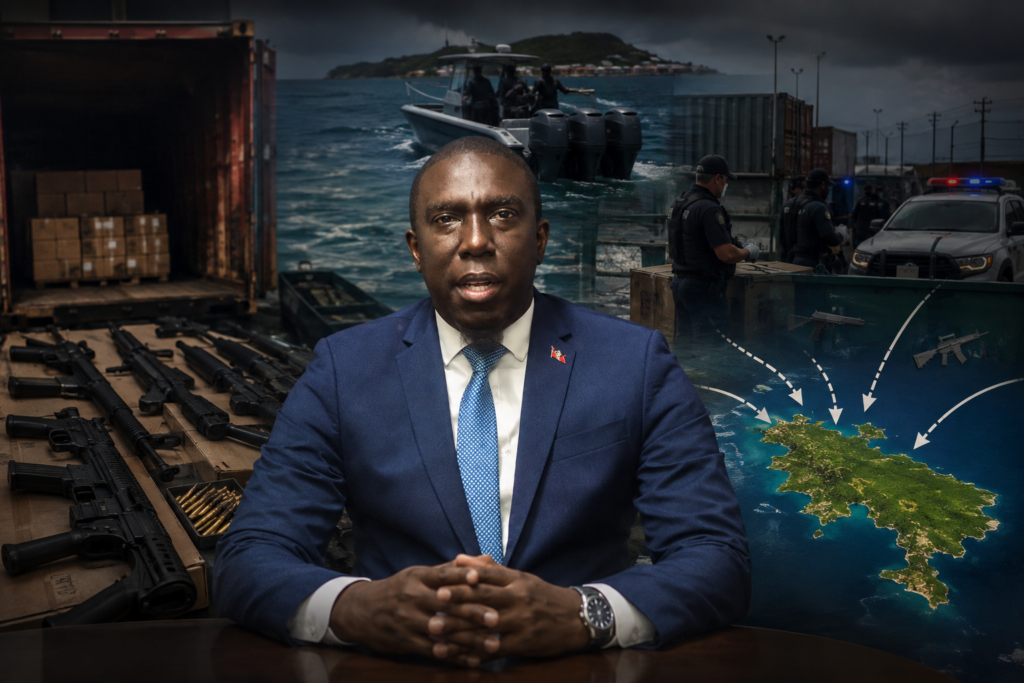
Against a backdrop of surging gun-related violence across Antigua and Barbuda, opposition leader Jamal Pringle has put forward a bold, targeted policy proposal: the creation of a dedicated firearm tracing and intelligence unit designed to choke off the flow of illegal weapons into the twin-island nation and break up the transnational criminal networks behind the trade.
Pringle framed the plan as a critical shift in the country’s approach to gun crime, arguing that current strategies focus too heavily on responding to offences after they are committed, rather than addressing the root of the crisis: the steady inflow of illegal firearms. In remarks outlining the initiative, he emphasized that long-term reduction in gun violence depends on cutting off the supply of weapons at the source, rather than only enforcing the law after shootings have already shaken communities.
The proposed unit would have a straightforward, explicit four-part mandate, Pringle explained: trace every seized illegal firearm to its source, map out the smuggling routes weapons use to enter Antigua and Barbuda’s territory, identify all parties involved – from the original suppliers to local facilitators who help move weapons after they arrive – and systematically dismantle the trafficking rings that keep the illegal trade operating.
Pringle pushed for national leaders to confront hard, unaddressed questions that have lingered as gun crime rates climb. He pressed for clear answers on where the illegal weapons are originating, what entry points they exploit to gain access to the country, who is coordinating their smuggling across borders, and which local actors help distribute the firearms once they are inside Antigua and Barbuda.
Beyond the creation of the new domestic unit, Pringle also called for deepened collaboration and more robust intelligence sharing with regional and international law enforcement bodies. He argued that transnational criminal networks can only be defeated through coordinated cross-border action, noting that porous borders and uncoordinated enforcement create openings for traffickers to exploit.
“A government that cannot adequately secure its borders will struggle to secure its people,” Pringle stated, adding that Antigua and Barbuda must harden all ports, official border crossings and entry points to make them impenetrable for gun smuggling operations.
Closing his remarks, Pringle warned against allowing the recent wave of gun violence to become a normalized part of daily life in the nation. Every shooting, he stressed, inflicts lasting harm on local families, tears at the fabric of communities, and erodes public trust in the country’s ability to keep its citizens safe. The proposed new unit, he argued, is a necessary first step to reversing these trends and restoring security across the islands.