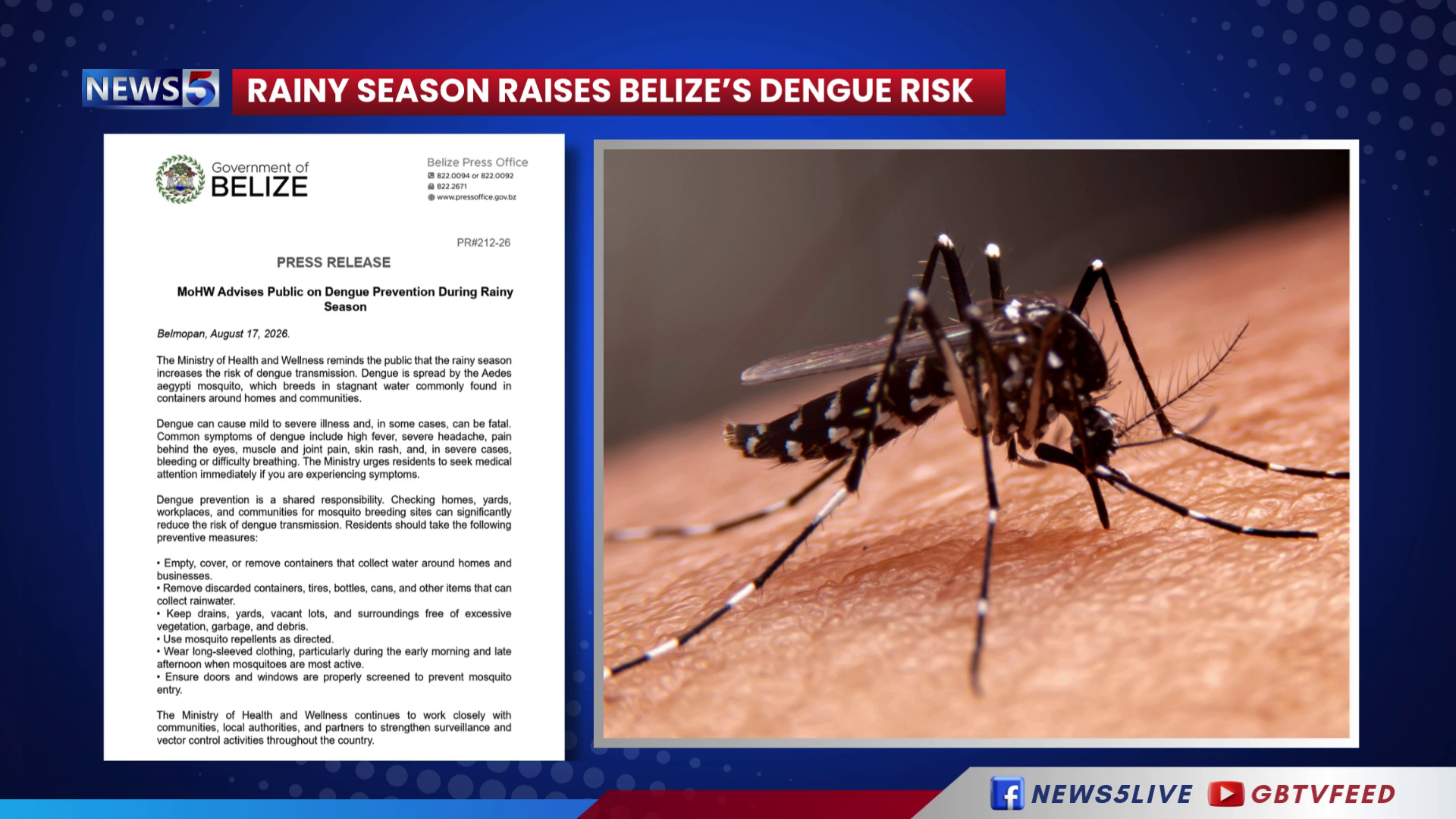
As the 2026 rainy season brings lower temperatures to Belize, it is simultaneously spurring a growing public health threat: a sharp increase in dengue fever risk fueled by expanding pools of stagnant water, the ideal breeding ground for the Aedes aegypti mosquitoes that carry the virus.
In a public advisory released on August 17, Belize’s Ministry of Health and Wellness has issued an urgent call to action for all residents across the Belize District to proactively inspect their properties, workplaces and shared community spaces for any collections of standing water that could support mosquito breeding.
Health authorities stress that dengue fever presents a wide spectrum of severity, ranging from mild, flu-like discomfort to life-threatening critical illness, with fatal outcomes recorded in a number of cases. Recognizable symptoms of the disease include sudden high fever, intense headaches, sharp pain behind the eyes, widespread muscle and joint soreness, skin rashes, abnormal bleeding, and labored breathing. The Ministry emphasizes that anyone who develops these symptoms should seek immediate professional medical care to reduce the risk of complications.
To help the public limit mosquito exposure and breeding, public health officials have outlined a series of simple, actionable prevention steps. Residents are encouraged to regularly empty or securely cover any outdoor containers that can collect rainwater, clear clogged drains and overgrown yard debris, dispose of waste items that hold standing water such as old tires, discarded bottles and aluminum cans, use EPA-approved mosquito repellent consistently, wear long-sleeved clothing when spending time outdoors, and ensure all doors and windows have intact, properly fitted mesh screens to keep mosquitoes out of living spaces.
The Ministry underscored that successful dengue prevention cannot be achieved by public health authorities alone: it is a shared collective responsibility that requires active participation from every community member. Government health teams continue to collaborate closely with local community leaders and municipal authorities to expand disease surveillance and scale up targeted vector control measures across at-risk areas.