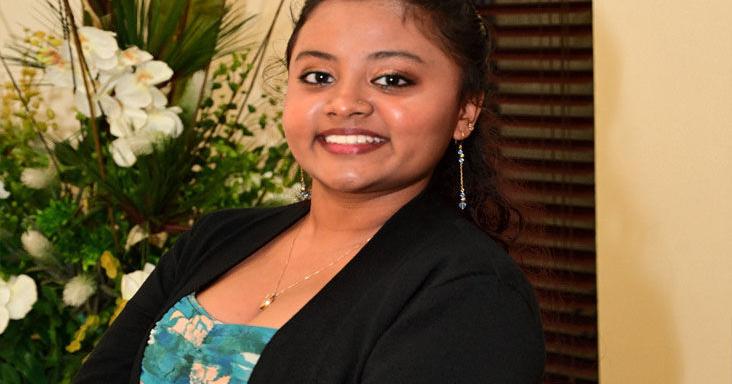
At just 19 years old, medical student Kaitlyn Sahatoo from Trinidad and Tobago is preparing for a life-changing international space mission in India, carrying with her a bold vision: to leverage cutting-edge space technology to transform her home country’s public healthcare system.
Selected from a pool of ambitious young female secondary school STEM participants, Sahatoo earned her spot on the 2026 ShakthiSAT Mission thanks to her standout scientific curiosity, natural leadership ability, and innovative problem-solving skills. The mission, a global initiative hosted between August 22 and 31 at Gautam Buddha University in Greater Noida, Uttar Pradesh, aims to empower 12,000 young women across 108 nations through hands-on, real-time satellite development projects.
In an exclusive interview with TV6 on Friday, Sahatoo shared that her fascination with space dates back to childhood, when she first began wondering how stars and the moon came to occupy their positions in the cosmos. Today, as a medical student, she is already charting a new interdisciplinary path that merges her two passions. She has identified multiple high-impact applications for space technology in Trinidad and Tobago’s healthcare sector, including enhanced disease surveillance, expanded telemedicine access, remote patient monitoring, and more effective disaster response coordination. For example, she notes satellite imaging and data could be used to track the spread of mosquito-borne illnesses like dengue, while also bringing specialized care to underserved communities in remote regions of the country.
Sahatoo attributes her selection success to her lifelong love of learning new skills, and explains that she has successfully balanced mission preparation with her CAPE exams and medical school coursework by completing program requirements during her free time. The program’s flexible online structure further helped her manage her schedule effectively. For her, the most anticipated part of the upcoming mission is the rare opportunity to collaborate directly with practicing space scientists on a satellite that will eventually launch into orbit and travel to the moon.
When she returns home from India, Sahatoo has already laid out plans to inspire the next generation of Caribbean STEM leaders. She intends to visit local secondary schools to deliver presentations and hold interactive discussions about space and satellite technology, with the long-term goal of developing a free, accessible space science curriculum for all students across the country.
Laura Rambaran, co-ambassador of the Shakti Saath program, says Sahatoo’s unique path perfectly illustrates the untapped potential of interdisciplinary innovation at the intersection of medicine and space science. Rambaran notes that Sahatoo’s participation in the program has already opened doors for her to explore space medicine, a rapidly growing emerging field that aligns both of her academic and professional interests. “She has decided to dive into space. Although her trajectory was medicine, she decided to explore something else,” Rambaran explained.
The Shakti Saath program was created specifically to introduce young people in regions like the Caribbean to STEM and space opportunities that would otherwise be out of reach. Currently, Trinidad and Tobago does not have a formal national space agenda, but Rambaran and fellow co-ambassador Donna Schoon-Moses are working alongside the Caribbean Space Agency and the local Ministry of Education to integrate the program’s curriculum into national secondary education. The 21-module curriculum, developed by an international team of leading space scientists, is planned to be rolled out as a summer enrichment program first, targeted at students who have never had exposure to space science before.
A key partner in this expansion effort is India, which has made dramatic, globally recognized advances in space exploration in recent decades. Rambaran says the Shakti Saath team based in India has offered full, free access to the program’s curriculum, as well as support for curriculum adaptation, program organization, and other critical resources to help Trinidad and Tobago build out its space education ecosystem. Rambaran believes that expanding early access to space science will fundamentally reshape how young Trinidadians view careers in science and technology, unlocking new economic and professional opportunities for generations to come.