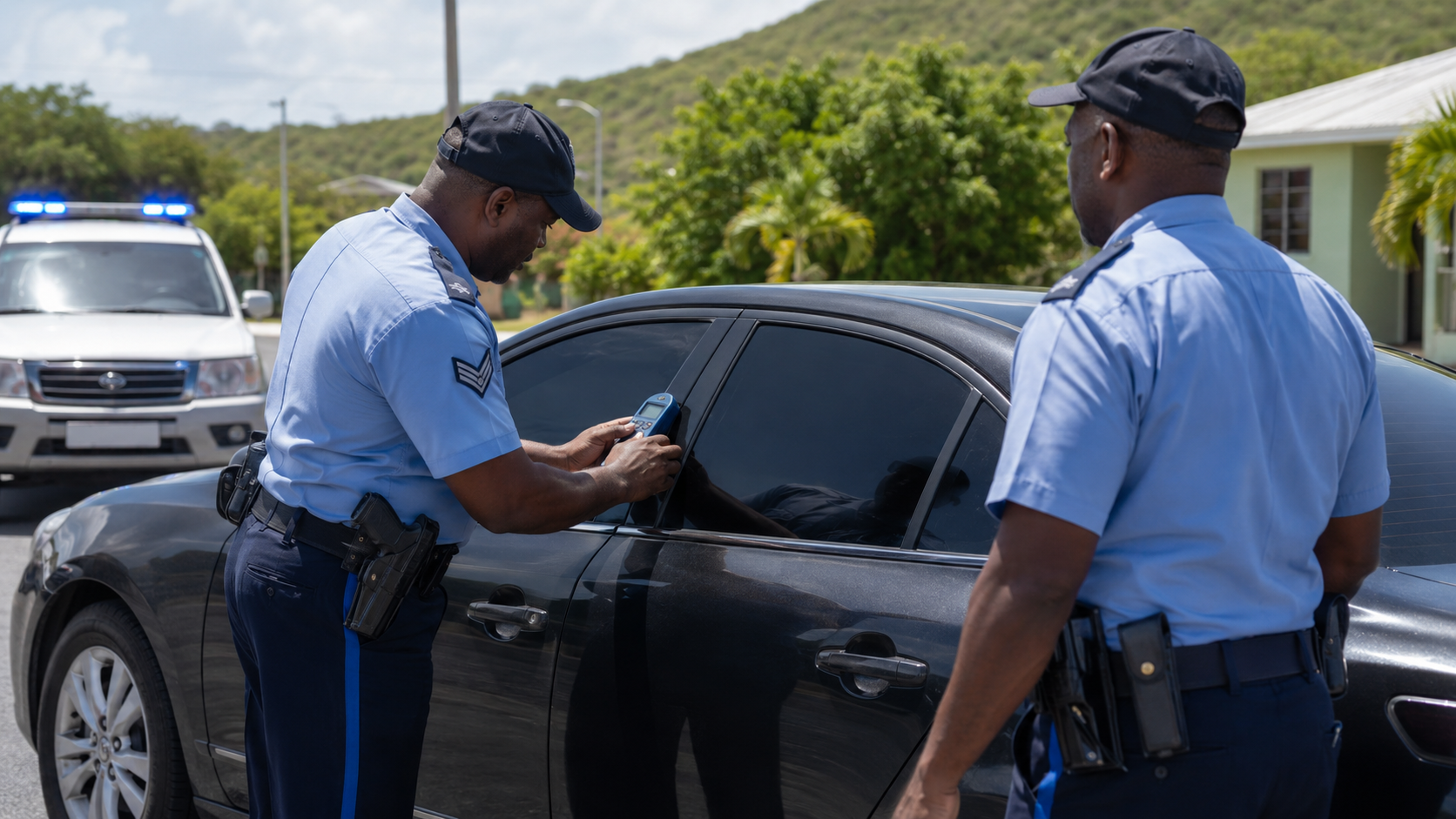
In a targeted push to curb violent crime and illegal gun activity across Antigua and Barbuda, national authorities have ordered law enforcement to ramp up crackdowns on motor vehicles with excessively dark window tinting. The new enforcement directive was announced by Prime Minister Gaston Browne during an appearance on the local Browne and Browne Show, where he outlined clear parameters for the new rule: any window tinting that blocks police from clearly viewing vehicle occupants and activity inside must be removed immediately.
“Criminal actors are using heavily tinted vehicles to hide their illegal activities, and we have formally instructed police to force the removal of these tints,” Browne stated in his remarks. “We need unobstructed visibility into every vehicle on our roads to keep communities safe.”
The new policy comes directly out of a recent high-level meeting of the country’s National Security Council, where top officials gathered to assess evolving crime patterns, the spread of unregistered illegal firearms across the nation, and the operational effectiveness of Antigua and Barbuda’s law enforcement institutions. Beyond the tinting mandate, the prime minister also called for a dramatic expansion of routine stop-and-search operations, issuing a recommendation that these proactive public safety checks be held at minimum twice per week across the country.
To support law enforcement in carrying out these expanded security measures, the prime minister confirmed that the national government plans to invest in boosting the police force’s operational capabilities. This upgrade will include allocating additional patrol vehicles, surveillance drones, and other critical resources to frontline officers, giving them the tools they need to enforce new security rules effectively. At the time of his announcement, Browne declined to share further details about additional strategies developed during the National Security Council meeting, noting that sensitive operational details cannot be disclosed publicly to avoid undermining ongoing law enforcement work.