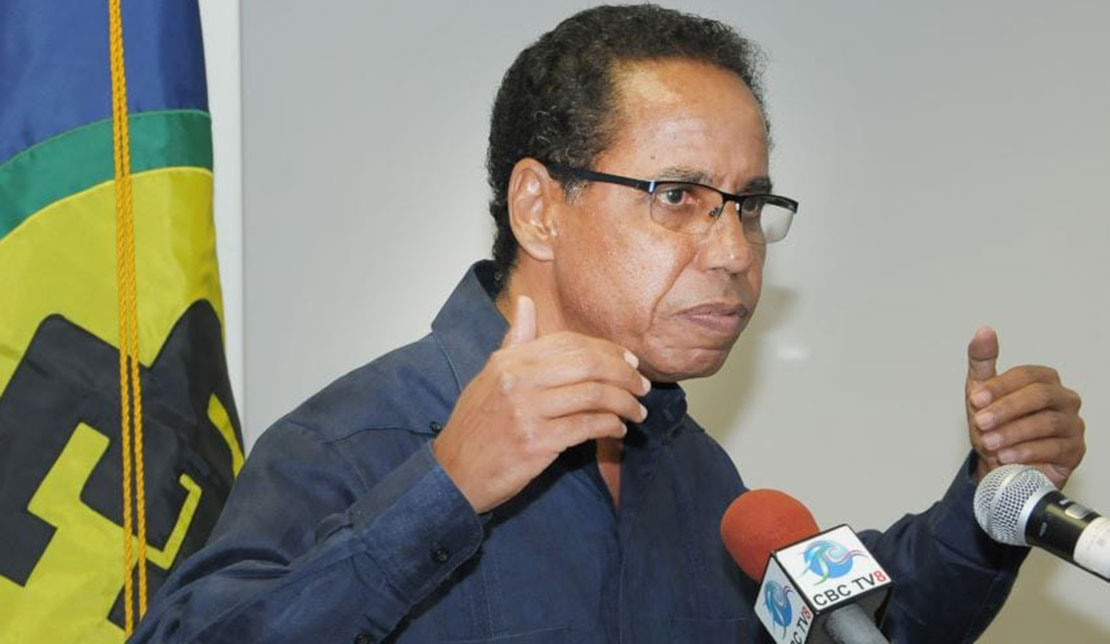
Across the Caribbean, the Caribbean Court of Justice (CCJ) has recently dominated regional headlines – but not for developments that paint the institution in a positive light. As Barbados’ Ambassador to CARICOM, David Comissiong, argues in this commentary, most ordinary Caribbean citizens lack deep contextual knowledge about the CCJ, leaving them vulnerable to misinformation that could skew their perspective on this foundational CARICOM institution. This piece seeks to clarify the CCJ’s origins, mandate, and track record to counter misleading negative narratives.
First and foremost, Comissiong emphasizes that the CCJ is a homegrown regional institution owned by the Caribbean people. Created between 2001 and 2005 by all 15 member states of the Caribbean Community (CARICOM), the CCJ counts among the 17 official CARICOM institutions, joining respected bodies like the Caribbean Disaster Emergency Management Agency (CDEMA), the Caribbean Agricultural Research and Development Institute (CARDI), and the Caribbean Examinations Council (CXC). The court was designed to deliver two core services to member states: adjudicating all legal disputes related to the implementation of the Revised Treaty of Chaguaramas, and serving as the highest national court of appeal for any CARICOM member state that chooses to recognize it as such.
In Comissiong’s assessment, the CCJ stands as the single most exceptional institution across the entire CARICOM system, outperforming every other regional body – including the British Privy Council, which many Caribbean states still rely on for final appeals. He outlines eight key strengths that set the CCJ apart, starting with its unshakable financial foundation. Unlike many regional institutions that face recurring budget volatility, the CCJ is funded through a permanent $100 million US trust fund, managed by an independent, professional board of trustees drawn from leading Caribbean entities including the Caribbean Insurance Associations, the Caribbean Institute of Chartered Accountants, the Association of Indigenous Banks of the Caribbean, the University of the West Indies, and the CARICOM Secretariat. Comissiong credits this stable funding structure to the foresight of CARICOM leaders, including current Barbados Prime Minister Mia Amor Mottley, who was the island’s Attorney-General when the CCJ was founded, and former St. Lucia Prime Minister Dr. Kenny Anthony.
This consistent, secure funding has allowed the CCJ to build and maintain a world-class, modern headquarters and courthouse in Port-of-Spain, Trinidad and Tobago. Unlike the London-based Privy Council, the CCJ also operates as an itinerant court, traveling across CARICOM member states to bring judicial services directly to citizens in Barbados, Jamaica, Belize, Guyana and beyond.
A third core strength of the CCJ is its panel of highly respected, experienced judges. Justices have been drawn from across CARICOM nations including Trinidad and Tobago, St. Kitts and Nevis, Jamaica, St. Vincent and the Grenadines, Barbados, Guyana, and Belize, as well as from the United Kingdom, Canada, Nigeria, and the Netherlands Antilles. The court’s three past presidents – Michael de la Bastide of Trinidad and Tobago, Sir Dennis Byron of St. Kitts and Nevis, and Adrian Saunders of St. Vincent and the Grenadines – are all widely recognized as leading legal luminaries in the global legal community.
Critically, the CCJ operates with full political independence, Comissiong argues. All judicial appointments are made by the broad-based, non-partisan Regional Judicial and Legal Services Commission (RJLSC), which includes representatives from the Council of Legal Education, the University of the West Indies Faculty of Law, the University of Guyana Faculty of Law, CARICOM national bar associations, the OECS Bar Association, CARICOM public and judicial service commissions, and the secretariats of both CARICOM and the OECS. No other regional judicial body can claim a more inclusive, politically neutral appointment process, Comissiong notes, and the commission has already committed to conducting a full, appropriate investigation into the current controversy through the court’s established internal disciplinary frameworks.
Unlike the British Privy Council, the CCJ is structured as a people’s court accessible to all Caribbean citizens, regardless of income or case size. It serves as a final court of appeal for every type of civil and criminal case, from small civil claims brought by working-class citizens to high-stakes commercial disputes involving large corporations. By contrast, the Privy Council primarily hears death row murder appeals and large civil cases, effectively shutting out ordinary citizens from accessing final appeal for their routine legal matters.
This accessibility is further reinforced by the CCJ’s affordable fee structure. Taking an appeal to the Privy Council in London requires Caribbean citizens to pay for expensive filing fees, retain costly UK-based legal counsel, and cover travel costs to the United Kingdom – with total estimates ranging between $57,000 and $87,000 US per case, putting the process out of reach for most people. The CCJ charges no prohibitive fees, and often travels to a litigant’s home country or permits hearings via video conference, eliminating the need for costly travel.
Beyond its core judicial functions, the CCJ acts as a developmental institution committed to lifting standards across Caribbean national justice systems. It regularly offers constructive criticism, targeted guidance, and professional training to inefficient or dysfunctional national courts in member states, working to improve overall judicial performance across the region.
Finally, Comissiong points to the CCJ’s 21-year track record of independent, effective adjudication as proof of its value. Over more than two decades of operation, there has been no credible evidence of external political interference in the court’s work. In fact, the CCJ has repeatedly ruled against CARICOM national governments in high-profile disputes, demonstrating its independence.
In conclusion, Comissiong frames the CCJ as one of the greatest achievements of the Caribbean regional integration movement. It is a homegrown institution built by Caribbean intellect and initiative, independently funded by Caribbean taxpayers, and inclusive of a broad cross-section of Caribbean regional entities – making it a true microcosm of the Caribbean Community itself. To lack confidence in the CCJ, he argues, is to lack confidence in the Caribbean people and their ability to govern their own regional affairs.
Comissiong notes that the current controversy surrounding the court is not unusual: no human institution is immune from periodic challenges or controversy, and the CCJ has in place clear processes to address current concerns. Currently, 14 CARICOM member states recognize the CCJ as the court of original jurisdiction for treaty matters, but only five – Barbados, Guyana, Belize, Dominica, and St. Lucia – use it as their final national court of appeal. For Comissiong, it is past time for all CARICOM member states to fully embrace and utilize this world-class regional institution.