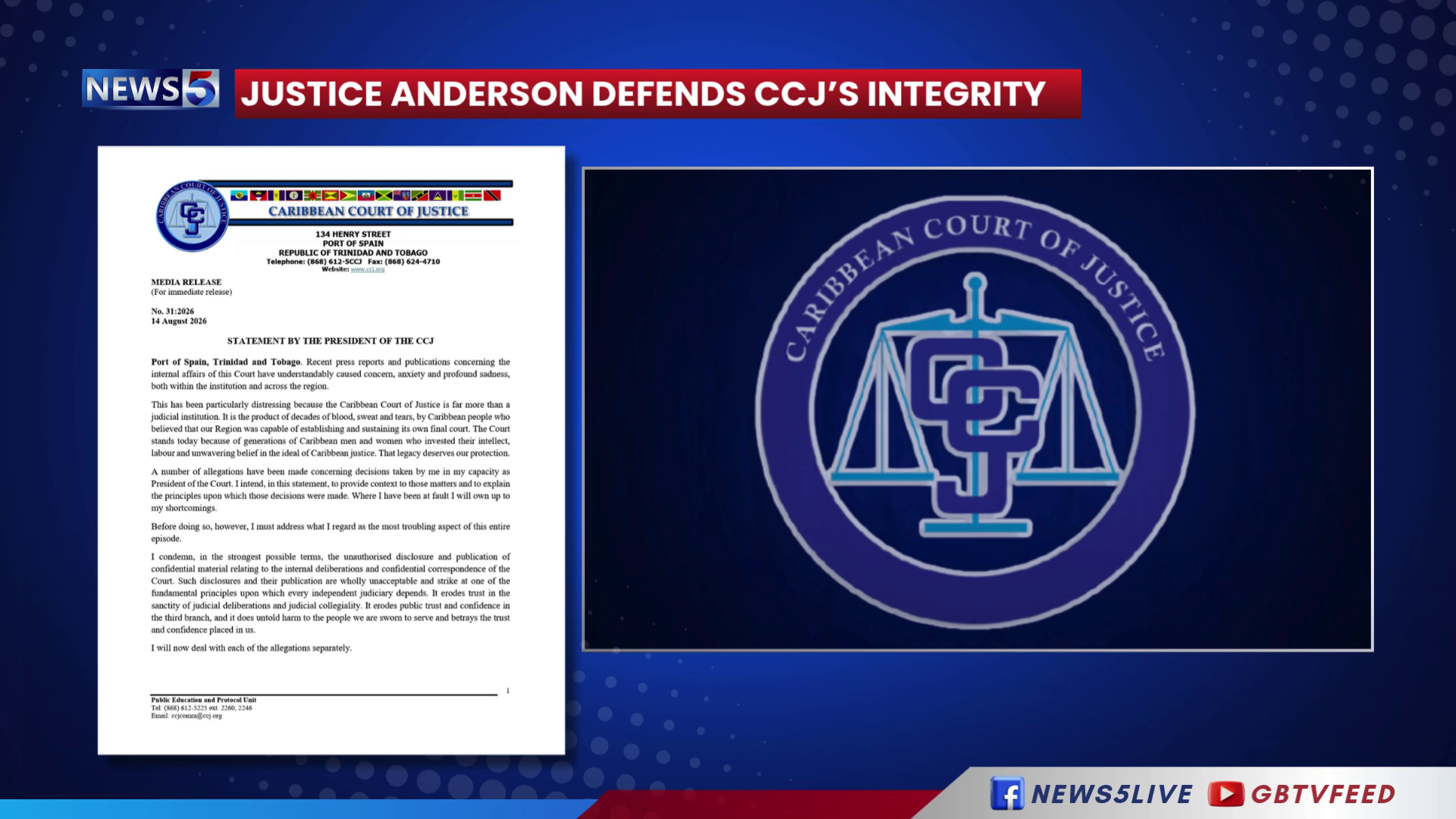
On August 14, 2026, the head of the Caribbean’s top regional judicial body has pushed back against a series of recent claims that threaten to undermine the court’s institutional standing and public trust. In an official public statement released the same day, CCJ President Justice Winston Anderson addressed swirling allegations surrounding the court’s internal operations, confirming that the unconfirmed reports have sparked widespread distress and unease both within the institution and across the broader Caribbean community.
At the core of Anderson’s response is a sharp condemnation of the unauthorized disclosure of confidential court records. The CCJ president emphasized that the leaked material inflicts lasting damage on three pillars of the regional justice system: public faith in the courts, the long-guaranteed independence of the judiciary, and the integrity of the court’s internal decision-making deliberations.
Anderson directly refuted each of the most prominent allegations one by one, starting with claims that judicial panel selections were manipulated to deliver predetermined outcomes in certain cases. He labeled these assertions categorically false, warning that they erode the public’s confidence in the entire Caribbean justice ecosystem.
Turning to claims around judicial dress codes during proceedings, Anderson clarified that the CCJ has adhered consistently to long-established institutional practices, which allow for both traditional judicial robes and bench jackets during official hearings. He acknowledged that his public approach to addressing the issue may have been perceived as forceful by some observers, but explained that his priority was protecting the consistent standards and public image of the regional court.
Beyond internal operational claims, Anderson also weighed in on a long-running judicial appointment controversy in Guyana, where the top positions of Chancellor and Chief Justice have remained filled by acting appointees for an extended period. He stressed that his concern over the prolonged acting appointments is not rooted in political motivations, but rather a commitment to upholding judicial independence. Anderson argued that substantive, permanent appointments to the country’s highest judicial offices are a necessary requirement to protect the rule of law.
Despite the current controversy roiling the institution, Anderson reaffirmed that the Caribbean Court of Justice will remain steadfast in its core mandate. He confirmed the court will continue to carry out its work independently and impartially, remaining dedicated to serving the people of the Caribbean while safeguarding the legacy of regional justice that the institution has built over its history.