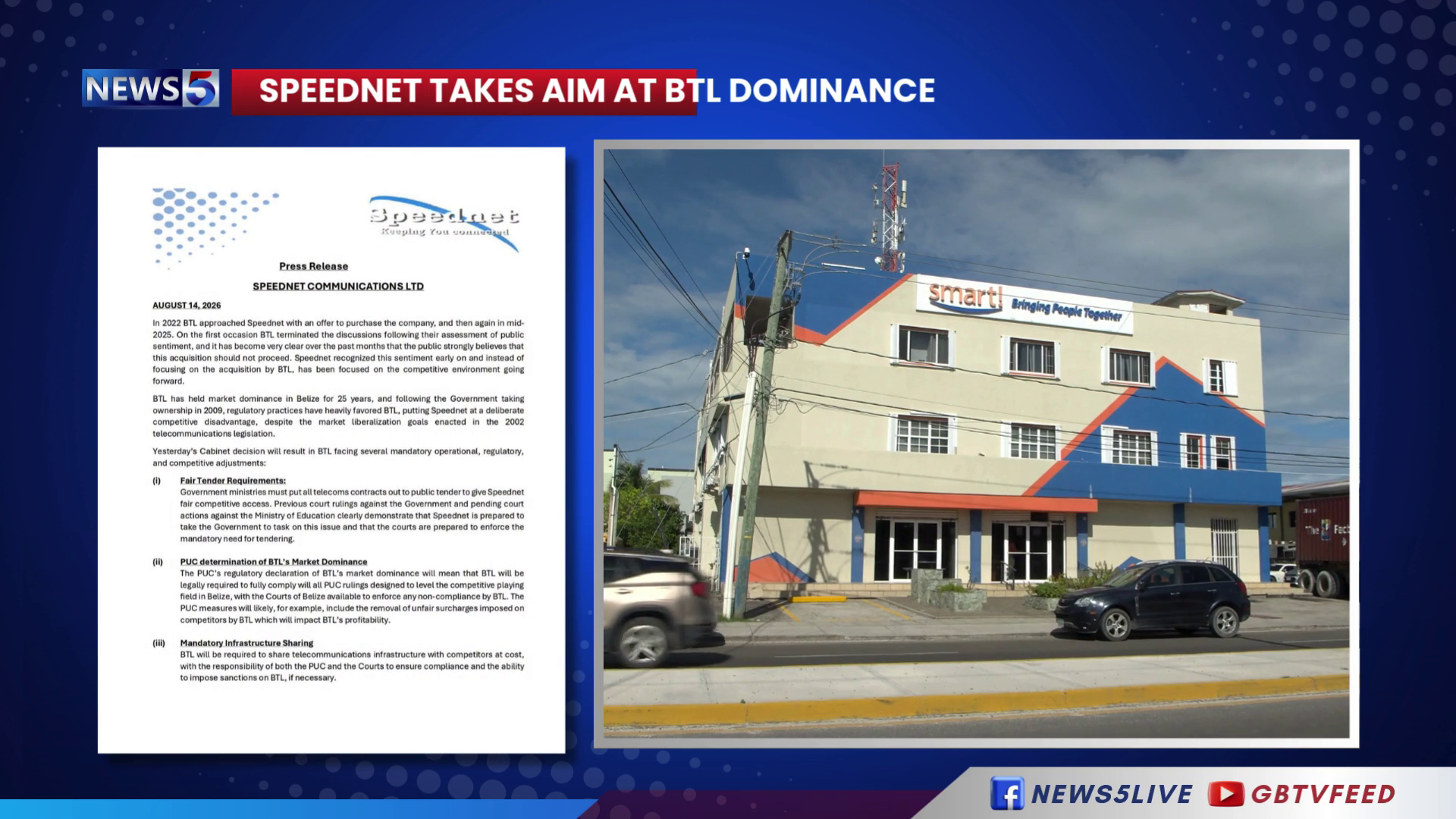
On August 14, 2026, Belize’s telecommunications landscape is undergoing a major shift following the collapse of a proposed acquisition of Speednet by incumbent provider BTL, with both players now positioning themselves for a restructured competitive market.
For months, public discourse in Belize has centered on the potential buyout of Speednet by BTL, a deal that would have reshaped the entire domestic telecom sector. In an official press release issued this week, Speednet confirmed that BTL first approached the smaller provider with an acquisition offer back in 2022, before returning with a second bid in mid-2025. Both rounds of negotiations failed to produce a finalized agreement, a outcome Speednet attributes largely to widespread public pressure. Thousands of Belizean consumers made clear they wanted Speednet to remain an independent alternative to the long-dominant BTL, and that public sentiment ultimately pushed the company to walk away from sale talks.
With acquisition discussions fully off the table, Speednet says the battle has now moved to securing fair competition in a market it says has been tilted toward BTL for decades. Speednet officials note that BTL has held a 25-year stranglehold on Belize’s telecom market, and that since the Belizean government took ownership of BTL in 2009, regulatory policies have consistently favored the larger provider, leaving Speednet at a significant structural disadvantage.
But the recent decision by Belize’s Cabinet to block the proposed acquisition has opened the door to new rules of the game, according to Speednet. Going forward, BTL will be required to operate under a far more balanced regulatory framework. One key change mandates that all government telecom contracts be put out to open public tender, ending the longstanding practice of awarding contracts directly to BTL without giving rival providers a fair opportunity to bid.
This shift follows the Public Utilities Commission (PUC)’s official designation of BTL as a dominant market player, a classification that forces the incumbent to comply with new regulations designed to level the competitive playing field. For Speednet, the most critical changes include the elimination of what it calls unfair surcharges that BTL has long imposed on competing providers. Another landmark requirement mandates that BTL share its existing telecom infrastructure with competitors at cost, with the PUC and national courts granted full authority to enforce compliance and levy penalties against BTL if it fails to adhere to the new rules.
Speednet has moved quickly to thank the wide coalition of groups that supported its position throughout the acquisition debate, including the Belize Chamber of Commerce, national labor unions, independent media outlets, and broader civil society organizations. The company says this public and institutional backing has solidified its position in the market, and it is not just committed to staying — it is planning aggressive growth. Speednet announced plans for major capital investments in next-generation technology, upgraded network systems, new equipment, and expanded infrastructure, all with the goal of delivering affordable, modern telecom services to Belizean consumers. For the company, this moment marks not the end of acquisition talks, but the start of a new chapter for Belize’s telecom industry, built on fair competition, equal access, and real consumer choice.
Across the industry, BTL has acknowledged the new reality and is shifting its own strategy. In an internal bulletin sent to all employees Wednesday, BTL Chairman Markhelm Lizarraga confirmed that the company respects the Cabinet’s decision to reject the proposed Speednet acquisition, and that the chapter of merger discussions is now closed. Lizarraga noted that hundreds of hours of work went into evaluating the proposed transaction, but the company is now turning its focus to other avenues of business growth.
Lizarraga acknowledged that the PUC’s designation of BTL as a dominant market player has fundamentally altered the company’s operating environment, bringing with it increased regulatory obligations, stricter external oversight, and tighter constraints on how BTL can compete, invest, and serve its customer base. Despite these new challenges, BTL is framing the shift as an opportunity to reinvent itself for the modern market. The bulletin emphasized that BTL remains a strong market player, with a dedicated workforce, longstanding trusted relationships with customers, an extensive national infrastructure network, and robust technological capabilities.
BTL is already in the process of transforming from a purely traditional telecommunications provider into a broader technology and digital services company, with expanding offerings in cloud infrastructure, cybersecurity, managed enterprise services, big data solutions, and other emerging technology sectors. Lizarraga told employees that succeeding in this new, more competitive landscape will require tighter operational execution, a sharper focus on customer needs, more strategic use of the company’s existing assets, and unified teamwork across all departments. He urged staff not to let current market headwinds define the company’s future, stressing that Digi/BTL remains positioned for long-term growth.
As Speednet celebrates the opening of a new, more competitive era and BTL refocuses its internal strategy for changing market rules, one thing is clear: while the proposed acquisition is dead, the fight to shape the future of Belize’s telecommunications sector is only just beginning.