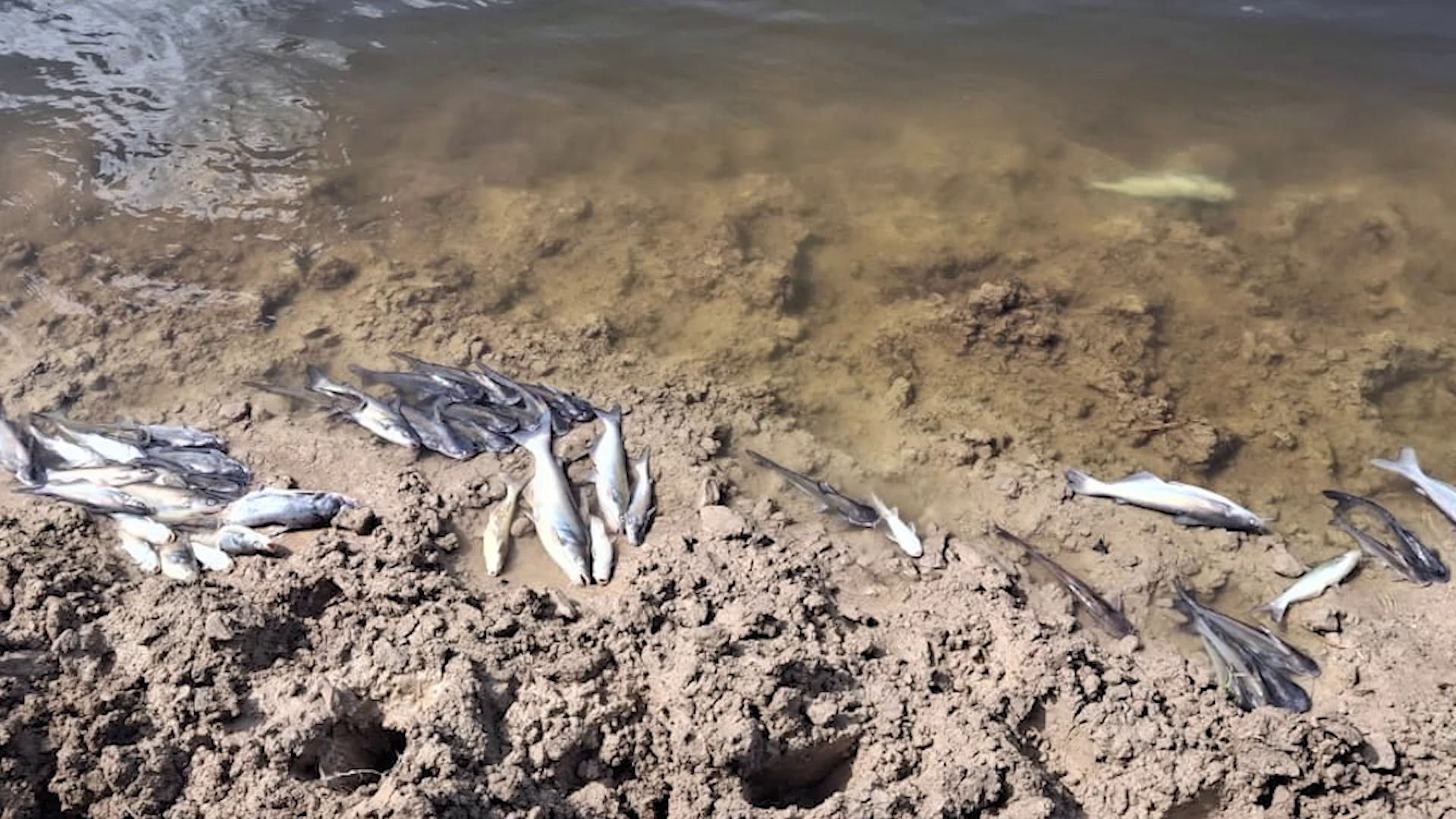
On August 13, 2026, a massive fish death event in the Belize River Valley has sparked a tense ongoing investigation, with public debate centering on the role of agricultural operations and recent severe flooding. Thousands of aquatic life were found dead across the waterway, prompting both public outcry and official inquiry, as community members and environmental activists point to nutrient-rich runoff from canals associated with the major agricultural producer Santander Sugar as the likely culprit.
However, government environmental authorities have pushed back against early conclusions, noting that no conclusive evidence has yet emerged to directly tie Santander Sugar’s operations to the mass mortality event. Anthony Mai, the nation’s Chief Environmental Officer, explained that newly analyzed satellite imagery paints a clear picture of extreme pre-event flooding across large swathes of agricultural land in the region, including rice fields, the southern section of Santander’s farm, and dozens of other neighboring properties. The massive volume of floodwater that washed accumulated sediment, nutrients and organic material from these inundated fields into the Belize River almost certainly altered the river’s aquatic ecosystem dramatically, creating conditions that could trigger large-scale fish death, Mai said.
Santander Sugar has also pushed back against public allegations, stating that none of its internal canal networks connect to Laboring Creek, the tributary that feeds directly into the affected section of the Belize River. The company notes that it manages only 12 percent of the larger shared watershed that drains into the river, meaning the area is home to dozens of other land users, from small family farms to residential neighborhoods, all of which contribute to runoff into the waterway.
Orlando Habet, Belize’s Minister of Sustainable Development, echoed the government’s cautious stance, explaining that investigators cannot pin blame on any single entity without concrete evidence. He noted that while runoff from Santander’s property can flow into canals that eventually reach the Belize River when retention ponds overflow, multiple other nearby farms also drain into the same canal system. This shared drainage network makes it impossible to single out Santander as the sole cause at this stage of the investigation, Habet said.
The minister also acknowledged that consistent regulatory enforcement remains a persistent challenge for his ministry, even with existing environmental laws on the books. Different pieces of legislation fall under the oversight of separate government bodies, Habet explained, requiring inter-agency alignment to ensure compliance across all land users in the watershed.
Independent environmental researchers say the incident highlights longstanding gaps in Belize’s environmental regulation and enforcement that need urgent addressing. Dr. Donald McKnight, research director at the Savanna Field Station, emphasized that the nation must strengthen its enforcement capacity to prevent similar mass mortality events in the future. During a recent site visit to the Belize River, McKnight noted he observed multiple unregulated drainage canals running directly from agricultural fields into the main river. While these unregulated discharges may not have caused the 2026 fish kill, they create a persistent risk of future ecological collapse in the waterway, he warned.
As of mid-August 2026, the investigation remains ongoing. The Department of the Environment confirmed that Santander Sugar has fully cooperated with all investigative requests, but definitive lab results to confirm the exact cause of the fish kill are still pending. Researchers are currently monitoring water quality as contaminated water moves downstream, warning that the event could impact additional riverside communities before the water reaches the Caribbean Sea.