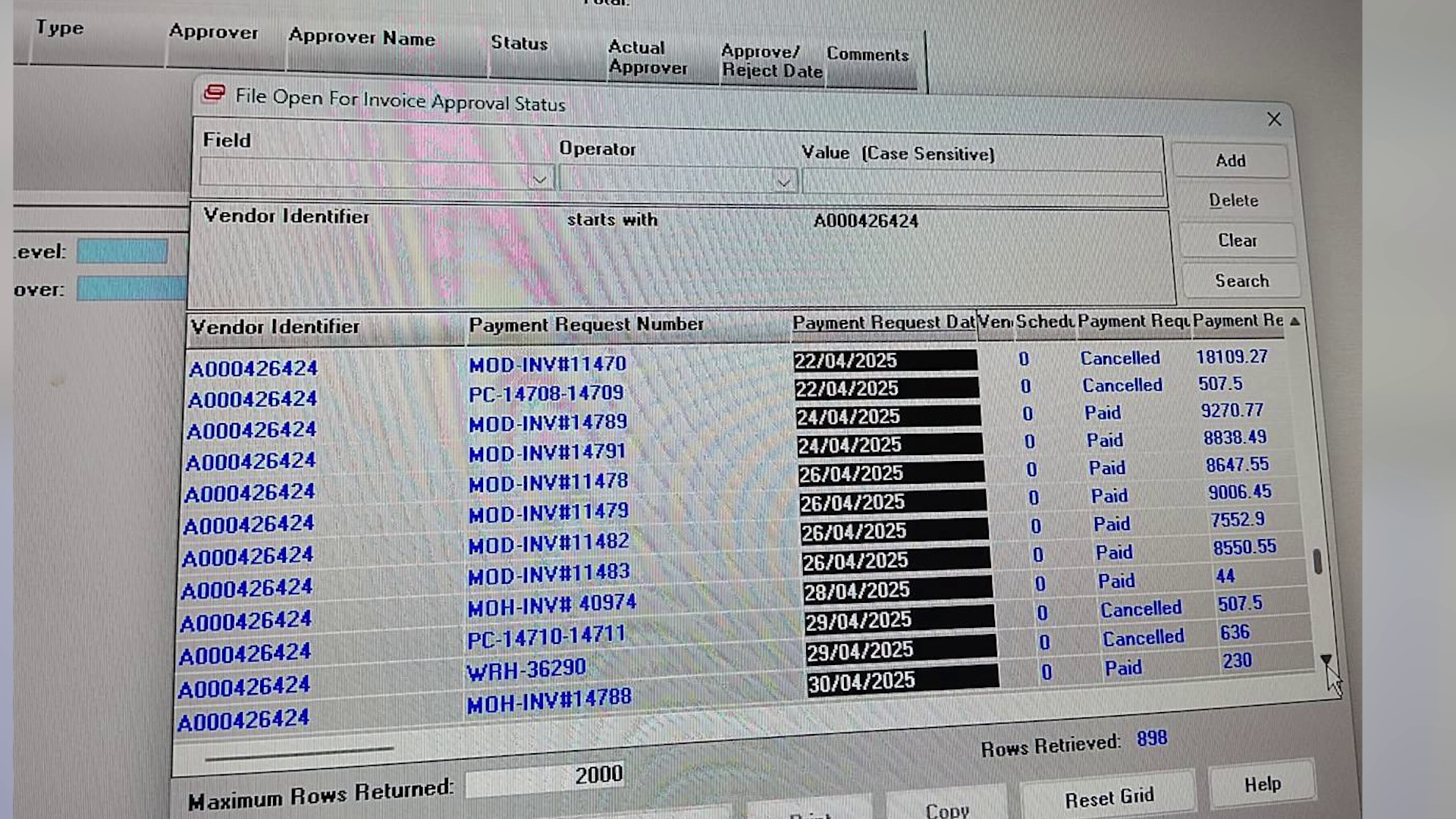
In an ongoing investigation into the high-stakes Mira Family Millions defense procurement scandal rocking Belize, national Auditor General Maria Rodriguez has outlined the innovative, ground-level investigative steps her team is taking to answer a critical public question: Did taxpayers get full value for the millions spent on Ministry of Defense contracts?
Unlike routine audits that only review formal financial documents like invoices and purchase orders, Rodriguez’s team is cross-reaching official procurement records with handwritten kitchen logs from the Belize Defense Force (BDF) meal facilities. The logic is straightforward: all rations purchased for military personnel must be used in base kitchens, which are required to document every ingredient used for daily meal preparation. By comparing the volume and type of supplies listed in procurement contracts to what appears in kitchen usage records, auditors can directly identify discrepancies where public funds may have been spent on goods that never reached military use.
Rodriguez emphasized that missing or incomplete kitchen logs are not a acceptable administrative oversight. “If you fail to document what you received and used, you are essentially showing you cannot account for public assets you purchased,” she explained in an interview. “It is in the Ministry of Defense’s own interest to maintain complete records — without clear documentation, auditors cannot confirm that purchased supplies were actually used for their intended public purpose.”
When pressed on the common excuse of poor administrative record-keeping, Rodriguez rejected the claim outright, noting that her team uses on-site observation to verify log accuracy even when records are incomplete. Auditors have conducted unannounced spot checks at institutional kitchens across government facilities, including hospitals, observing what chefs prepare on a given day then returning two weeks later to cross-check against official logs. Mismatches between observed usage and recorded entries immediately flag potential fraud for further investigation. While on-site checks at BDF kitchens have not yet been completed, Rodriguez confirmed they are scheduled as part of the ongoing probe.
Beyond verifying whether supplies were actually delivered and used, the investigation has expanded to examine claims that conflicts of interest were deliberately ignored at multiple levels of the approval process. Rodriguez stressed that responsibility for preventing biased procurement does not end with the bidding company — the Ministry of Defense’s chief executive officer and the Ministry of Finance bear legal and ethical responsibility for flagging improper connections at every approval stage.
“At this point, I can only allege that conflict of interest may have occurred; only a court can make a formal finding of wrongdoing,” Rodriguez clarified. She added that key questions remain about whether family ties to the winning bidder were overlooked during approvals. Under Belize’s current governance framework, the accounting officer — the Ministry of Defense CEO — is legally required to flag potential conflicts of interest, even if they are raised by a sitting minister. If that step was skipped, relevant officials failed to properly manage a critical public integrity risk.
Rodriguez also called out other oversight bodies that failed to intervene, noting that the Ministry of Finance issued a no-objection certificate for the contracts without completing mandatory conflict of interest checks, and the Contractor General also did not flag irregularities tied to the ownership of the winning bid.
Most notably, the investigation has exposed a gaping hole in Belize’s public integrity framework: current national law does not require formal, mandatory conflict of interest declarations for public procurement processes, leaving oversight officials without clear legal requirements to enforce. This regulatory gap has allowed unvetted connections to potentially influence multi-million dollar public contracts, Rodriguez said.