As climate change continues to drive rising ocean temperatures and widespread coral bleaching across the Caribbean, tourism giant Iberostar Hotels & Resorts is stepping up its commitment to marine ecosystem protection through an expanded portfolio of coral reef conservation and restoration initiatives in the Dominican Republic.
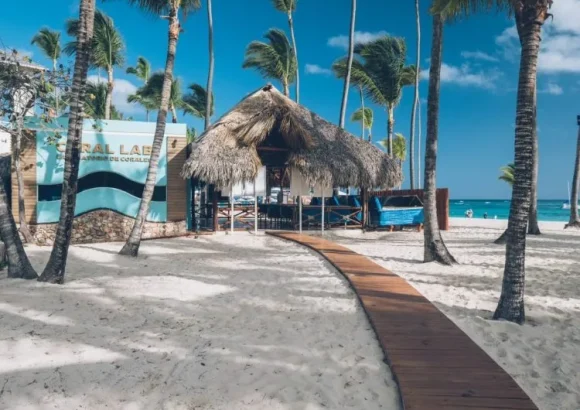
At the company’s Playa Bávaro location, a dedicated on-site coral laboratory houses a specialized genetic bank preserving samples from nine distinct species of reef-building corals. The facility’s in-house team of scientific researchers carries out cutting-edge thermotolerance experiments, designed to map how different coral species react to elevated ocean heat levels. The data gathered from these studies will directly inform and strengthen future reef restoration projects across the region.
All of these conservation efforts fall under the umbrella of Iberostar’s flagship sustainability program, “Wave of Change”, an initiative built to advance the principles of responsible tourism and safeguard vulnerable coastal ecosystems around the globe. To date, the company’s global nature conservation strategy has brought together more than 30 independent scientists and marine specialists, contributed to 13 peer-reviewed scientific publications, and developed two standardized restoration protocols that are now widely used by coral conservation professionals worldwide.
In collaboration with the Dominican Republic’s Ministry of Environment and Natural Resources, with initial seed funding from the German Development Cooperation (GIZ), Iberostar has already completed the rehabilitation of roughly one hectare of degraded reef habitat within the Playa Bávaro tourism complex. This restored coastal zone now acts as a critical refuge for native endemic marine species, and functions as a natural seed source to support natural vegetation regeneration across nearby damaged ecosystems.
Iberostar’s conservation footprint extends well beyond this single site in the Dominican Republic. Across the entire Caribbean region, the company operates seven underwater coral nurseries, where heat-tolerant coral fragments are grown before being outplanted to damaged reef sites. It also runs three land-based coral research laboratories, located in the Dominican Republic, Mexico, and Jamaica respectively.
Most recently, the company laid the groundwork for long-term institutional collaboration on marine conservation: In February 2026, the Iberostar Foundation partnered with the Autonomous University of Santo Domingo to launch the Iberostar Sea Initiative, a program focused on advancing marine research, providing specialized conservation training, and facilitating cross-sector knowledge transfer. Just two months later, in April, Iberostar signed a formal partnership agreement with the Dominican Ministry of Environment to support coordinated conservation and restoration work for coastal and marine ecosystems in the popular tourist regions of La Altagracia and Puerto Plata.