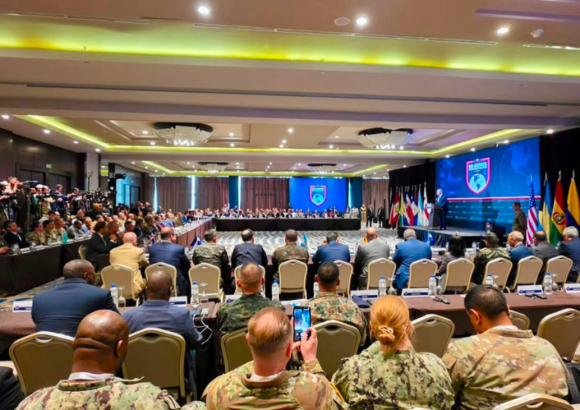
Against a backdrop of growing transnational drug trafficking and organized criminal activity across the Americas, Panama played host this week to the high-stakes Forum of the Americas Coalition Against Cartels (A3C), bringing together top defense and security leaders from 18 countries across the region. The two-day gathering, held on August 11 and 12, centered on a core shared goal: forging more robust cross-border collaboration to dismantle criminal cartels and their sprawling networks, through targeted strategies including improved intelligence sharing, tightened border security protocols, and streamlined coordination between national security institutions.
Leading the Dominican Republic’s official delegation to the forum was Lieutenant General Carlos Antonio Fernández Onofre, the country’s Minister of Defense. He was joined by a senior cross-agency team reflecting the Dominican government’s priority of addressing organized crime: Deputy Interior and Police Minister Edwin Eusebio Féliz Brito, Director of the National Investigations Department (DNI) Luis Soto, Defense Ministry Intelligence Director Brigadier General Enrique Armando Aguilera Trujillo, and Brigadier General Edgar Tiburcio, the Dominican Republic’s designated liaison for the U.S.-backed Shield of the Americas initiative.
As the host nation, Panama structured the forum’s agenda to tackle the full scope of regional security threats, with focused discussions on disrupting every layer of cartel operations: from their financial infrastructure and cross-border logistics routes to their on-the-ground operational cells. Unlike isolated national enforcement efforts, forum participants emphasized that coordinated, collective action is the only viable path to weakening cartel influence across the hemisphere.
Following the conclusion of the gathering, the Dominican government released a statement outlining the strategic benefits of its participation. Officials noted that the forum has already opened new doors for expanded partnership and real-time intelligence exchange with the United States and other participating nations. These new cooperative ties, the government added, will directly bolster the country’s ability to monitor and secure its land, maritime, and air territories, blocking criminal groups from using Dominican infrastructure to traffic drugs and carry out other illegal organized activities.