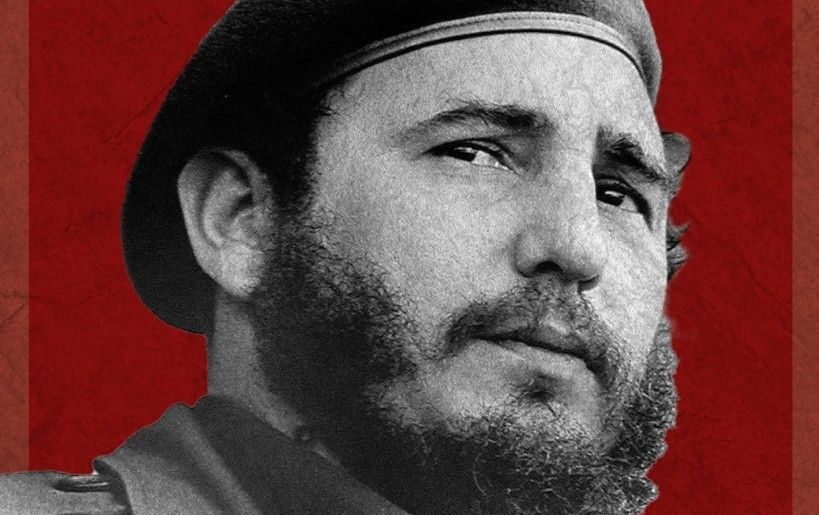
On August 13, 2026, the Caribbean region pauses to mark a historic milestone: the 100th anniversary of the birth of Fidel Castro, the iconic founding leader of the Cuban Revolution. This day is far more than a ceremonial tribute to a political figure; it is a collective reflection on the life, ideals, and lasting global impact of a man who redefined Cuba’s national identity and inspired solidarity movements across the Global South.
For Cubans, the centenary offers a moment to revisit the foundational values that Fidel Castro embedded into the Cuban project after the 1959 revolution. Under his leadership, the Cuban government positioned national independence, territorial sovereignty, and self-determination as non-negotiable pillars of public life, alongside core social commitments to universal public education, free healthcare, scientific advancement, and human dignity. Unlike many nations that frame access to basic services as market-dependent privileges, Cuba enshrined education and healthcare as inalienable human rights for all citizens. This vision led to the total eradication of illiteracy within years of the revolution, the construction of one of the world’s most accessible universal public health systems, and the training of generations of skilled medical professionals and scientists that have extended Cuba’s humanitarian reach far beyond its borders.
One of the most tangible manifestations of this solidarity legacy can be found in the small Caribbean nation of Dominica. When Dominica achieved full independence in 1978, its leadership turned to the international community for support to build out its domestic public services, and Fidel Castro’s Cuba was among the first to answer that call. Just one year later, the first cohort of Dominican students departed for Cuba to pursue higher education. In the decades since, more than 400 Dominican students have graduated from Cuban universities and technical institutions, with over 130 earning degrees in medicine. Beyond education, Cuban development cooperation has supported Dominican progress across key sectors including public health infrastructure, school construction, and community development projects.
This year holds double significance for the two Caribbean nations: alongside Fidel Castro’s centenary, they are also celebrating 30 years of formal diplomatic relations. But officials on both sides emphasize that the fraternal bond between Cuba and Dominica predates formal diplomatic recognition, forged through decades of mutual solidarity rooted in shared experiences of colonialism and a commitment to South-South cooperation.
The centenary commemoration comes at a moment of extraordinary economic and social strain for Cuba, as the decades-long United States economic, commercial, and financial blockade has been intensified in recent years, with new restrictions severely limiting the country’s access to global fuel supplies. Fuel scarcity is not merely an energy issue for Cuba: it directly undermines the functioning of core public services, cutting electricity to hospitals, interrupting cold chain storage for life-saving medications, reducing access to clean drinking water, slowing domestic food production, and disrupting the daily operations of nearly every sector of society.
Data presented at the 80th session of the United Nations General Assembly on July 7, 2026, underscores the staggering human and economic cost of the blockade. Between March 1, 2025, and February 28, 2026, total damages from the sanctions reached a record high of $8.083 billion at current market prices, representing a 7% increase from the previous year’s total. That averages out to $22 million in economic losses every single day. Cubans often describe the ongoing blockade as a “permanent hurricane”: a constant, unrelenting force designed to wear down the population and make daily survival untenable. But as Dominicans, who have faced their own share of devastating Atlantic hurricanes, understand well, communities can withstand extreme hardship, rebuild stronger after crisis, and emerge more united than before.
Cuban leaders and citizens alike affirm that they will follow that same path, drawing strength from the legacy of the revolution and the achievements they have built over decades, rooted in the principles Fidel Castro helped establish. A little-known, defining detail of Fidel Castro’s legacy also shaped this year’s commemorations: per his explicit request before his death, no public statues, monuments, or buildings bearing his name dot Cuba’s public landscape. He insisted that his legacy should not be carved into stone or bronze, but instead live on in the Cuban people, in their collective values, and in their daily actions to defend the revolution’s gains.
One hundred years after his birth, that legacy remains vibrantly alive across Cuba, carried by generations of citizens who continue to prioritize human dignity and national sovereignty. In Dominica, that legacy lives on too: in the hundreds of Dominican professionals whose lives and careers were shaped by Cuban educational support, in the Cuban-trained doctors who serve Dominican communities across the country, and in the unbreakable fraternal bond between the two Caribbean nations.
Today, the most enduring monument to Fidel Castro is not a structure built of hard materials: it is a people that remembers its history, resists external pressure, and continues to believe in the vision of a more just and sovereign world. As the two nations mark this centenary, leaders reaffirmed their commitment to preserving and growing the solidarity between Cuba and Dominica for generations to come, closing with a collective tribute: Happy 100th birthday, Fidel!