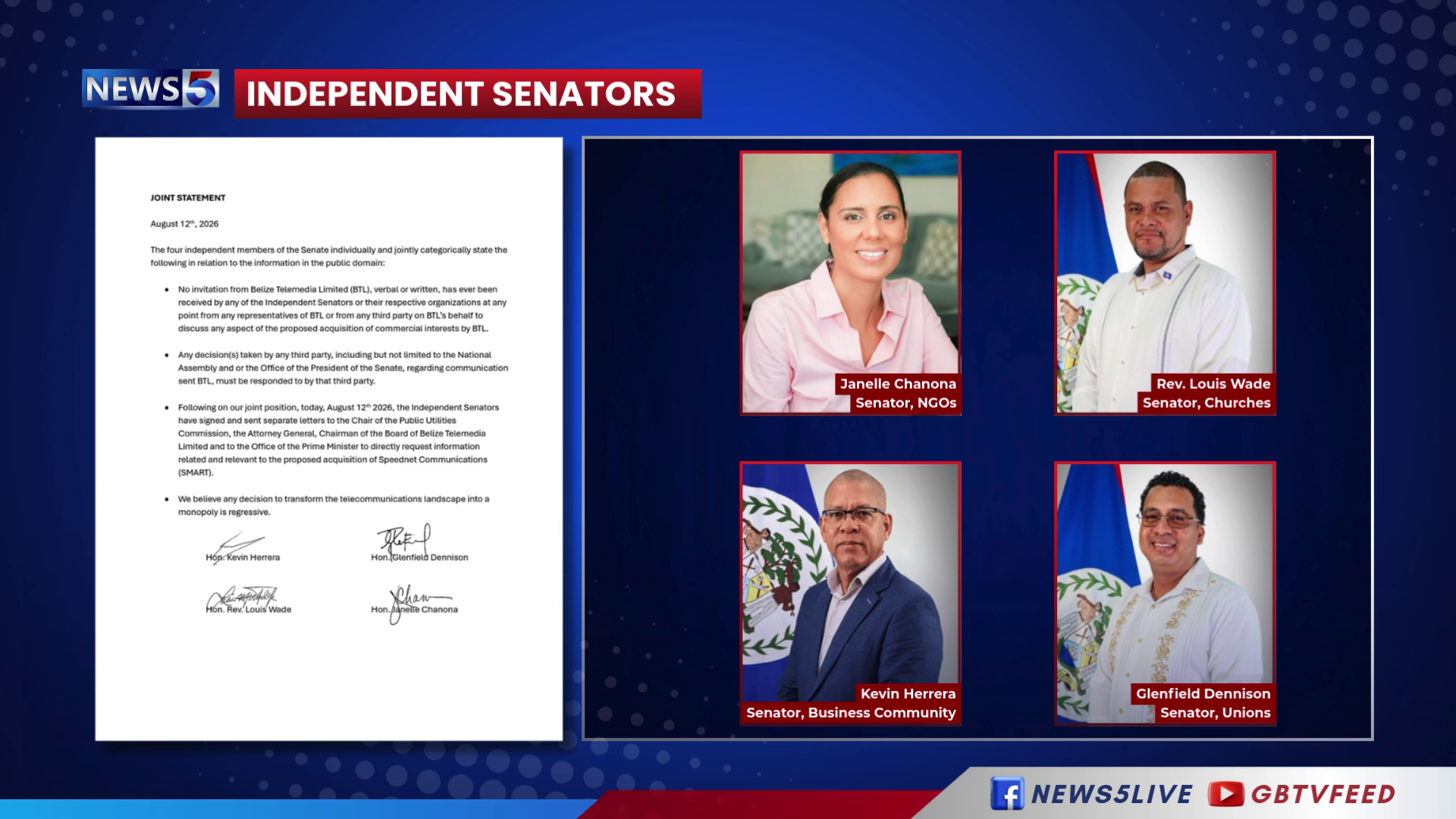
A high-stakes proposed acquisition in Belize’s telecommunications sector has sparked a public dispute over stakeholder consultation and industry transparency, as four independent senators push back against claims from Belize Telemedia Limited (BTL) that they refused repeated invitations to discuss the deal.
BTL, the country’s major telecom provider, has moved forward with plans to acquire Speednet Communications, the parent company of competing provider SMART. If approved, the merger would reshape Belize’s entire telecom market, impacting everything from consumer call and internet pricing to service quality and customer choice. BTL chairman Markhelm Lizarraga claimed publicly that the company had repeatedly extended invitations to independent senators to brief them on the proposal, accusing the lawmakers of refusing to engage with the company.
But the four senators – Kevin Herrera, Glenfield Dennison, Rev. Louis Wade, and Janelle Chanona – have issued a flat denial of Lizarraga’s claims. They assert that no invitation, whether verbal or written, was ever extended to them directly to discuss the acquisition. Senator Chanona confirmed she received no such outreach, and an internal check with the Senate Clerk’s Office also confirmed no formal request from BTL to meet with the independent caucus specifically.
Further clarification from Senate President Carolyn Trench-Sandiford has since shed light on the confusion: a formal briefing request was indeed sent by BTL CEO Ivan Tesucum on February 6 this year, but it was addressed only to the Office of the Senate President, asking to brief the full Senate as a collective body – not independent senators individually. That request came on the same day that Public Utilities Minister Michel Chebat announced in the House of Representatives that all discussions on the proposed acquisition would be paused, pending board approvals from BTL and the Social Security Board, plus a formal regulatory submission to the Public Utilities Commission (PUC).
The Senate President acknowledged BTL’s request four days later on February 10, but noted the briefing would need to be scheduled at a later date, factoring in the paused acquisition process, existing Senate legislative workload, other National Assembly commitments, and an upcoming parliamentary recess. Now that BTL’s board has formally approved the acquisition, the Senate is moving to schedule the information session, with plans to invite all senators and request participation from the PUC for the briefing.
The dispute has elevated broader concerns about the lack of open consultation around the deal, which critics warn could consolidate Belize’s telecom sector into a single monopoly – a step the independent senators have already labeled a regressive move for the country. Frustrated by the lack of proactive information sharing, the four lawmakers have sent formal letters directly to the PUC, the Attorney General, BTL’s board chair, and the Office of the Prime Minister requesting official answers on the proposed merger.
At the core of the conflict is a growing public question: before regulators and government officials greenlight a decision that will impact every Belizean’s access to telecommunications, will the public receive a full, clear, and honest accounting of the deal’s potential impacts? The dispute now centers not just on whether the acquisition will be approved, but on whether all stakeholders – including elected representatives and the voting public – will get a chance to weigh in before the country’s telecom landscape is permanently altered.