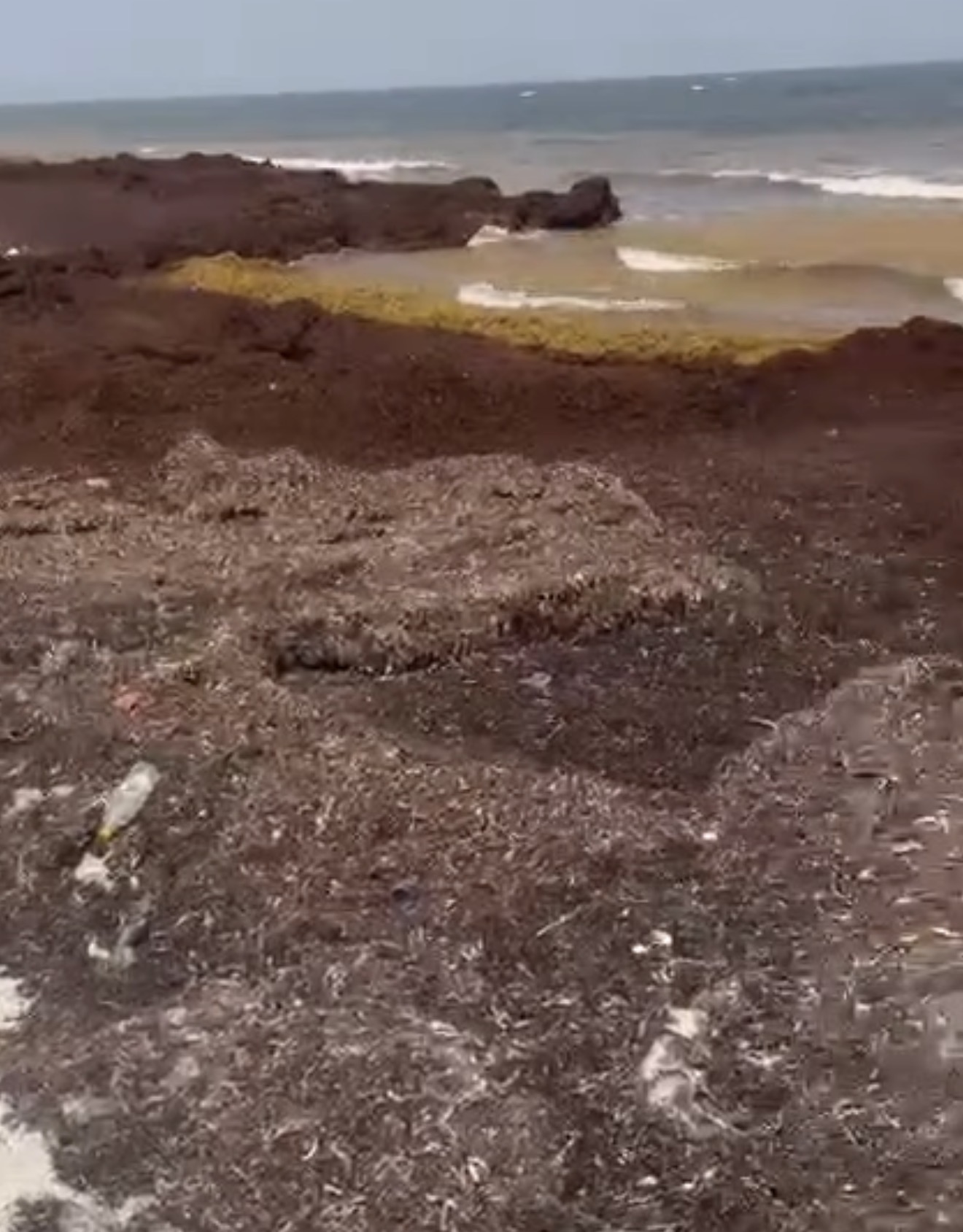
A thick accumulation of brown sargassum seaweed has blanketed stretches of Jabberwock Beach, coating the shoreline and creating unwelcome conditions for visitors and local communities. This latest proliferation of the marine algae is part of a broader regional challenge, as Caribbean nations once again grapple with a major sargassum season that has become an annual environmental and economic concern.
Projections from the University of South Florida’s Optical Oceanography Laboratory paint a worrying picture for the coming years: by 2026, the total volume of sargassum blooming across the Atlantic is expected to hit at least the second-highest level recorded since systematic monitoring began. This growing trend of increasingly large sargassum outbreaks has put mounting pressure on coastal communities throughout the Caribbean basin.
Unlike many harmful invasive species, sargassum is a naturally occurring brown algae that forms large floating mats across the open Atlantic Ocean. Offshore, these mats actually play a valuable ecological role, serving as critical habitat and feeding grounds for a wide range of marine life, from small juvenile fish to sea turtles. The situation changes dramatically, however, when large quantities of the algae wash onto sandy shorelines and begin to decompose. As it breaks down, sargassum releases a pungent, unpleasant odor that drives away tourists and disrupts daily life for coastal residents.
To combat the persistent problem, regional governments, beachfront hotels, and local tourism businesses have poured millions of dollars into annual cleanup operations and the installation of offshore containment barriers designed to stop sargassum from reaching shore. Beyond mitigation efforts, researchers and innovative entrepreneurs across the region and beyond are actively investigating potential commercial uses for the harvested algae, exploring applications that could turn the nuisance into a valuable resource. Promising areas of development include using sargassum as a base for organic agricultural fertilizers, a feedstock for renewable biofuels, and even a raw material for sustainable textiles and other consumer goods.