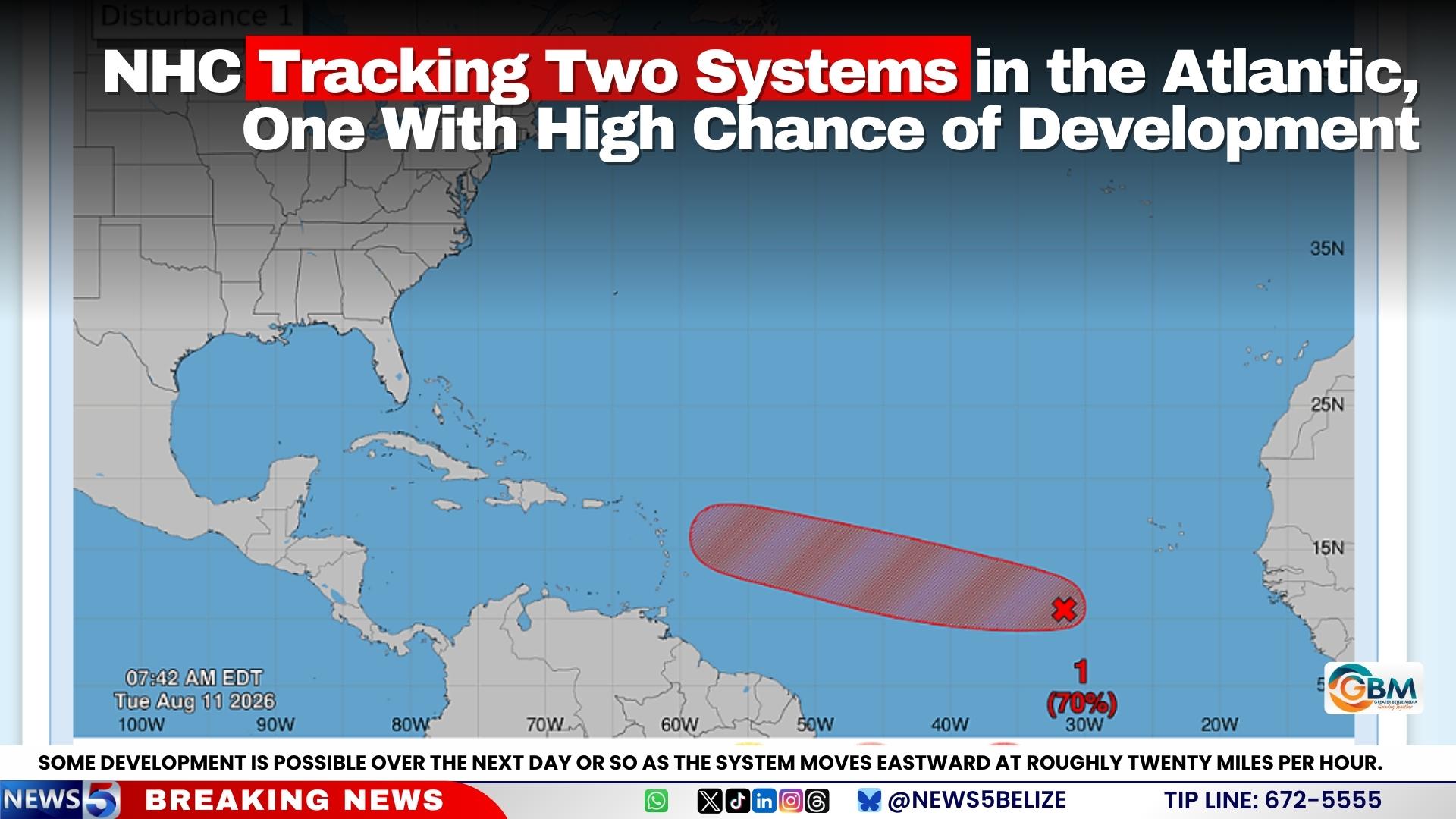
As the 2026 Atlantic hurricane season continues, the United States National Hurricane Center (NHC) is keeping close watch on two separate low-pressure systems moving across the basin this week, with one system holding a strong probability of maturing into a tropical depression before the end of the week.
Per the NHC’s latest official Tropical Weather Outlook, the first of the two monitored disturbances is situated in the central tropical Atlantic, centered roughly 500 miles to the southwest of the Cabo Verde Islands. While shower and thunderstorm activity linked to this low-pressure system has remained limited in recent observations, meteorologists with the agency have projected that environmental conditions will become increasingly conducive to strengthening over the coming 48 to 72 hours.
Forecasters project that as the system tracks on a west to west-northwest course across the central tropical Atlantic, it will likely organize into a tropical depression during the second half of this week. Right now, the NHC assigns this system just a 30% probability of development within the next 48 hours, but that chance climbs significantly to 70% — a high likelihood rating — over the full seven-day forecast window.
The second system under monitoring is a trough of low pressure located several hundred miles northeast of Bermuda, which is currently generating scattered showers and thunderstorms across the central subtropical Atlantic. The NHC notes that limited, slow development of this system cannot be ruled out over the next 24 to 48 hours as it travels eastward at around 20 miles per hour. However, the system is on track to reach much cooler ocean waters later this week, a shift in conditions that will halt any further organization by Thursday. For this second disturbance, the NHC pegs development odds at just 10% over both the 48-hour and seven-day forecast periods.
Amid ongoing monitoring for the active hurricane season, the NHC confirmed that it will continue issuing regular updates on both systems as they progress across the Atlantic, updating forecast probabilities and development status as new observational data becomes available.